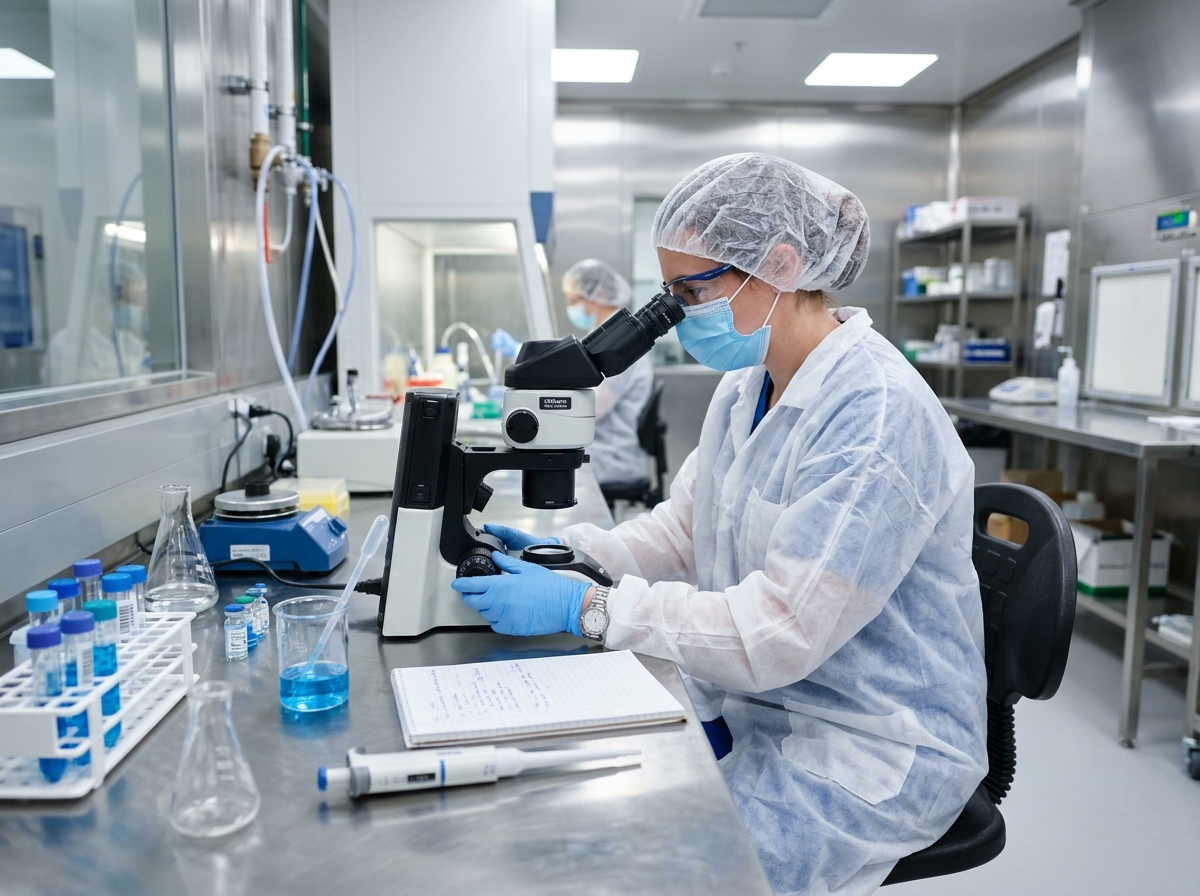
Release testing is what separates a batch where every unit is the same from a batch where only the average is right. In-process checks catch problems while they are still fixable; finished-goods release decides whether the batch ships at all. Both are documented, and the results come to you with the consignment rather than staying in our file.
In-process checks by format
On tablets and capsules: blend uniformity, weight variation, hardness, friability, disintegration time and fill weight. These determine whether the dose in each unit matches the label, which is the whole point of a dosage form.
On liquids: pH, brix or specific gravity, fill volume and clarity. On powders: bulk density, particle size, moisture and blend uniformity. On creams and topicals: viscosity, pH, fill weight and emulsion stability.
Finished-goods release panel
Every batch is released against description and appearance, identification of actives, assay where a standardised active is specified, microbiological limits including total plate count and specified pathogens, and heavy metals. Moisture and disintegration are included where format-relevant.
A batch that fails does not ship. We investigate the cause and either rework or remake, and you are told what happened, rather than discovering a short delivery and being left to guess.
Reading a certificate of analysis properly
A useful certificate reports a result against a specification, test by test. A certificate that simply says "complies" for everything is telling you much less than it appears to. Ours states the specification, the method and the observed result.
Look particularly at the assay line on any product where you are paying for a standardised active. That single number is the difference between the product you specified and a cheaper one wearing its label.