Reviewed for accuracy and claims compliance: Claims and compliance review
Almost no herbal powder tells you anything useful by looking at it.
Ashwagandha root powder is beige whether it is excellent or worthless. Triphala is brown either way. You cannot see withanolide content, and you cannot see heavy metals.
Moringa leaf powder is the exception.
Its colour is a genuine, visible, free indicator of how it was made, and the three things that make it dull are the same three things that strip out what you bought it for.
So this is one of the very few cases where a consumer can assess quality without a lab. We think that is worth a whole article, and we think the industry prefers you did not know.
General information, not medical advice. Colour tells you about processing. It does not tell you about heavy metals or microbial load, those still need a certificate, and there is a pregnancy warning on root and bark further down.
What the green is
Chlorophyll.
And chlorophyll is a convenient accident for a buyer, because it is fragile in exactly the same ways as the nutrients that matter in moringa.
Chlorophyll degrades with heat. The magnesium ion at the centre of the molecule gets displaced by hydrogen, turning bright green chlorophyll into dull olive-brown pheophytin. This is the same reaction that turns overcooked spinach that unappetising khaki colour, you have seen it in your own kitchen.
It degrades with light over time.
It degrades with prolonged exposure to air.
And beta-carotene and vitamin C, the two nutrients that make up moringa’s real nutritional case, degrade under the same conditions.
So the colour is not a proxy. It is the same damage, showing itself.
That is the whole argument. Everything below is detail.
Reason one: drying temperature
This is the biggest single factor and it is a cost decision, not an accident.
How moringa leaf should be dried: shade-dried, or dried in a controlled drier at a low temperature, with good airflow. Slow. Below about 50 °C.
How it often is dried: in direct sun on a tarpaulin or a concrete floor, or pushed through a hot drier to get it done in hours instead of a day or two.
Why the shortcut happens: a faster drier means more throughput and less working capital tied up. Fast drying is cheaper per kilo. That is the entire reason.
What it costs: the chlorophyll goes olive. The beta-carotene, the main reason to eat moringa at all, is reduced. The vitamin C is largely gone.
And direct sun is specifically bad, because you get heat and ultraviolet light together.
So when a powder is khaki, you are usually looking at a drying decision taken to save money. Not contamination, not fraud, just a cheaper process, with the nutrition removed as a side effect.
Reason two: stalk and stem in the grind
And this is the most common form of quiet adulteration in moringa, because it is not technically adulteration at all.
Moringa leaflets grow on a compound stalk, a central rachis with many small leaflets on it.
Stripping the leaflets off that stalk is labour. It is hand work. Leaving the stalk on and grinding the whole thing is cheaper and yields more kilos.
And the stalk is woody, pale, fibrous and nutritionally poor. It dilutes everything: less beta-carotene, less protein, less of everything you wanted, per gram.
What it looks like: a paler, duller, slightly yellowish or greyish green. And often a grittier, coarser texture, because the woody fibre does not mill as finely as the leaf.
And you can sometimes see tiny pale flecks in it.
What a label should say: “moringa leaf”, the part, explicitly. A label saying only “moringa” or “moringa powder” is not committing to anything.
And the test you can run at home: rub a pinch between your fingers. Pure leaf powder feels soft, almost like talc, and smells green. Stalk-heavy powder feels gritty.
Reason three: old leaves and the wrong harvest
Leaf age matters.
Young, tender leaves have the highest nutrient density and the most chlorophyll. Mature and yellowing leaves have less of both, and a plant shedding old leaves is moving nutrients out of them.
And harvesting the whole tree indiscriminately, old leaves included, is faster than selective picking.
What it looks like: duller, more variable colour, sometimes with a yellow cast.
Season matters too. Nutrient content shifts with rainfall and growth stage, which is one reason the figures on moringa packs should be read as a range rather than a specification.
Reason four: storage and age
Even good powder fades.
Chlorophyll keeps degrading in the bag, slowly in a sealed, opaque, cool container; much faster in a clear jar on a warm shelf.
So:
Clear plastic jars are a bad sign for a chlorophyll-rich powder. Opaque packaging, or at least a sealed foil pouch, is what the product needs.
And a bright green powder is also telling you it is reasonably fresh.
Which means colour carries two pieces of information at once: how it was made, and how long ago.
So what should it actually look like
Good moringa leaf powder:
Vivid, bright, slightly grassy green. Not neon, nobody should add colour, and a suspiciously uniform brilliant green is its own warning. But clearly, obviously green.
Fine and soft to the touch, like talc or cocoa powder.
It smells green, fresh, slightly pea-like or matcha-like. Some people say “fresh peas”. Not musty, not hay-like, not sour.
And it tastes mildly bitter and grassy. That bitterness is normal and is not a defect.
Powder to be suspicious of:
Khaki, olive, brown or grey-green, heat damage, old leaves, or age. Pale yellowish-green with grit, stalk content. Musty or hay smell, poor drying or damp storage. This one also raises a microbial question. Any sour or fermented note, the leaf got damp before drying. Stop. Caked or clumped, moisture ingress. Very coarse texture, stalk, or sloppy milling.
What colour does not tell you
And this section matters as much as the rest, because colour is reassuring in a way that can be misleading.
Colour tells you nothing about heavy metals. Lead, cadmium, arsenic and mercury are invisible, tasteless and odourless. Leaves pick up what is in the soil, in irrigation water and in roadside dust. A beautifully green powder from a contaminated site is still contaminated.
Colour tells you nothing about microbial load. And this is moringa’s most under-discussed risk. Leaves are frequently dried in the open, sometimes directly on the ground, handled by hand, and not heat-treated afterwards. E. coli, Salmonella, total plate count, yeast and mould all belong on the certificate. This is not a formality, it is a raw agricultural product that goes into your mouth without cooking.
Colour tells you nothing about pesticide residues.
And colour tells you nothing about whether the leaf is even moringa, though in practice leaf-level substitution is less of a problem here than in root and rhizome materials, where you cannot identify the plant by looking.
So: colour is the best free check you have, and it replaces nothing. Ask for the batch certificate anyway, heavy metals, pesticides, microbiology. We do not treat those as optional and no serious manufacturer should.
What we ask of our own supply
Since we are making a standard here, we should say what we hold ourselves to.
Leaf stripped from the stalk before drying, and the part declared on the label as leaf.
Shade or controlled low-temperature drying. Not direct sun, not a hot fast drier.
Milling that does not generate heat, a fast hammer mill heats the material, which undoes part of the careful drying. This is a real and overlooked step.
Opaque, sealed packaging, and a sensible shelf life rather than an optimistic one.
Batch-wise heavy metals, pesticide residues and microbiology, with the certificate available to whoever asks.
And honest nutrient figures, or none. A pack declaring a fixed vitamin C value for dried leaf powder is declaring something the drying mostly destroyed. We would rather print nothing than print that.
For clients private-labelling moringa, this is the specification conversation worth having, and the price difference between a properly dried leaf powder and a fast-dried stalk-inclusive one is real. It shows up in the colour of what arrives, which is the point of this article.
Root and bark, the warning that outranks colour
Moringa root and bark contain alkaloids including spirochin, and the root bark has a documented traditional use as an abortifacient.
So avoid root and bark in pregnancy entirely, and in our view avoid them in self-medication generally.
In pregnancy, moringa leaf is traditionally eaten as food, while concentrated leaf supplements have not been adequately studied, so food amounts yes, supplements no.
And this is the practical reason the part declaration matters as much as the colour. A product that says only “moringa extract” has not told you which part of the plant you are swallowing.
What we will and will not claim
Sayable: a traditional-use statement for moringa, framed as traditional use; the part used and the quantity; the drying method, if you want to describe your process honestly; and authorised nutrient-function claims only for nutrients present in a quantified, significant amount, in practice usually vitamin A and vitamin K.
And the governing fact: there is no authorised health claim for moringa.
Not sayable: treats diabetes, lowers cholesterol, detoxifies, boosts immunity, treats anaemia, aids weight loss.
And a specific one for this article: we will not claim that colour proves purity. It proves careful processing and reasonable freshness. That is a real thing and it is not the same thing.
And the most honest summary:
Moringa is one of the only herbal powders you can partly judge by eye, because chlorophyll fails under exactly the same conditions as the beta-carotene you are buying it for.
Bright green means it was dried slowly, from leaf rather than stalk, and not too long ago.
Khaki means someone saved money, and the saving came out of the nutrition.
And neither colour tells you about lead or Salmonella, so ask for the certificate regardless.
When to see a doctor
Before starting a moringa supplement, if you:
- are pregnant, and avoid root and bark entirely
- are breastfeeding, food amounts fine, supplements ask first
- take warfarin or acenocoumarol, moringa leaf is high in vitamin K, which destabilises INR
- take diabetes or blood pressure medication, monitoring
- take thyroid medication
- have a calcium-oxalate kidney stone history
Get a diagnosis rather than a powder if you have: fatigue, breathlessness on exertion or pallor (anaemia needs a blood test and a cause); unexplained weight loss; difficulty seeing in dim light; or a child not growing or gaining weight.
Stop and get checked: rash or swelling, persistent diarrhoea, or, after taking any poorly stored herbal powder, fever with vomiting and diarrhoea, which is a microbial question and worth mentioning to the doctor along with what you took.
The short version
- Most herbal powders tell you nothing by eye; moringa is the exception
- The green is chlorophyll
- Chlorophyll fails under the same conditions as beta-carotene and vitamin C
- So colour is not a proxy, it is the same damage showing itself
- Heat displaces magnesium in chlorophyll, turning it olive-brown
- It is the same reaction as overcooked spinach going khaki
- Moringa should be shade-dried or dried below about 50 °C with airflow
- Fast hot drying and direct sun are cheaper per kilo, that is the whole reason
- Direct sun is specifically bad: heat plus UV together
- Khaki powder usually reflects a drying decision taken to save money
- Leaflets grow on a stalk, and stripping them is hand labour
- Grinding the stalk in is cheaper and yields more kilos
- Stalk is woody, pale and nutritionally poor, it dilutes everything
- Stalk-heavy powder looks paler and feels gritty
- Rub a pinch: pure leaf feels like talc, stalk feels gritty
- Young leaves have the most nutrients and chlorophyll
- Selective picking is slower than stripping the whole tree
- Chlorophyll keeps degrading in the bag, clear jars are a bad sign
- So colour tells you two things: how it was made and how old it is
- Good powder is vivid green, soft as talc, and smells of fresh peas
- Mild bitterness is normal and not a defect
- Musty, hay-like or sour smells mean poor drying or damp, a microbial question
- Colour tells you nothing about heavy metals, they are invisible
- Colour tells you nothing about microbial load, moringa’s most under-discussed risk
- Leaves are often dried on the ground and never heat-treated afterwards
- Demand batch heavy-metal, pesticide and microbiology certificates anyway
- Hot hammer milling undoes careful drying, an overlooked step
- A fixed vitamin C figure on dried leaf powder is a figure drying destroyed
- Root and bark contain spirochin; root bark is traditionally abortifacient
- So the part declaration matters as much as the colour, insist on “leaf”
- There is no authorised health claim for moringa
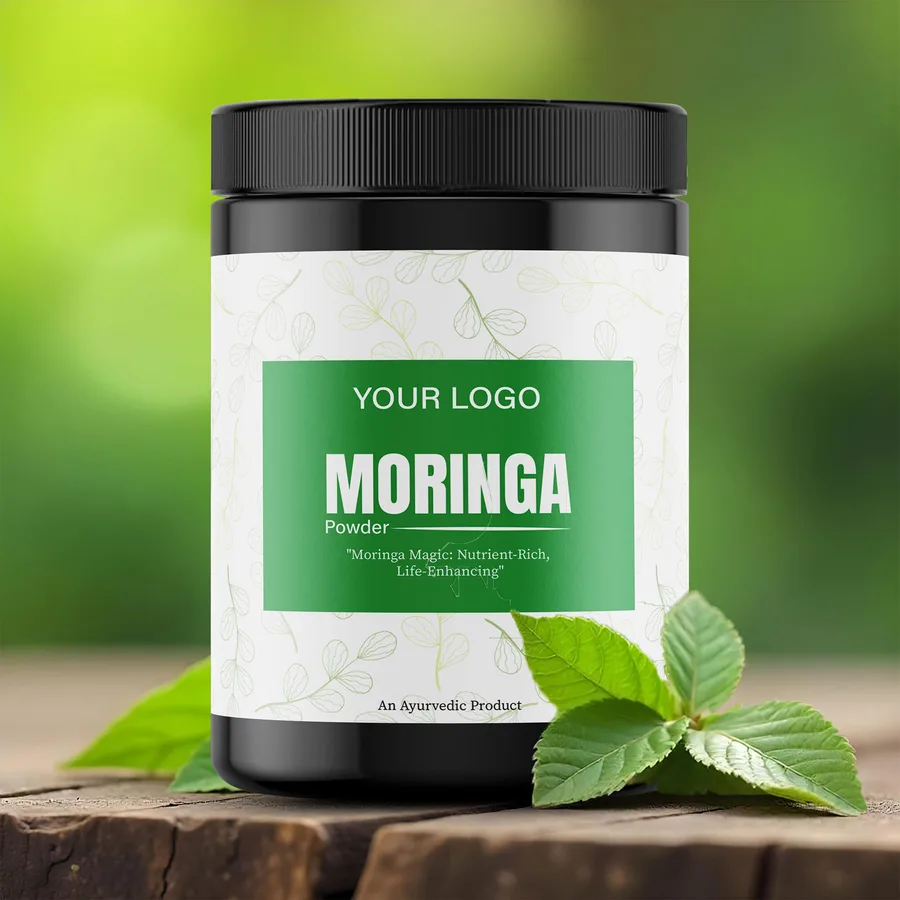
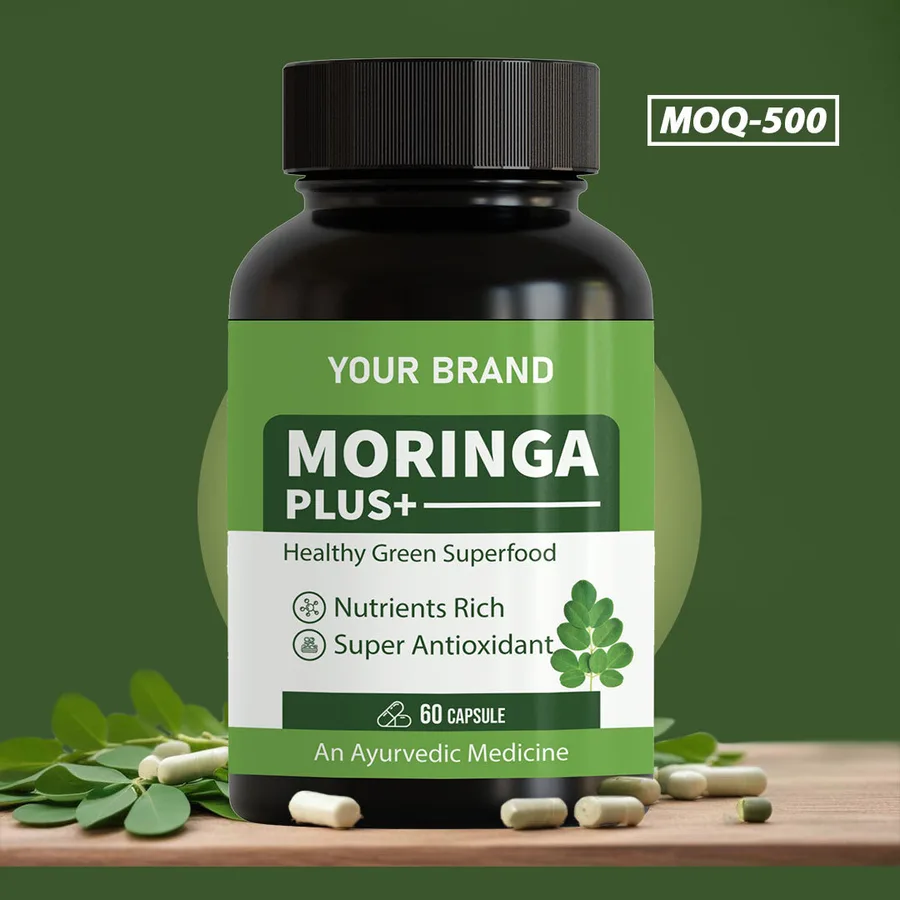
Ingredient detail: moringa. Our formats: Moringa Leaf Powder, Moringa Capsule. Related reading: moringa’s nutrient profile, moringa powder vs capsule vs juice, moringa as an export product, and choosing a contract manufacturer.
Get our product list and minimum orders
Leave your email and we will send the formats we make, the minimum order for each and typical lead times. We use it only to reply to you.
Manufacturing in this category?
We make products in this category for other people's brands. Tell us the format and volume and we will send a specification and a per-unit cost.
Request a quotation ↗NutraHerbal manufactures food supplements, Ayurvedic proprietary medicines and cosmetics for business customers. Product information on this site describes composition, format and commercial positioning for brand owners. It is not medical advice, does not claim to diagnose, treat, cure or prevent any disease, and is not a substitute for consulting a qualified practitioner. Final label claims are the brand owner's responsibility and must be approved for the destination market.
How we write and review content: editorial policy.