Reviewed for accuracy and claims compliance: Claims compliance review
Iron deficiency anaemia is one of India’s largest nutritional problems, and it affects women and adolescent girls disproportionately. National surveys have repeatedly found anaemia in a majority of Indian women of reproductive age, and the figure has proved stubborn across decades of programmes.
This article is about why, because the reasons stack, most are invisible to the person affected, and one of them is more correctable than the rest.
This is information, not medical advice. Do not start iron without testing. Iron deficiency in an adult man or a post-menopausal woman needs the cause investigated rather than just corrected.
Six factors, and they compound
1. Menstrual blood loss, the largest single factor
Iron leaves the body with blood, and menstruating women lose it monthly in a way men do not.
And here is the part that makes it invisible: most women do not know whether their periods are heavy, because they have nothing to compare against. Heavy menstrual bleeding is frequently regarded as normal and rarely mentioned to a doctor.
Signs that bleeding is heavy: soaking through protection hourly, passing large clots, bleeding beyond seven days, flooding, or needing to change protection overnight.
And the critical point: heavy bleeding is itself treatable, hormonal options and the progesterone-releasing intrauterine device among them, with fibroids and adenomyosis identifiable and manageable. Correcting iron while the loss continues is refilling a leaking bucket.
2. Vegetarian and low-meat diets
Two forms of dietary iron:
Haem iron, from meat, fish and poultry, absorbed efficiently and relatively unaffected by what else is on the plate.
Non-haem iron, from plants, absorbed far less efficiently, and heavily influenced by the rest of the meal.
Indian vegetarian diets supply almost entirely non-haem iron. The iron is present; the absorption is the problem.
So this is not a diet that is low in iron. It is a diet whose iron is hard to get at, which is a different problem with a different solution.
3. Tea with meals, and this is the most correctable factor
This is the one worth acting on today.
Tannins in tea and coffee substantially reduce non-haem iron absorption from the same meal. This is well established.
And tea with or immediately after meals is close to universal in India, breakfast with chai, lunch followed by chai, evening chai with biscuits.
Which produces a specific and common situation: a woman eating dal, green vegetables and jaggery daily, and absorbing a fraction of the iron in them, because of a cup of tea she does not connect to the problem.
The fix costs nothing and requires no supplement: move tea and coffee at least an hour away from meals. You do not have to give up tea. You have to move it.
In our view this single change is the highest-value intervention in this entire article.
4. Phytates, and the tradition that already handled them
Phytates in whole grains and legumes inhibit iron absorption, and those are the same foods carrying the iron.
And Indian tradition already addressed this, which is genuinely interesting: soaking dal and chana overnight, sprouting, and fermenting batter all reduce phytate content. Idli and dosa batter, sprouted moong, soaked rajma, these practices improve mineral absorption, and they predate the biochemistry that explains them.
What has changed is that modern kitchens skip the soaking.
5. Pregnancy, and closely spaced pregnancies
Pregnancy increases iron requirements substantially, and the stores are drawn down further by delivery blood loss and lactation.
Closely spaced pregnancies do not allow stores to recover, so each one starts from a lower baseline. In a population where birth spacing is often short, this compounds across a woman’s reproductive years.
6. Adolescence, and this is where it is set
The requirement rises sharply at adolescence: growth, increasing blood volume, and the onset of menstruation, all at once.
And in many Indian households, adolescent girls eat less and eat later than the boys, smaller portions, less dal, less dahi, less of whatever protein is on the table.
So deficiency is frequently established in the teenage years, before pregnancy adds to it. Which means the most effective place to intervene is school-age girls, and that is why national programmes target them.
And three further factors
Hookworm and other intestinal parasites, still present, causing chronic blood loss, and treated with a single inexpensive dose. Periodic deworming is part of national policy for this reason.
Coeliac disease, increasingly recognised in India, impairing absorption, and often presenting as iron deficiency that does not respond to supplementation.
And H. pylori, common here, and associated with iron deficiency through several mechanisms.
Why programmes have not closed the gap
Worth addressing, because the scale of effort has been considerable.
India has run iron and folic acid supplementation programmes for decades, along with food fortification and deworming. Anaemia prevalence has moved less than expected.
The commonly discussed reasons:
Adherence. Iron tablets cause gastrointestinal side effects, and people stop taking them. This is the dominant practical problem, and it is addressable, through alternate-day dosing and gentler forms.
The causes are not only dietary. Supplementation does not fix heavy menstrual bleeding, hookworm, coeliac disease or H. pylori.
Anaemia is not only iron deficiency. B12 and folate deficiency, haemoglobinopathies including thalassaemia trait and sickle cell, and anaemia of chronic disease all contribute, and iron does not treat any of them. In parts of India, thalassaemia trait is common enough that assuming all microcytic anaemia is iron deficiency is a real diagnostic error.
And measurement. Haemoglobin alone misses the earlier stages, and methods of measurement have themselves been debated.
The useful takeaway for an individual: do not assume your anaemia is dietary iron deficiency. Get it characterised.
The part that is most often missed: deficiency without anaemia
This matters for individuals more than any statistic.
Iron deficiency develops in stages. Stores fall first, measured by ferritin, and haemoglobin stays normal for a long time.
So a woman can be iron deficient with a perfectly normal haemoglobin, and be told she is fine.
And the symptoms of that stage are real: fatigue, poor exercise tolerance, breathlessness on exertion, hair shedding, poor concentration, reduced work capacity, headaches, restless legs, and a craving for ice, clay or chalk, which is a recognised and oddly specific sign.
Which means: ask for ferritin, not just haemoglobin. And take the actual number to your doctor rather than accepting “normal”, because the bottom of the laboratory range is not adequate for symptoms.
Check CRP alongside it, because ferritin rises with inflammation and can mask a real deficiency.
What to do about it
For an individual woman:
- Test CBC and ferritin, and B12, since vegetarian diets are short of that too
- Ask whether your periods are heavy, and raise it, because it is treatable
- Move tea and coffee an hour from meals, the highest-value free change
- Add vitamin C to iron-containing meals, lemon on dal, amla, guava, tomato
- Soak and sprout dal and chana
- Separate calcium and dairy from iron-rich meals
- If supplementing, ask about alternate-day dosing, better absorbed and better tolerated
- Continue about three months past normal haemoglobin, to refill stores
- And if iron does not work, get the cause investigated, coeliac, H. pylori, continuing blood loss, or a different anaemia
And in an adult man or post-menopausal woman, iron deficiency is not assumed to be dietary. The gut is investigated, because that is how ulcers and bowel cancers are found.
What a product can and cannot claim
We manufacture in this category, so the line matters.
What is sayable: iron’s recognised role in normal red blood cell and haemoglobin formation, and in reducing tiredness and fatigue; vitamin C’s role in increasing iron absorption; the recognised roles of folate and B12.
What is not: treats anaemia, cures iron deficiency, or raises haemoglobin. Anaemia is a diagnosed condition and treating it is a medicinal claim.
And the line we require on artwork: test before taking iron, and iron deficiency in a man or post-menopausal woman needs the cause investigated. That second point is the one that matters most and almost nobody prints it.
The honest summary: this is a category where the product can genuinely help, because the deficiency is real and widespread. And the free interventions, moving tea, adding lemon, soaking dal, and asking about heavy periods, come first, because without them a supplement is working against the same obstacles.
The short version
- Six factors stack: menstrual loss, non-haem-only diets, tea with meals, phytates, pregnancy spacing, and adolescence.
- Most women do not know their periods are heavy, and heavy bleeding is treatable. Correcting iron while it continues is refilling a leaking bucket.
- Indian vegetarian diets are not low in iron, the iron is hard to absorb. Different problem, different solution.
- Tea with meals is the most correctable factor. Move it an hour away; you do not have to give it up.
- Soaking, sprouting and fermenting reduce phytates, tradition already solved this, and modern kitchens skip it.
- Deficiency is usually established in adolescence, which is why school programmes target girls.
- Hookworm, coeliac disease and H. pylori are real contributors that supplements do not fix.
- Not all anaemia is iron deficiency, B12, folate and thalassaemia trait matter, and iron treats none of them.
- You can be iron deficient with normal haemoglobin. Ask for ferritin, with CRP to interpret it.
- Craving ice, clay or chalk is a recognised sign.
- Alternate-day dosing is better absorbed and better tolerated, the main reason people abandon iron is side effects.
- In a man or post-menopausal woman, investigate the cause.
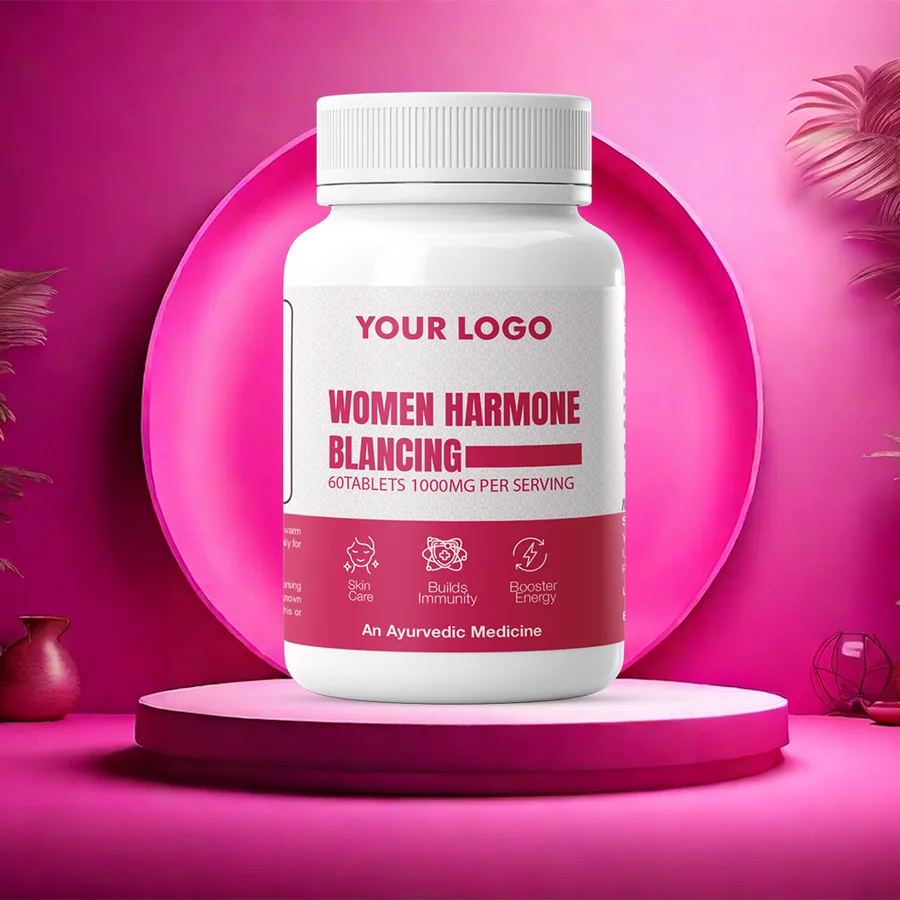
Composition detail: Femino 360. Related: iron supplements that do not cause constipation and आयरन के साथ चाय और कॉफ़ी क्यों नहीं.
Get our product list and minimum orders
Leave your email and we will send the formats we make, the minimum order for each and typical lead times. We use it only to reply to you.
Manufacturing in this category?
We make products in this category for other people's brands. Tell us the format and volume and we will send a specification and a per-unit cost.
Request a quotation ↗NutraHerbal manufactures food supplements, Ayurvedic proprietary medicines and cosmetics for business customers. Product information on this site describes composition, format and commercial positioning for brand owners. It is not medical advice, does not claim to diagnose, treat, cure or prevent any disease, and is not a substitute for consulting a qualified practitioner. Final label claims are the brand owner's responsibility and must be approved for the destination market.
How we write and review content: editorial policy.