Reviewed for accuracy and claims compliance: Claims compliance review
This is one of the most asked questions in Indian hair care right now, and the honest answer is less dramatic than either side’s marketing. Both oils do roughly the same category of thing. What differs is the ingredient story, the sensory experience, and who each one is talking to.
Let us go through it properly, including the parts that both sets of brands leave out.
First, the thing both oils cannot do
Neither onion oil nor bhringraj oil regrows hair in pattern baldness. Not slowly, not with consistent use, not with a better formulation.
If your hairline is receding in a pattern, or you are thinning from the crown, that is androgenetic alopecia and it is a different problem with different answers, which you should discuss with a dermatologist rather than with a product page.
What a good hair oil does do:
- Reduces breakage, which makes hair look fuller because less of it snaps off
- Conditions the scalp and reduces dryness and flaking
- Improves manageability, so there is less mechanical damage from combing
- Makes scalp massage pleasant enough that you actually do it
That is a modest and genuine list. Anything beyond it is marketing.
Onion oil: what it actually is
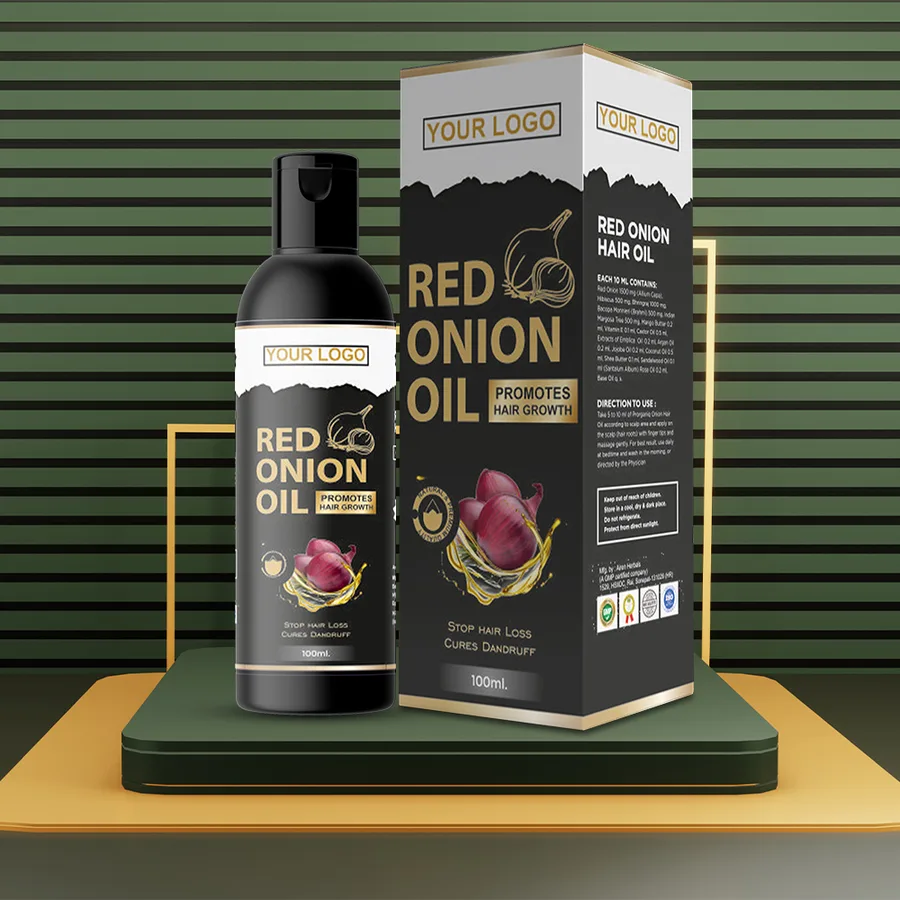
First clarification, because it matters: good onion oil is made with red onion seed oil, not fresh onion juice.
Fresh onion juice is unstable, smells considerably worse, and will not survive a shelf life. Products implying they contain freshly pressed onion juice are either not telling the whole story or have a product that degrades in the bottle.
The case for it: Onion oil has the strongest search demand in Indian hair care, and it has grown faster than any other hair product term. It is also usually blended with kalonji (black seed) and sometimes bhringraj, so you are rarely buying onion alone.
The case against it: the smell. This is the number one reason people abandon onion oil, and most brands do not mention it. A well-made product uses deodorised seed oil with essential-oil masking, which largely solves it. A cheap one does not, and you will know within one application.
Who it suits: younger users, people who found it through short video, anyone who wants the current popular thing and does not mind a wash-day commitment.
Bhringraj oil: what it actually is
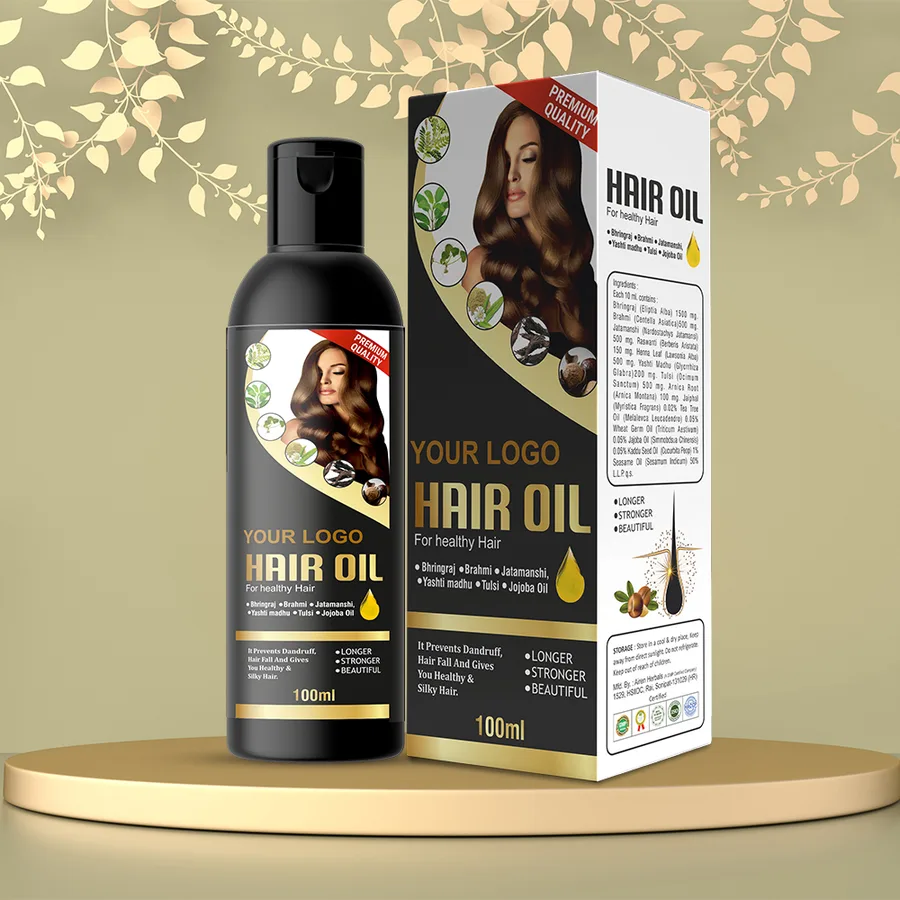
Bhringraj is Eclipta alba, called kesharaja in Ayurveda, literally “king of hair”. It is the oldest and most consistently used hair herb in the Indian tradition, usually prepared in a sesame or coconut oil base with amla, brahmi and sometimes jatamansi.
The case for it: cultural credibility that costs nothing. An Indian customer does not need to be told what bhringraj is. It also tends to be a gentler sensory experience, no smell problem, and the classical oils are generally less likely to be an aggressive degreasing wash-out.
The case against it: it has less current search momentum, so if you are hoping to be told about the exciting new thing, this is not it. It is the reliable thing.
Who it suits: anyone who prefers traditional preparations, people with dry scalp, those who do regular oiling as a routine rather than as a treatment.
Side by side
| Onion oil | Bhringraj oil | |
|---|---|---|
| Hero ingredient | Red onion seed oil | Bhringraj (Eclipta alba) |
| Search demand | Very high, still growing | Steady, culturally embedded |
| Smell | The main complaint; needs deodorised oil | Generally pleasant |
| Base | Usually coconut/sesame blend | Classically sesame |
| Best for | Breakage, current-trend buyers | Dry scalp, traditional routine |
| Typical audience | 20–35, digital-first | All ages, tradition-led |
| Cultural trust | Built by marketing | Built over centuries |
So which one?
Our honest answer, as a manufacturer who makes both:
If you are buying one for yourself: pick based on smell tolerance and scalp type. Dry scalp and a preference for traditional preparations, bhringraj. Comfortable with a stronger product and want the thing with momentum, onion, but buy one that has clearly dealt with the odour.
If you are launching a brand: launch both. They reach different customers at almost no additional cost, since the base and the bottling are shared. The onion SKU brings the search traffic; the bhringraj SKU brings the customers who distrust trends. Letting your content route the customer is more effective than betting on one.
The thing more important than which oil
Here is what we would actually tell a friend asking this question.
If you are losing noticeable amounts of hair, the oil is not the first decision. The first decision is finding out why. Four tests answer it most of the time: haemoglobin, ferritin, thyroid profile and vitamin D.
Iron deficiency is extremely common among Indian women and is a major, treatable cause of hair fall. Thyroid disorders cause thinning and show up on a blood test. Hair fall two to three months after an illness, surgery, childbirth or major stress is a recognised and usually temporary pattern.
If one of those is your cause, fixing it will do more than any oil. The oil then helps with breakage while the underlying issue resolves, which is a real contribution, just not the main one.
How to actually use either oil
- Warm it slightly, not hot
- Apply with fingertips to the scalp, not just the lengths
- Massage gently for five to ten minutes. Gently. Vigorous rubbing on wet or fragile hair causes the breakage you are trying to prevent
- Leave for one to two hours, or overnight if your routine allows
- Wash out with a mild, sulphate-free shampoo
- Twice a week is plenty
And give it three months. Hair grows on a cycle; what falls today was determined weeks ago. Judging an oil in three weeks tells you nothing, which is why people conclude that nothing works, they never let anything finish.
Safety notes
- Patch test before first use, particularly with onion oil, which is a more common sensitiser.
- Avoid on broken or inflamed scalp skin.
- If you have scalp psoriasis, seborrhoeic dermatitis or circular patches of hair loss, see a dermatologist rather than self-treating.
- Sudden hair loss in clumps needs medical attention.
This article is information, not medical advice.
The short version
Both oils reduce breakage and condition the scalp; neither regrows hair in pattern baldness. Onion has the search demand and a smell problem that good manufacturing solves; bhringraj has centuries of credibility and a gentler experience. Buy on scalp type and smell tolerance, launch both if you are a brand, and get your ferritin and thyroid checked before blaming either.
For composition detail see red onion hair oil and bhringraj hair oil. The oil-plus-tablet pairing with Folico 360 is the combination this category actually wants.
Get our product list and minimum orders
Leave your email and we will send the formats we make, the minimum order for each and typical lead times. We use it only to reply to you.
Manufacturing in this category?
We make products in this category for other people's brands. Tell us the format and volume and we will send a specification and a per-unit cost.
Request a quotation ↗NutraHerbal manufactures food supplements, Ayurvedic proprietary medicines and cosmetics for business customers. Product information on this site describes composition, format and commercial positioning for brand owners. It is not medical advice, does not claim to diagnose, treat, cure or prevent any disease, and is not a substitute for consulting a qualified practitioner. Final label claims are the brand owner's responsibility and must be approved for the destination market.
How we write and review content: editorial policy.