Reviewed for accuracy and claims compliance: Commercial review
Most articles on this subject are written by people who want to sell you manufacturing, and the numbers reflect that. We also want to sell you manufacturing, and we would still rather you went in with a realistic figure, because a client who runs out of money in month four is not useful to either of us.
So here is a line-by-line breakdown of a genuine first launch, including the cost that sinks more new brands than any other.
The structure we are costing
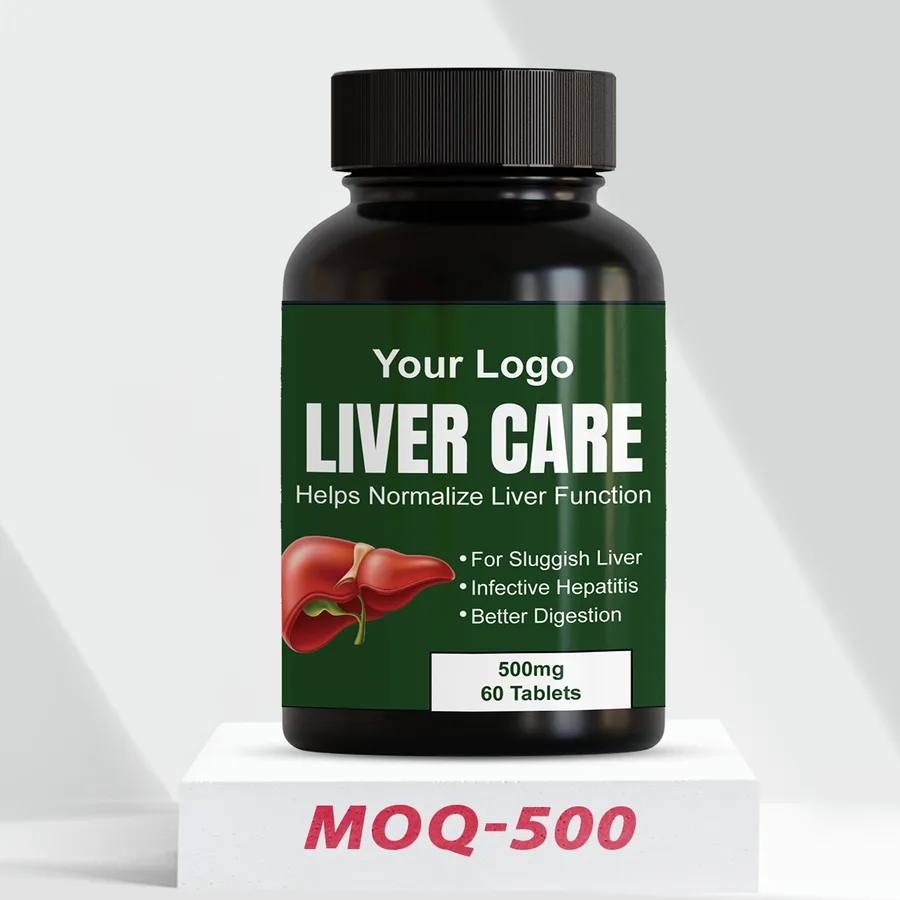
To make this concrete, assume a sensible first launch: four SKUs that form a routine, at our minimum order quantities, in a single wellness category. Something like a liver range, a tablet, a juice, a churna and a detox tablet, or a hair range with a tablet, an oil, a shampoo and a serum.
Four SKUs rather than one, because customers buy routines and a single-product brand caps its own order value. Minimum quantities rather than a bigger run, because your first order should be sized against what you can actually sell inside the shelf life.
1. Stock
The largest single line, and the one people estimate reasonably well.
At our minimum, 500 units per SKU on every format, a four-SKU order is 2,000 units in total, and what it costs depends almost entirely on composition rather than on count. Extract loads drive this more than anything: a 1200 mg tablet with glucosamine and 95% curcumin costs multiples of a triphala churna. Ask for a line-by-line quotation rather than a blended per-unit number; at this volume one expensive active can double the bill on its own.
Two things to understand about this number:
It is not linear. A 500-unit run does not cost a tenth of a 5,000-unit run. The fixed costs inside a batch, changeover, cleaning, QC testing, do not shrink with the order, so the per-unit price at 500 is meaningfully higher. What you are buying with a low minimum is not the cheapest unit cost; it is the right to be wrong about a product without being buried in stock.
It moves. Garcinia, saffron, whey, glucosamine and amla all track commodity markets. A quotation from last quarter may not hold this quarter. Ask for a cost breakdown rather than a blended number so you can see which lines are volatile.
2. Artwork and design
Underestimated almost universally.
A supplement label has to satisfy a regulator and sell a product at the same time. A designer who has not worked in this category will do the second well and the first badly, and you will find out after the plates are made.
Budget for label artwork per SKU, carton artwork where you are using cartons, and a shipper carton design. If you are using a template route this drops substantially; if you want distinctive packaging for a premium product it rises.
The cheapest money you will spend: sending artwork for a compliance review before plates are cut. We do this free, and it catches the two expensive mistakes, a missing mandatory declaration that forces a reprint, and a claim that gets your listing pulled after you have paid for stock.
3. Printing plates and cylinders
A one-time cost per SKU per artwork version, and genuinely a surprise to most first-time brands. You pay it whether you print 5,000 labels or 50,000.
This is the reason changing your MRP after plates are made is expensive, and the reason we push brands to settle pricing before artwork rather than after.
4. Registrations and legal
- Company or firm registration, if you do not already have an entity
- GST registration, straightforward
- FSSAI licence in your own name as brand owner or marketer, ours covers our manufacturing, not your marketing. It does not transfer.
- Trademark application on the brand name, do the search before you print anything. Brands routinely commission artwork, print cartons, then discover the name is taken.
- Product approvals where your licence route requires them
Individually modest; collectively a real line item. If you are filing anything as an Ayurvedic proprietary medicine rather than a food supplement, add consultant fees, because state-level practice varies and this is where a consultant earns their money.
5. Website and basic digital
A functioning store, product photography, and the content you will need before launch.
Photography is worth real money. Product shots are the single most visible quality signal a customer sees before buying, and phone photos on a kitchen counter read exactly as what they are.
Content before launch, not after. A category guide, an ingredient explainer and a diet article in the right language will be earning traffic by the time your stock arrives. Publishing after launch is the most common sequencing mistake we see, and it costs nothing to get right.
6. Testing beyond our standard panel
Our release panel and certificate of analysis come with the batch. If you want to publish test reports, which in adulteration-prone categories like shilajit, protein and spirulina is genuinely effective marketing, budget for additional third-party testing scoped for publication.
7. Freight and fulfilment setup
Inbound freight from us to you. Then whatever your fulfilment model requires, courier account, packaging material, a warehouse arrangement or a 3PL onboarding.
8. Working capital, the line that sinks brands
This is the most important paragraph in the article.
You pay for stock months before you sell it. Between placing an order and receiving revenue you will have:
- Paid an advance against the purchase order
- Paid the balance on dispatch
- Paid for artwork, plates, photography and the website
- Waited 12 to 25 working days for manufacturing
- Waited for inbound freight
- Then started selling, with revenue arriving over the following months
Brands do not usually fail because the product was wrong. They fail because they spent everything on the first order and had nothing left for the three months it takes to sell it.
Our blunt rule of thumb: whatever your launch budget is, do not put more than about 60% of it into the first stock order. The rest is the runway you need to actually sell it.
So what is the total?
For a credible four-SKU launch including stock, artwork, plates, registrations, photography, website and a working-capital buffer, the realistic figure is in the low single-digit lakhs of rupees. The part worth noticing is the shape of it: at a 500-unit minimum the stock order is no longer the biggest line. Artwork, plates, registrations, photography and content are fixed costs, they cost the same whether you make 500 units or 50,000, so on a small first run they dominate the budget.
That has a practical consequence. Cutting your order quantity does not cut your launch cost proportionally, and it is the reason a one-SKU launch rarely saves what people expect it to.
Could it be done for less? Yes, with one SKU, template artwork, no photography budget and no content. That is also the version that most reliably fails, because a single product with no audience has nothing to cross-sell and no way to be found.
Could it cost much more? Easily, if you go to custom formulation, premium packaging, or a protein launch with its higher raw-material cost per unit.
Be suspicious of anyone quoting a figure much lower than this range. They are either excluding the lines above or they are describing a launch that will not work.
Where to spend and where not to
Worth spending on:
- Product photography
- Compliance review and a regulatory consultant if anything is unusual
- A fourth SKU that completes a routine
- Working capital
Not worth spending on, at first:
- Custom formulation. Use private label, test the market, then develop against evidence rather than assumption.
- A large first order for a better unit price. Shelf-life risk and cash exposure outweigh the discount.
- Premium packaging on a product you are not sure will sell.
- Paid advertising before you have content. Acquisition costs in competitive categories will eat you alive.
A sanity check before you commit
Take your intended retail price. Subtract channel commission and fulfilment. Subtract acquisition cost if you are buying traffic. Subtract GST. What remains must cover your landed unit cost and leave a margin you can run a business on.
If it does not, the answer is a different format, a different pack size or a different category, not a bigger order to improve the unit price. Do this arithmetic before artwork, because pack size and MRP are the most expensive decisions to reverse once plates exist.
The short version
Low single-digit lakhs for a credible four-SKU launch. At a 500-unit minimum the stock order is the smaller half of that, artwork, plates, registrations and content are the lines people forget, and they do not shrink with your order size. Working capital is the one that actually determines survival: keep 40% of your budget out of the first stock order.
For the full sequence see how to start a supplement brand in India. For the margin arithmetic, costing and margins. For what the minimums and timelines actually are, minimum order and lead times.
Get our product list and minimum orders
Leave your email and we will send the formats we make, the minimum order for each and typical lead times. We use it only to reply to you.
Manufacturing in this category?
We make products in this category for other people's brands. Tell us the format and volume and we will send a specification and a per-unit cost.
Request a quotation ↗NutraHerbal manufactures food supplements, Ayurvedic proprietary medicines and cosmetics for business customers. Product information on this site describes composition, format and commercial positioning for brand owners. It is not medical advice, does not claim to diagnose, treat, cure or prevent any disease, and is not a substitute for consulting a qualified practitioner. Final label claims are the brand owner's responsibility and must be approved for the destination market.
How we write and review content: editorial policy.