Reviewed for accuracy and claims compliance: Claims compliance review
A well-constructed Indian vegetarian diet is a good diet. It is high in fibre and legumes, varied in vegetables, and rich in the spices that most nutrition research now treats as an asset.
It is also, reliably and predictably, short on four specific things. Not because vegetarianism is inadequate, but because these four are either concentrated in animal foods or poorly absorbed from the plant sources that contain them.
This article is about those four, and about why the standard advice, “eat more spinach”, “have more dal”, does not close the gaps.
This is information, not medical advice. Deficiencies should be confirmed by testing, and doses set by your doctor. Several of these are genuinely dose-sensitive.
1. Vitamin B12, the one with no plant source
This is the most important item on the list and the least negotiable.
Why it is short: B12 is produced by bacteria, and in the food chain it reaches humans almost entirely through animal products. No plant food is a reliable source. Not spinach, not sprouts, not any vegetable.
Lacto-vegetarians get some from milk and curd, which helps, but Indian intakes are often insufficient, and surveys of Indian vegetarian populations have repeatedly found high rates of low B12. Vegans get none at all from food.
What it does: nerve function, red blood cell formation, DNA synthesis.
Why this one matters more than the others: B12 deficiency causes neurological damage, and nerve damage can become irreversible if it goes untreated long enough. The haematological effects correct with treatment; the neurological ones may not.
The symptoms are easy to dismiss: tiredness, tingling or numbness in hands and feet, a burning sensation in the feet, poor memory or mental fogginess, sore tongue, breathlessness, low mood.
The trap: B12 deficiency and folate deficiency produce similar blood pictures, and high folate intake can mask the anaemia while the nerve damage continues. Indian vegetarian diets are generally high in folate. This is exactly the situation in which B12 deficiency goes unnoticed for years.
What to do: get tested. If you are a lifelong vegetarian or vegan, assume you need supplementation rather than hoping diet covers it. Methylcobalamin and cyanocobalamin are both used; your doctor will set the dose and form, and significant deficiency is sometimes treated by injection initially.
Not a source, despite frequent claims: spirulina contains a B12 analogue that is not biologically useful to humans and may interfere with the real thing. Fermented foods, idli and dosa batter, and mushrooms are not reliable sources either.
One more: metformin and long-term antacids both reduce B12 absorption. A vegetarian on either has two reasons to test.
2. Vitamin D, not a vegetarian problem, but a universal Indian one
Strictly this is not specific to vegetarians, deficiency is extremely common across the Indian population, in a country with abundant sunshine.
Why: indoor work, covered clothing, urban air pollution reducing UVB, deliberate sun avoidance for skin tone, and the fact that darker skin requires longer exposure to synthesise the same amount. Dietary sources are limited, and the richest ones, oily fish, egg yolk, liver, are not vegetarian.
Why it belongs on a vegetarian list anyway: vitamin D governs how much calcium you absorb, and vegetarian calcium sources are already less bioavailable. The two deficiencies compound.
Symptoms: bone and muscle aches, proximal muscle weakness, fatigue, low mood.
What to do: test. Supplement at a dose your doctor sets based on the result. Do not self-prescribe high doses, vitamin D is fat-soluble, excess accumulates, and toxicity causes high blood calcium. Those weekly 60,000 IU sachets passed around informally are a real dose and belong under medical direction.
Vegan note: most D3 is from lanolin, which is sheep’s wool. Lichen-derived D3 is available for strict vegans; D2 is plant-derived but less effective at raising and maintaining blood levels.
3. Iron, present in the diet, poorly absorbed from it
The subtlest item here, because Indian vegetarian diets are not especially low in iron. The problem is absorption.
Two forms: haem iron from animal foods, absorbed efficiently; non-haem iron from plants, absorbed far less efficiently and strongly affected by what else is on the plate.
What blocks it:
- Phytates in whole grains and legumes, the same foods that carry the iron
- Tannins in tea and coffee, and this one is large. Tea with or just after a meal substantially reduces iron absorption from that meal, and tea with meals is near-universal in India
- Calcium, which competes directly
- Oxalates in spinach, which is why spinach is a far weaker iron source than its reputation
What helps: vitamin C, which markedly improves non-haem iron absorption. A lemon squeezed over dal, amla, guava, tomato or capsicum in the same meal does real work.
Practical changes that matter more than eating more iron:
- Move tea and coffee to between meals, at least an hour either side. This is the single highest-value change for many people.
- Add vitamin C to iron-containing meals. Lemon on dal, salad with the meal.
- Separate calcium supplements from iron-rich meals and from iron supplements.
- Soak and sprout legumes and grains, and use fermented preparations, all reduce phytate.
- Cast iron cookware contributes modestly.
Who is at highest risk: menstruating women, pregnant women, adolescent girls, and anyone with heavy periods. Iron deficiency anaemia is very common among Indian women, and vegetarian diets plus tea with meals plus menstrual losses is the combination that produces it.
Important: do not take iron supplements without testing. Iron overload is harmful, excess iron causes constipation and gastric upset, and some people carry haemochromatosis without knowing. Test, then treat.
4. Omega-3, present as the wrong kind
The least discussed of the four.
Three relevant fatty acids: ALA, which is plant-derived, and EPA and DHA, which are the forms with most of the evidence behind them for cardiovascular and brain function.
Plant sources give you ALA, flaxseed, chia, walnuts, mustard oil. The body converts ALA to EPA and then to DHA, but the conversion is inefficient, particularly the final step to DHA, and it is further suppressed by a high intake of omega-6 fats.
That last point matters in India, because sunflower, safflower, soybean and corn oils are high in omega-6 and are among the most-used cooking oils. A diet heavy in those oils and light in ALA sources gives you the worst version of this ratio.
What to do:
- Flaxseed, ground not whole, whole seeds pass through largely undigested. A tablespoon of freshly ground flax daily. Grind in small batches; it oxidises.
- Chia, soaked.
- Walnuts, a small handful.
- Reconsider your cooking oil. Mustard oil has a better fatty acid profile than sunflower or safflower, and groundnut oil is reasonable. Rotating oils is sensible.
- For EPA and DHA directly: algal oil is the vegetarian and vegan source, derived from the same microalgae that fish get theirs from. It is the only vegetarian source of preformed DHA, and it costs more.
Who should pay particular attention: pregnant and breastfeeding women, because DHA matters for fetal and infant brain development, and anyone vegetarian with cardiovascular risk factors.
A note on protein, which is the fifth thing
Protein is not on the main list because Indian vegetarian diets can supply enough, but often do not, and two groups are consistently short.
Older adults, whose appetite falls while protein requirements per kilogram rise, this is a direct contributor to muscle loss, frailty and falls.
Women, whose diets in many Indian households are lower in dal, dahi and paneer than the men’s in the same house.
The quality question: most plant proteins are limiting in one essential amino acid, cereals in lysine, legumes in methionine. Dal with rice, or roti with rajma, complements them, which is what Indian cuisine has always done. That part is not a problem, so long as both halves are actually eaten in reasonable quantity.
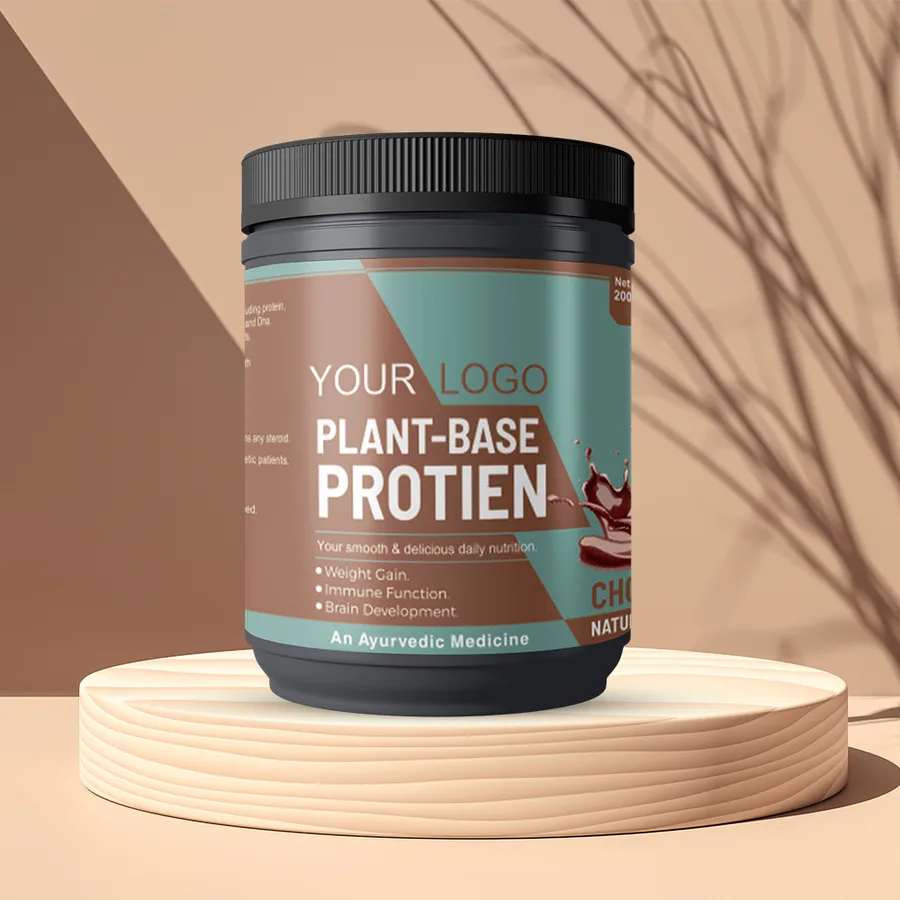
Practical: dal twice a day, curd or paneer daily, a handful of nuts, and soya or a plant protein powder where intake is genuinely low, particularly for older adults.
What to test, and when
If you are a lifelong Indian vegetarian, these are worth doing once and then periodically:
| Test | Why |
|---|---|
| Vitamin B12 | Highest-stakes gap; no plant source |
| Vitamin D (25-OH) | Near-universal deficiency |
| CBC with ferritin | Ferritin shows iron stores; CBC alone misses early depletion |
| Thyroid (TSH) | Common, overlapping symptoms |
Test before supplementing, not after. These four results will tell you more than any amount of reading.
What products can and cannot claim
Because we manufacture in this space, the line is worth stating.
What is sayable: the recognised role of B12 in nerve function and red blood cell formation; of vitamin D in calcium absorption and bone health; of iron in oxygen transport; of protein in muscle maintenance. These are established nutrient functions.
What is not: that a product treats anaemia, treats deficiency as a diagnosed condition, or substitutes for medical assessment. Significant B12 or iron deficiency is a clinical matter.
And the honest position: a supplement fills a gap. It does not establish whether you have one. The test comes first, and in this specific case, for B12, the test genuinely matters, because the consequence of missing it is nerve damage rather than tiredness.
The short version
- B12, no plant source, highest stakes, and high folate intake can mask it while nerve damage progresses. Test, and expect to supplement.
- Vitamin D, test, supplement at a doctor-set dose, do not self-prescribe high doses.
- Iron, present but poorly absorbed. Move tea away from meals, add vitamin C, test ferritin before supplementing.
- Omega-3, plants give ALA, which converts poorly to DHA. Ground flax daily, rethink high omega-6 cooking oils, algal oil for preformed DHA.
- Protein, adequate is possible, but older adults and women are often short. Dal plus grain complements the amino acids.
Products in this range: plant protein powder and vitamin D3 drops.
Get our product list and minimum orders
Leave your email and we will send the formats we make, the minimum order for each and typical lead times. We use it only to reply to you.
Manufacturing in this category?
We make products in this category for other people's brands. Tell us the format and volume and we will send a specification and a per-unit cost.
Request a quotation ↗NutraHerbal manufactures food supplements, Ayurvedic proprietary medicines and cosmetics for business customers. Product information on this site describes composition, format and commercial positioning for brand owners. It is not medical advice, does not claim to diagnose, treat, cure or prevent any disease, and is not a substitute for consulting a qualified practitioner. Final label claims are the brand owner's responsibility and must be approved for the destination market.
How we write and review content: editorial policy.