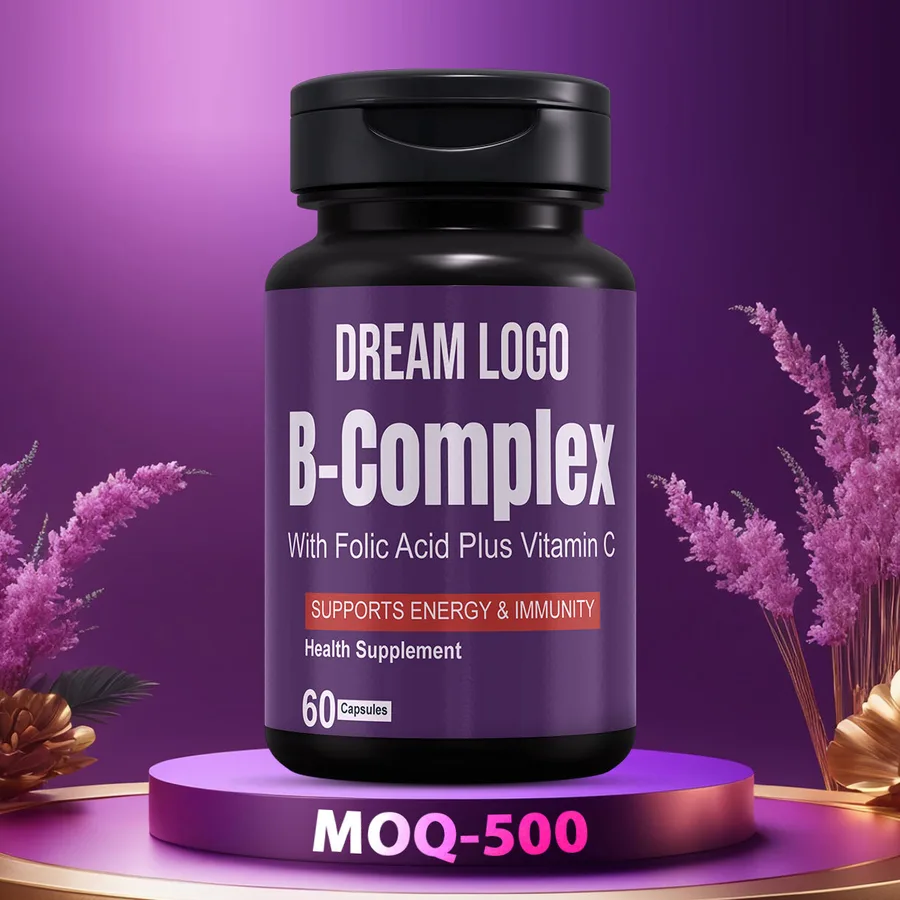
Reviewed for accuracy and claims compliance: Claims compliance review
We argue against supplements on this site more often than for them. This is the exception, and it is not a close call.
Vitamin B12 is the one nutrient a plant-based diet cannot reliably supply, and its deficiency does something most deficiencies do not: it causes neurological damage that can become permanent.
And the Indian context makes it worse rather than better. A large vegetarian population, widespread deficiency even among people eating dairy, and a high-folate diet that specifically masks the blood signs while the nerve damage proceeds.
If you eat a fully plant-based diet and take nothing else, take this.
This is information, not medical advice. Numbness or tingling in the hands or feet with a vegetarian or vegan diet needs testing promptly, not a dietary adjustment.
Why plants do not contain it
This is the part that explains everything else.
B12 is not made by plants or animals. It is made by bacteria, specifically certain archaea and bacteria.
Animals get it because:
Ruminants have bacteria in the rumen that synthesise it, which the animal then absorbs. Other animals get it from bacterially contaminated food, water and soil, or from eating other animals.
And humans do have B12-producing bacteria in the large intestine, but that is downstream of the ileum, where absorption happens. So we cannot use our own. That anatomical fact is the whole problem.
Which means: there is no plant food that reliably contains meaningful, active B12. Not one. This is a hard biological constraint, not a gap in the research.
Historically, humans got some from untreated water, soil residue on vegetables, and insects. Modern hygiene removed those routes, and that is a good trade, but it means supplementation is now the route.
The “sources” that are not sources
This section matters because these are widely recommended and they do not work.
Spirulina, contains pseudo-vitamin B12 (corrinoids), which is biologically inactive in humans. And worse: it is detected by some older assays, so it can make a blood test look falsely reassuring, and there is evidence it may compete with real B12. We sell spirulina powder, and we will say plainly: it is not a B12 source.
Nori and other seaweeds, nori contains some genuinely active B12, and it is the only plant food with a reasonable claim. And the amount is variable and unreliable between harvests and species, and other seaweeds contain mostly inactive analogues. Not a basis for depending on it.
Fermented foods, idli, dosa, dhokla, kanji, tempeh, miso, amounts are small, highly variable, and often inactive analogues. Idli-dosa batter is not a B12 source, despite being frequently described as one.
Mushrooms, trace amounts in some species; not reliable.
“Unwashed organic vegetables”, this advice circulates and it is bad advice. The amounts are trivial and the infection risk is real.
Barley grass, wheatgrass, moringa, chlorella, chlorella contains some active B12 but amounts vary hugely by product; the others are not sources.
And a specific one for India: curd and buttermilk do contain B12, because they are dairy. They are a real source for lacto-vegetarians, and not for vegans, and the amounts are modest enough that dairy-eating Indian vegetarians are still commonly deficient. That is an important and under-appreciated point.
Why the damage is different
Most nutrient deficiencies cause reversible symptoms. B12 is not one of them.
What it does:
Anaemia, megaloblastic, with large red cells. Reversible.
And neurological damage, subacute combined degeneration of the spinal cord, affecting the posterior and lateral columns, plus peripheral neuropathy, optic nerve effects, and cognitive and psychiatric effects.
And this part may not fully recover. Treatment stops progression; it does not reliably reverse established damage. The longer the delay, the more is permanent.
Which is why this is framed as a safety article rather than a nutrition one.
The symptoms, in rough order of appearance:
- Tingling, numbness or “pins and needles” in the hands and feet, usually symmetrical, and this is the one to act on
- Fatigue and weakness
- Unsteadiness, particularly in the dark or with eyes closed, loss of position sense
- Sore or smooth red tongue, and mouth ulcers
- Memory problems, poor concentration, irritability
- Low mood, and in severe cases confusion or psychiatric symptoms
- Visual disturbance
- And in infants: failure to thrive, developmental regression, irritability and poor feeding
And the one about infants
This needs stating directly because the consequences are severe.
An exclusively breastfed infant of a B12-deficient mother can develop profound deficiency, with developmental regression, irritability, poor growth and in severe cases lasting neurological harm.
And it can happen even where the mother has few symptoms herself.
So: a vegan or strictly vegetarian woman who is pregnant or breastfeeding needs her B12 addressed, without exception. This is the highest-stakes application of everything in this article.
How folate hides it, the Indian problem
This is the specific reason the Indian picture is worse, and it is rarely explained.
B12 and folate both participate in the same reaction, the conversion of homocysteine to methionine, and the regeneration of tetrahydrofolate.
In B12 deficiency, folate gets trapped in a form that cannot be used (the “methylfolate trap”), and DNA synthesis in dividing cells is impaired. That is what produces the large red cells.
And here is the trap: if dietary folate is plentiful, it can partially drive the blood picture back towards normal. The red cells look less abnormal, the anaemia is masked, and the neurological damage continues unaffected, because folate cannot substitute for B12 in the other reaction B12 is needed for.
Indian vegetarian diets are generally good in folate, dals, greens, legumes. Which means:
The classic blood warning sign is less likely to appear here, and the deficiency may present neurologically first, or be found late.
So: do not wait for anaemia. A normal haemoglobin and a normal blood count do not rule out B12 deficiency in someone on an Indian vegetarian diet. This is the single most important diagnostic point in this article.
Testing, and how to read it
| Test | What it tells you |
|---|---|
| Serum B12 | The usual first test, and it has real limitations, it measures total B12 including inactive analogues, and the reference range’s lower end is widely considered too low |
| Borderline results | A result in the low-normal range does not exclude deficiency if symptoms fit |
| Homocysteine | Rises in B12 deficiency, and also in folate and B6 deficiency |
| Methylmalonic acid (MMA) | The most specific functional marker. Rises in B12 deficiency and not in folate deficiency. Ask for it if the picture is unclear |
| Holotranscobalamin (active B12) | Measures the fraction actually available to cells; not widely available |
| Full blood count with MCV | High MCV supports it, and normal MCV does not exclude it, especially with high folate |
| Folate and ferritin | Co-existing iron deficiency can mask the large cells, giving a normal MCV. This combination is common in India |
And the practical advice: if you are vegan or vegetarian and have any neurological symptom, do not accept a borderline B12 as reassurance. Ask about MMA or homocysteine.
And a warning that applies to everyone: high-dose biotin, present in many hair and skin supplements, interferes with many immunoassays including B12. Stop it before testing and tell the laboratory.
What to take
Dose and form are your doctor’s call, and the shape of the guidance is worth knowing.
Forms:
Cyanocobalamin, the most studied, most stable, cheapest, and used in most fortification programmes. It is what the evidence base rests on.
Methylcobalamin, an active form, popular in India, often marketed as superior. The claimed superiority is not well established for ordinary deficiency, and it is less stable. It is a reasonable choice and not a necessary one.
Hydroxocobalamin, used in injections.
Adenosylcobalamin, the other active form.
Our position: cyanocobalamin is the default and is entirely adequate. An exception is sometimes argued in smokers and in certain rare kidney conditions, where other forms are preferred, ask your doctor.
Route and frequency:
Oral works for most people, including many with absorption problems, because a small fraction is absorbed by passive diffusion independent of intrinsic factor, which is why high oral doses work even when the intrinsic factor route is impaired.
And a dose-frequency fact worth knowing: absorption via the intrinsic factor route saturates at a very small amount per dose. So a single large weekly dose and a small daily dose are both used, and the arithmetic differs, this is why weekly doses are much larger than seven daily doses, rather than exactly seven times.
Sublingual, absorbed similarly to swallowed tablets in comparative studies; the “bypasses the gut” claim is largely marketing. It is fine, and not superior.
Injections, used for severe deficiency, neurological involvement, pernicious anaemia and malabsorption. Loading doses then maintenance. If you have neurological symptoms, this is the route to discuss.
And fortified foods, fortified plant milks, nutritional yeast, breakfast cereals. Useful, and in India fortified products are far less widely available than in Western countries, which weakens this route here.
Safety: B12 is water-soluble and remarkably safe. No established upper limit, and excess is excreted. Rare acne-like eruptions are reported at high doses.
And one real caution: do not start B12 alone if there is severe deficiency with anaemia, potassium can drop as red cell production resumes. That is a reason for this to be medically supervised in severe cases, not a reason to avoid it.
Who else should be tested, beyond vegans
This section matters because deficiency is far from limited to vegans.
Lacto-vegetarians, commonly deficient in India despite dairy intake.
Anyone over 60, absorption declines with age, and atrophic gastritis is common.
Long-term metformin, a well-documented cause of B12 deficiency, and it is a very large group in India. Anyone on metformin for years should have B12 checked, and this is routinely missed.
Long-term PPIs and H2 blockers, stomach acid is needed to release B12 from food.
Pernicious anaemia, autoimmune loss of intrinsic factor.
After gastric or bariatric surgery, and in ileal disease or resection, Crohn’s disease, coeliac disease.
Chronic alcohol use.
Pregnancy and breastfeeding on a vegetarian or vegan diet.
Infants of deficient mothers.
And a particular combination: metformin plus a vegetarian diet plus age over 60. That is extremely common in India and it is close to a guarantee.
The honest position on our own category
We say “you probably do not need this” about most of what we make. Here we say the opposite.
What is sayable: vitamin B12 contributes to normal red blood cell formation, to normal functioning of the nervous system, to normal homocysteine metabolism, to normal energy-yielding metabolism, to normal psychological function, to normal function of the immune system, to the process of cell division, and to the reduction of tiredness and fatigue.
That is an unusually strong and accurate set of authorised claims, and they genuinely describe what this article is about.
What is not sayable: treats deficiency, cures anaemia, treats neuropathy, or improves memory.
And what we refuse: selling spirulina as a B12 source. We make spirulina powder and it is not a B12 product, and we will not let a “rich in B12” line onto that artwork. This is one of the most common false claims in the Indian supplement market and it causes real harm, because people believe they are covered.
And what we think should be on every vegan-positioned product: a clear statement that B12 requires a reliable supplemented source. Almost no vegan protein powder in India says this, and all of them should.
When to see a doctor
Promptly, do not wait:
- Tingling, numbness or pins and needles in hands or feet
- Unsteadiness when walking, or worse in the dark
- Memory or concentration problems with a vegetarian or vegan diet
- Visual disturbance
- An infant who is breastfed by a vegan or vegetarian mother and is not feeding well, not growing, or losing skills, this is urgent
- Confusion or significant mood change
Soon:
- Any vegan or vegetarian who has never had B12 checked
- Pregnancy or breastfeeding on a vegetarian or vegan diet, without exception
- On metformin for more than a year or two
- On long-term PPIs
- Over 60
- After gastric or bariatric surgery, or with coeliac or Crohn’s disease
- A borderline B12 result with symptoms, ask about MMA or homocysteine
- Before any blood test, if you take high-dose biotin
- And before relying on spirulina, nori or fermented foods, they are not adequate
The short version
- B12 is made by bacteria, not by plants or animals.
- Our own gut bacteria make it too far down the intestine to absorb. That anatomical fact is the whole problem.
- No plant food reliably contains meaningful active B12. This is a hard constraint.
- Modern hygiene removed the historical soil and water routes.
- Spirulina contains inactive pseudo-B12, and it can make older assays read falsely reassuring.
- We sell spirulina and we will say plainly it is not a B12 source.
- Nori has some active B12 and is too variable to depend on.
- Idli-dosa batter is not a B12 source.
- “Unwashed vegetables” is bad advice, trivial amounts, real infection risk.
- Curd and buttermilk are real sources for lacto-vegetarians, and Indian vegetarians are still commonly deficient.
- The anaemia is reversible; the nerve damage may not be.
- Treatment stops progression and does not reliably reverse established damage.
- Tingling in hands or feet is the symptom to act on.
- An infant of a deficient mother can be severely affected, this is the highest-stakes case.
- High folate masks the blood picture while nerve damage continues, the methylfolate trap.
- Indian vegetarian diets are folate-rich, which makes this worse, not better.
- A normal haemoglobin and MCV do not rule out B12 deficiency here. The key diagnostic point.
- Co-existing iron deficiency can also normalise the MCV, common in India.
- Ask about MMA or homocysteine if B12 is borderline with symptoms.
- High-dose biotin interferes with B12 and thyroid assays, stop before testing.
- Cyanocobalamin is the studied, stable, cheap default. Methylcobalamin’s superiority is not established.
- Oral works for most people because a fraction absorbs by passive diffusion.
- Sublingual is not superior to swallowed tablets.
- Injections for severe or neurological cases.
- B12 is remarkably safe, no established upper limit.
- Metformin is a documented cause, and metformin plus vegetarian diet plus age over 60 is near-certain in India.
- Long-term PPIs reduce absorption.
- Every vegan-positioned product should say B12 needs a supplemented source. Almost none do.
Composition detail: B-complex capsule and plant protein powder. Related: the four nutrients Indian vegetarians most often lack, omega-3 for vegetarians, and is your supplement actually vegetarian?.
Get our product list and minimum orders
Leave your email and we will send the formats we make, the minimum order for each and typical lead times. We use it only to reply to you.
Manufacturing in this category?
We make products in this category for other people's brands. Tell us the format and volume and we will send a specification and a per-unit cost.
Request a quotation ↗NutraHerbal manufactures food supplements, Ayurvedic proprietary medicines and cosmetics for business customers. Product information on this site describes composition, format and commercial positioning for brand owners. It is not medical advice, does not claim to diagnose, treat, cure or prevent any disease, and is not a substitute for consulting a qualified practitioner. Final label claims are the brand owner's responsibility and must be approved for the destination market.
How we write and review content: editorial policy.