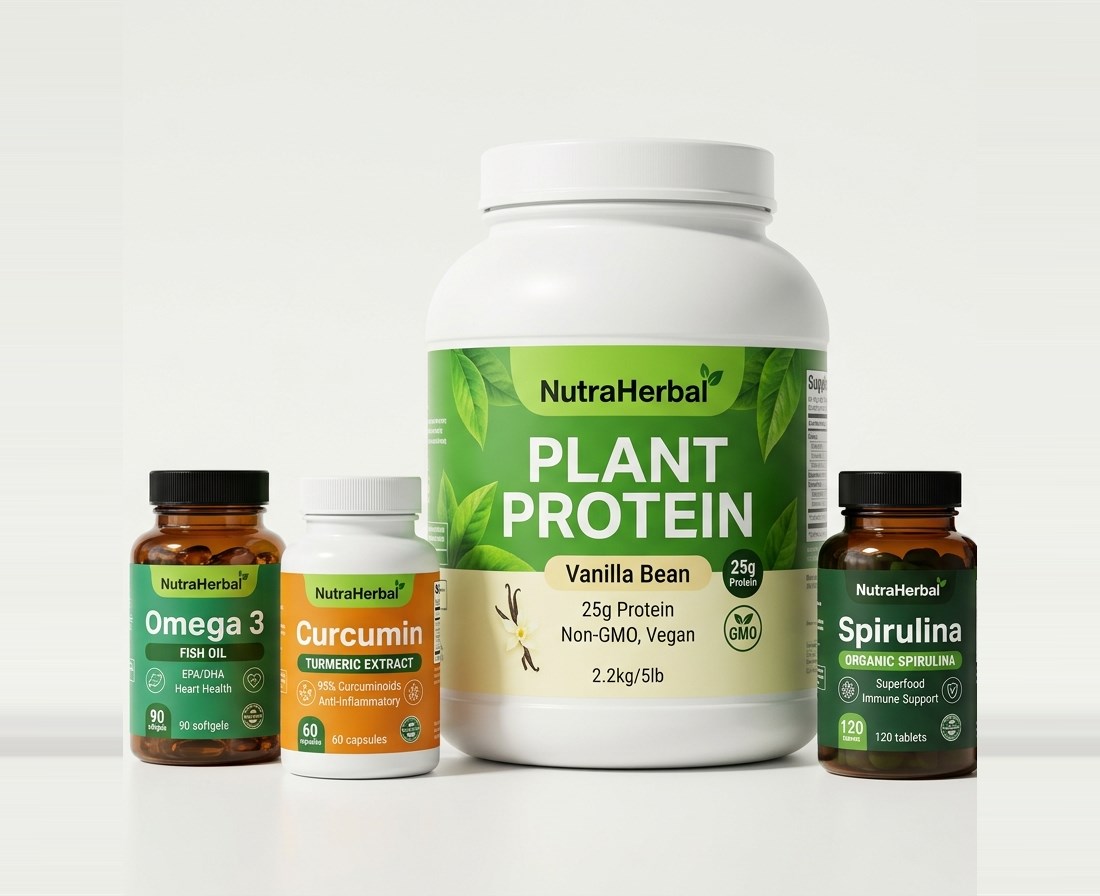
A supplement label has to sell the product and satisfy a regulator at the same time, and designers who have not worked in this category tend to do the first well and the second badly. This page sets out what must be on the pack, what must never be, and the review step that catches problems before plates are made rather than after.
Mandatory declarations
The specifics depend on your licence route and the two formats genuinely differ, but broadly you need: product name; complete composition with quantities per unit; net quantity; manufacturer name, address and licence number; FSSAI licence number and logo where applicable; vegetarian or non-vegetarian mark; allergen declarations; storage instructions; directions for use; MRP; batch number; manufacturing date; and best-before or expiry date.
Also required and frequently forgotten: a customer-care contact, country of origin, and on a food supplement a statement that it is not for medicinal use. Missing any of these is a labelling non-compliance regardless of product quality.
Claims that will cause you problems
Any statement that the product cures, treats, prevents or manages a disease. Weight-loss figures in kilograms. Sexual-performance claims. Specific promises such as increasing sperm count, regulating menstruation, dissolving kidney stones, shrinking the prostate, reversing diabetes, curing piles, or regrowing hair in pattern baldness. Skin-whitening and fairness positioning. Before-and-after imagery implying a guaranteed outcome.
Three mechanisms enforce this faster than any regulator: marketplaces remove listings, ad platforms ban accounts, and disappointed customers leave reviews. All three happen within days and all three take revenue with them.
What you can say instead
Traditional use of recognised herbs. Composition and ingredient levels. Structure-function wording where a nutrient has established recognition, vitamin D and bone health, zinc and immune function, calcium and bone health, iron and reduced tiredness. General wellness positioning: liver wellness, metabolic wellness, joint comfort, digestive comfort, respiratory wellness, skin radiance.
This is almost always sufficient. The brands that last in this industry are not the ones making the biggest promises; they are the ones whose customers were not disappointed.
Design decisions that help rather than hinder
Print the composition in full and legibly. In a market where extract loads are routinely vague, a clear composition panel is a competitive advantage, customers in curcumin, ashwagandha and protein genuinely compare them.
Put the dose instruction on the front. Vague dosing is one of the most common reasons customers stop taking a product, and a customer who stops does not reorder. On anything in a privacy-sensitive category, offer a plain outer carton, it measurably reduces refused deliveries.
The review step
Send artwork before plates or cylinders are made. We check the mandatory declarations for your route, confirm the composition panel matches what we will manufacture, and flag any claim we will not print. It is free and takes a day or two.
This is not a regulatory sign-off and we do not present it as one. For a new market or an unusual claim you still need a consultant. What it catches is the obvious and expensive errors, and those are the majority.