Reviewed for accuracy and claims compliance: Claims and compliance review
Zinc is one of the better-evidenced things in a supplement cabinet, which makes it unusual in this industry. It also has three specific problems that almost no label addresses, and each one can make a purchase pointless or actively harmful.
One: the form determines whether it is absorbed, and the cheapest form is the worst.
Two: there is a real upper limit, around 40 mg a day, and plenty of products exceed it.
Three: long-term high-dose zinc causes copper deficiency, which can produce anaemia and irreversible neurological damage.
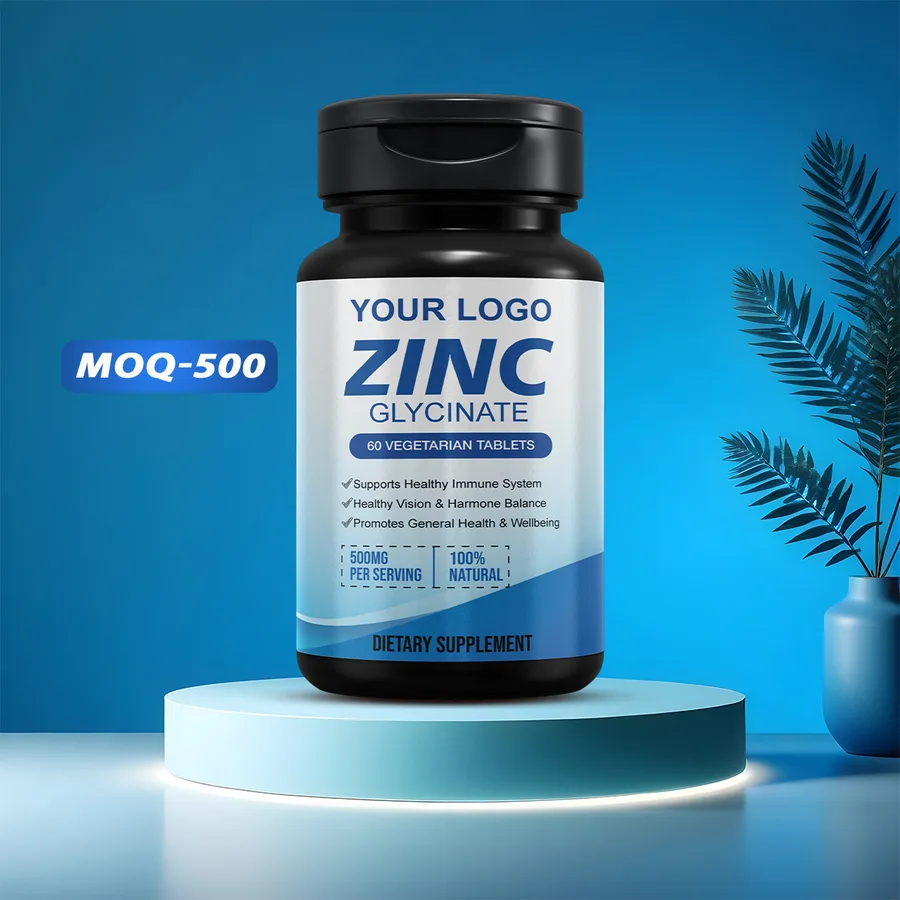
We make a zinc capsule. This article is the three things a buyer needs that the pack does not say. We have written separately on zinc for acne and on the zinc–vitamin C–vitamin D immunity trio; this one is about the mineral itself.
General information, not medical advice. And the copper point at the end is the one that matters most if you have been taking zinc for months.
What zinc actually does
It is a cofactor for hundreds of enzymes and a structural component of a large number of proteins, including the zinc-finger transcription factors that regulate gene expression.
Which is why deficiency produces such a scattered picture: poor wound healing, skin lesions, hair loss, impaired taste and smell, poor immune function, growth failure in children, and impaired male fertility.
And there is no good storage form. Unlike iron or vitamin B12, the body does not hold a large zinc reserve. So intake matters continuously, and deficiency develops relatively quickly.
Where it comes from: meat, shellfish (oysters are extraordinarily high), eggs, dairy, legumes, nuts, seeds, whole grains.
And the Indian problem, which is the same one calcium and iron have: phytate in cereals and legumes binds zinc and reduces absorption substantially. A cereal-and-legume diet can contain adequate zinc on paper and deliver considerably less.
Soaking, sprouting and fermenting reduce phytate, which is why idli, dosa and sprouted chana are nutritionally smarter than they look.
The forms, and this decides whether you absorbed anything
Elemental zinc is what counts. A zinc salt’s label weight is not the zinc content.
Zinc sulphate, about 23% elemental zinc. Cheap, well studied, and the harshest on the stomach. Most of the diarrhoea and ORS research used this form.
Zinc gluconate, about 13% elemental. Well absorbed, better tolerated, the form in most cold lozenges.
Zinc acetate, about 30% elemental. The form used in several of the better cold-duration trials.
Zinc picolinate, about 21%. Some comparative work suggests good absorption. Reasonable choice.
Zinc bisglycinate (chelate), well absorbed, gentle on the stomach, more expensive. A good option for someone who gets nauseous on sulphate.
Zinc citrate, about 31% elemental. Well absorbed, reasonably priced. A sensible default.
Zinc oxide, about 80% elemental zinc, which looks excellent on a label, and it is poorly soluble and poorly absorbed.
And that combination is exactly why it is a problem. It lets a manufacturer print a high elemental figure cheaply. Zinc oxide is genuinely useful as a topical, it is the active in calamine and in many sunscreens and nappy creams, and as an oral supplement it is the weakest of the common forms.
So the practical label rule:
Elemental zinc stated, and the salt named.
And if the salt is oxide, that is the one to avoid.
The dose, and the ceiling
Requirement: roughly 8–11 mg a day for adults, higher in pregnancy and lactation, and effectively higher again on a high-phytate vegetarian diet.
Typical supplement dose: 15–30 mg elemental daily is a reasonable range for correcting a shortfall.
And the upper limit: around 40 mg a day of total elemental zinc from all sources is the commonly cited tolerable upper intake for adults.
Which produces three practical warnings:
Products containing 50 mg of elemental zinc exist and are sold freely. A single one exceeds the upper limit.
Stacking is easy and invisible. A multivitamin plus a zinc capsule plus a hair-and-skin supplement plus lozenges during a cold can add to well over 40 mg without anyone noticing. Total it.
And more is not better. High-dose zinc impairs immune function rather than improving it, which is the opposite of why most people take it.
The copper problem
This is the section we would most want read, because it is the one genuine harm in this article and it is invisible for months.
Zinc and copper compete for absorption in the gut.
Specifically: zinc induces a protein called metallothionein in intestinal cells, which binds copper preferentially and holds it there, so it is excreted rather than absorbed.
So sustained high-dose zinc produces copper deficiency.
What copper deficiency does:
Anaemia, and it does not respond to iron, which is often how it is eventually identified.
Neutropenia, low white cells.
And the serious one: a myelopathy, spinal cord damage producing numbness, tingling, weakness and unsteady walking. This can closely mimic vitamin B12 deficiency, and it may not fully reverse once established.
This is a documented clinical entity. Zinc-induced copper deficiency appears in the medical literature, including from long-term high-dose supplement use and from zinc-containing denture adhesives.
So:
Do not take more than 40 mg of elemental zinc daily without medical supervision.
Do not take high-dose zinc indefinitely. For correcting a shortfall, a defined period makes sense; for years on end at 50 mg, it does not.
And if you are on long-term zinc and develop tingling, numbness, unsteadiness or an anaemia that does not respond to iron, tell your doctor you are taking zinc. They will not think of copper unless you mention it.
Formulations often add a small amount of copper to zinc products for this reason, and that is a sensible practice rather than a marketing flourish.
Where the evidence is good
Diarrhoea in children, the strongest case by far
And it is the least discussed in the supplement market, because there is no margin in it.
Zinc supplementation in childhood diarrhoea reduces duration and severity. The evidence is strong enough that WHO and UNICEF recommend zinc alongside oral rehydration solution, and it is part of Indian national programme guidance.
This is the single best-established use of zinc in the world, and it is a public health intervention rather than a wellness product.
If you only remember one zinc fact: a child with diarrhoea should get ORS and zinc, and that is standard care, not a supplement choice.
The common cold, real, with strict conditions
And the conditions are where almost everyone goes wrong.
Meta-analyses of zinc lozenges have found a reduction in cold duration, often cited in the region of a day or two.
But the trials that worked share specific features:
Lozenges, not swallowed capsules, the proposed mechanism involves zinc ions acting locally in the throat and nasal passages. A swallowed capsule does not do this.
Started within the first 24 hours of symptoms. Later is too late.
High ionic zinc availability, which means the lozenge must release free zinc ions. And this is where it gets specific: lozenges containing citric acid, tartaric acid, sorbitol or mannitol can bind zinc and prevent ion release. Many commercial lozenges are formulated this way, which may explain why some trials found nothing.
Taken every two to three hours while awake, totalling a substantial daily dose for a short period.
So “I took a zinc tablet and my cold was no shorter” is not evidence against zinc. It is evidence that a swallowed tablet is the wrong format.
And the honest caveat: the trials are heterogeneous, the effect size is modest, and zinc does not prevent colds, the preventive evidence is much weaker than the treatment evidence.
And a warning: never use intranasal zinc. Intranasal zinc preparations have been associated with loss of smell, sometimes permanent, and products were withdrawn over it.
Wound healing
Good evidence in zinc-deficient people. Little benefit in the already replete, which is the general pattern for micronutrients.
Male fertility
Zinc is genuinely involved in spermatogenesis and testosterone metabolism, and deficiency impairs fertility.
And correcting a deficiency helps; supplementing a replete man does not raise testosterone, despite that being a major marketing claim. We have written separately on zinc, selenium and L-carnitine in male fertility.
Where the evidence is weaker
Acne, some evidence, mostly at high doses with tolerability problems. Covered separately.
Taste and smell, helps when deficiency is the cause, which is a minority of cases.
COVID and general “immunity”, correcting deficiency supports immune function; supplementing the replete does not boost it. And high doses impair it.
Hair loss, helps if the cause is zinc deficiency, which is uncommon. Most hair loss is not a zinc problem.
Age-related macular degeneration, zinc is a component of the AREDS formulation, at high doses, with copper included for the reason above. That is a specific ophthalmic protocol, not general advice.
Practical points
Take it with food if it upsets your stomach, nausea is the commonest side effect, and zinc sulphate on an empty stomach is the usual culprit. Food reduces absorption somewhat, and a dose you can tolerate beats a dose you stop taking.
Separate from iron and calcium by a couple of hours, they compete.
Separate from tetracycline and fluoroquinolone antibiotics, zinc chelates them.
Separate from bisphosphonates.
And note the diuretic point: thiazide diuretics increase urinary zinc loss, so long-term users may run lower.
Do not take it long-term at high dose. And total your sources.
What we will and will not say
Sayable: the authorised nutrient-function claims for zinc, where present in a significant quantified amount, contribution to normal immune system function, normal DNA synthesis, normal cognitive function, normal fertility and reproduction, maintenance of normal testosterone levels in blood, maintenance of normal skin, hair and nails, normal vision, normal acid-base metabolism, normal macronutrient metabolism, and protection of cells from oxidative stress, in the permitted wording.
And that is a long list, which is why zinc appears in so many products. Note that “maintenance of normal testosterone levels” is authorised, “increases testosterone” is not, and the difference is the entire claim.
Not sayable: treats colds, prevents colds, boosts immunity, treats acne, increases testosterone, treats hair loss, treats COVID.
And three refusals:
We will not use zinc oxide as the zinc source in an oral product, because the high elemental figure flatters a label while the absorption does not support it.
We will not sell a 50 mg zinc product as a daily supplement, because a single capsule exceeds the upper intake limit.
And we will not market zinc as a testosterone booster. The authorised claim is maintenance of normal levels, deficiency correction is where the effect lies, and selling it to men who are not deficient is selling nothing.
And the most honest summary:
Zinc’s best-established use is childhood diarrhoea, where it is standard care and nobody makes money.
Its cold evidence is real and requires a lozenge, started within 24 hours, formulated to release free ions, conditions most products fail.
Zinc oxide prints the best elemental figure and absorbs the worst.
And 40 mg a day is a ceiling, not a target, because sustained high doses cause copper deficiency that can damage the spinal cord permanently.
When to see a doctor
Immediately, for a child with diarrhoea: ORS and zinc are standard care, and see a doctor urgently if there is blood in the stool, persistent vomiting, no urine for many hours, sunken eyes, drowsiness, or diarrhoea lasting more than a few days. Dehydration, not zinc, is what harms children here.
Before taking zinc long-term or above 40 mg, if you:
- have kidney disease
- have anaemia that has not responded to iron, ask about copper
- have tingling, numbness or unsteadiness on long-term zinc, mention the zinc explicitly
- take tetracycline or fluoroquinolone antibiotics, bisphosphonates, iron or calcium, timing matters
- take a thiazide diuretic
- have Wilson’s disease, zinc is used therapeutically here, so doses are set medically
- are pregnant or breastfeeding, requirements differ
- are giving it to a child, doses are weight-based
Never use intranasal zinc, loss of smell has been reported, sometimes permanently.
Get seen rather than supplementing if you have: persistent diarrhoea in an adult; unexplained hair loss; wounds that will not heal; recurrent infections; loss of taste or smell that persists; or unexplained weight loss. Each of those has a differential that zinc deficiency is only one item on.
The short version
- Zinc is well evidenced, with three problems labels do not address
- It is a cofactor for hundreds of enzymes and many structural proteins
- There is no good storage form, so intake matters continuously
- Phytate in cereals and legumes binds zinc and cuts absorption
- Soaking, sprouting and fermenting reduce phytate
- Elemental zinc is what counts, not the salt’s weight
- Sulphate is ~23% and the harshest on the stomach
- Gluconate is ~13% and is the usual lozenge form
- Acetate is ~30% and was used in several good cold trials
- Citrate is ~31%, well absorbed and a sensible default
- Bisglycinate is gentle and more expensive
- Zinc oxide is ~80% elemental and poorly absorbed
- That combination lets a cheap product print a flattering figure
- Zinc oxide is genuinely good topically, calamine, sunscreen, nappy cream
- Adult requirement is roughly 8–11 mg; supplements 15–30 mg is reasonable
- The upper limit is around 40 mg a day from all sources
- 50 mg products exist and a single one exceeds it
- Stacking across multivitamins, hair supplements and lozenges is invisible
- High-dose zinc impairs immune function rather than boosting it
- Zinc and copper compete for absorption
- Zinc induces metallothionein, which traps copper and prevents its uptake
- So sustained high-dose zinc causes copper deficiency
- Copper deficiency causes anaemia that does not respond to iron
- And a myelopathy, spinal cord damage that may not fully reverse
- It mimics B12 deficiency and is documented in the literature
- Tell your doctor you take zinc, or copper will not be considered
- Adding a little copper to a zinc formulation is sensible, not marketing
- Childhood diarrhoea is zinc’s strongest use, WHO and UNICEF recommend it
- And it is the least marketed, because there is no margin in it
- Cold lozenges reduce duration by roughly a day or two in meta-analyses
- It must be a lozenge, a swallowed capsule does not act locally
- It must start within 24 hours of symptoms
- Citric acid, tartaric acid, sorbitol and mannitol can bind zinc and block ion release
- Which may explain why some lozenge trials found nothing
- Zinc does not prevent colds, the preventive evidence is much weaker
- Never use intranasal zinc, loss of smell, sometimes permanent
- Correcting deficiency helps fertility; supplementing a replete man does not raise testosterone
- “Maintenance of normal testosterone” is authorised; “increases testosterone” is not
Our formulations: Zinc Capsule, B-Complex Capsule. Related reading: ज़िंक की कमी के लक्षण, zinc for acne, does it actually help, zinc, vitamin C and vitamin D, the three that hold up, and zinc, selenium and L-carnitine in male fertility.
Get our product list and minimum orders
Leave your email and we will send the formats we make, the minimum order for each and typical lead times. We use it only to reply to you.
Manufacturing in this category?
We make products in this category for other people's brands. Tell us the format and volume and we will send a specification and a per-unit cost.
Request a quotation ↗NutraHerbal manufactures food supplements, Ayurvedic proprietary medicines and cosmetics for business customers. Product information on this site describes composition, format and commercial positioning for brand owners. It is not medical advice, does not claim to diagnose, treat, cure or prevent any disease, and is not a substitute for consulting a qualified practitioner. Final label claims are the brand owner's responsibility and must be approved for the destination market.
How we write and review content: editorial policy.