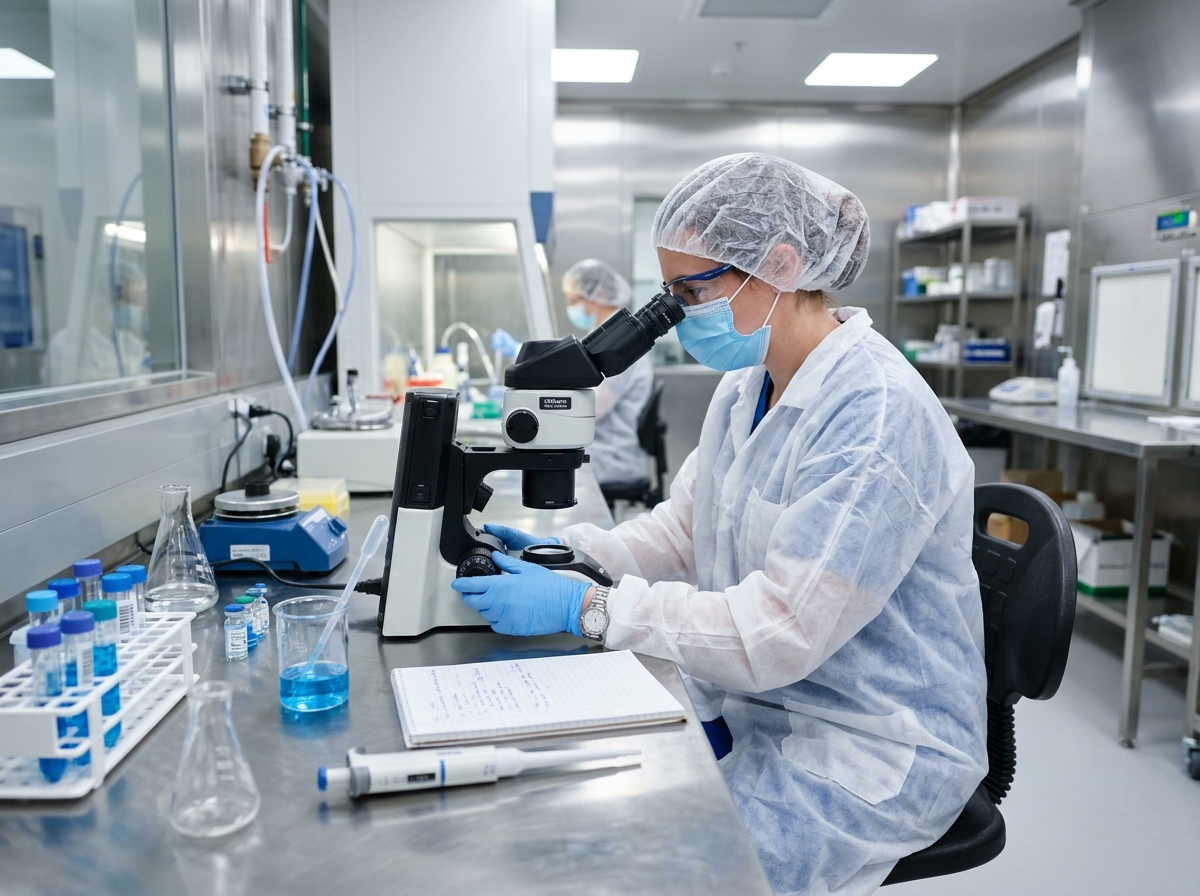
Testing is the part of manufacturing that customers never see and that determines whether a product is what the label says. Herbal raw material is variable by nature and adulterated by design in some categories. We test incoming material against specification, run in-process checks during manufacturing, and release finished goods against a defined panel, and we hand you the reports rather than keeping them internal.
Raw material, where most problems start
Incoming herbal material is checked for identity, foreign matter, moisture, ash values and, where a standardised extract is specified, for the marker constituent at the stated percentage. Material that fails specification is rejected rather than blended down, which is the shortcut that makes cheap extracts cheap.
For ingredients with a known adulteration problem we go further. Shilajit is re-tested in house for heavy metals regardless of what the supplier certificate says, because it is among the most faked ingredients in Indian herbal supply. Spirulina is tested for microcystin, which is a genuine hepatotoxin risk with poorly controlled cultivation. Curcumin is verified against the stated curcuminoid percentage, because plain turmeric sold as 95% extract is widespread.
In-process and finished goods
During manufacturing we check blend uniformity, tablet weight variation, hardness, friability and disintegration on solid dosage forms; pH, brix and fill volume on liquids; and viscosity and fill weight on topicals. These are the checks that determine whether every unit in a batch is actually the same.
Finished goods are released against a panel covering description, identification, assay where applicable, microbiology, and heavy metals. The certificate of analysis that ships with your batch reports these results against the specification, not as a generic pass statement.
What we send out, and why
Some tests need specialist equipment we do not keep in house, pesticide residue screening, aflatoxin and other specialised contaminant work. Those go to external laboratories. Where a buyer or a destination market requires an accredited laboratory specifically, tell us at enquiry stage so the testing is routed accordingly and the cost and turnaround sit in the quotation rather than appearing later. We would rather send a test out than report a result from equipment that is not the right tool for it.
Where a client wants to publish test reports as a marketing asset, which in categories like shilajit and protein is genuinely effective, we will arrange the testing in a form that is fit to publish.