Reviewed for accuracy and claims compliance: Claims compliance review
Most acne responds to over-the-counter treatment used properly and patiently. Some does not, and a smaller group needs prescription treatment early rather than eventually.
The distinction matters because of one thing: scarring is permanent. Everything else about acne resolves. Scars do not, and the window to prevent them is while the acne is active.
This is information, not medical advice. If you are already scarring, see a dermatologist now rather than trying another product first.
See a dermatologist now
These presentations should not be self-treated.
Deep, painful lumps under the skin. Nodules and cysts, firm, tender, sitting below the surface rather than coming to a head. This is nodulocystic acne and it scars. Over-the-counter treatment does not control it.
You are already scarring. Look for indented marks, small pits, ice-pick depressions, or a rolling unevenness in the skin’s surface when seen in side lighting.
This is the single most important line in this article: flat dark marks fade over months; indented or raised scars do not. If you can see texture change rather than just colour change, treatment has already been delayed, and the priority becomes preventing more.
Acne on the chest and back as well as the face, particularly if widespread.
Sudden severe acne that appeared over weeks rather than building gradually.
Acne with other hormonal features, irregular or absent periods, unwanted facial or body hair, hair thinning at the scalp, or significant weight change. This warrants investigation rather than just topical treatment.
Severe acne with fever, joint pain, or feeling generally unwell. Rare, and a reason to be seen promptly.
Acne causing real distress. This is a legitimate medical reason. The psychological impact of acne is well documented, and “it’s only cosmetic” is not a view a good doctor takes.
Pregnant or planning pregnancy, because several acne treatments are contraindicated and the options need to be chosen for you.
See a dermatologist soon
No improvement after about three months of consistent over-the-counter treatment used correctly. Three months is the honest minimum for any acne treatment, judging at three weeks is the most common error, but beyond that, persisting with something that is not working is lost time.
Getting worse despite treatment.
Treatment you cannot tolerate, if retinoids irritate your skin too much to continue, there are alternatives and techniques to make them workable.
Acne confined to an unusual pattern, only the forehead, only around the mouth, or matching where something touches your face. These have specific causes worth identifying.
Acne that has started in your thirties or forties, particularly in women, which often responds better to hormonal treatment than to topicals alone.
Marks and pigmentation that are not fading after several months.
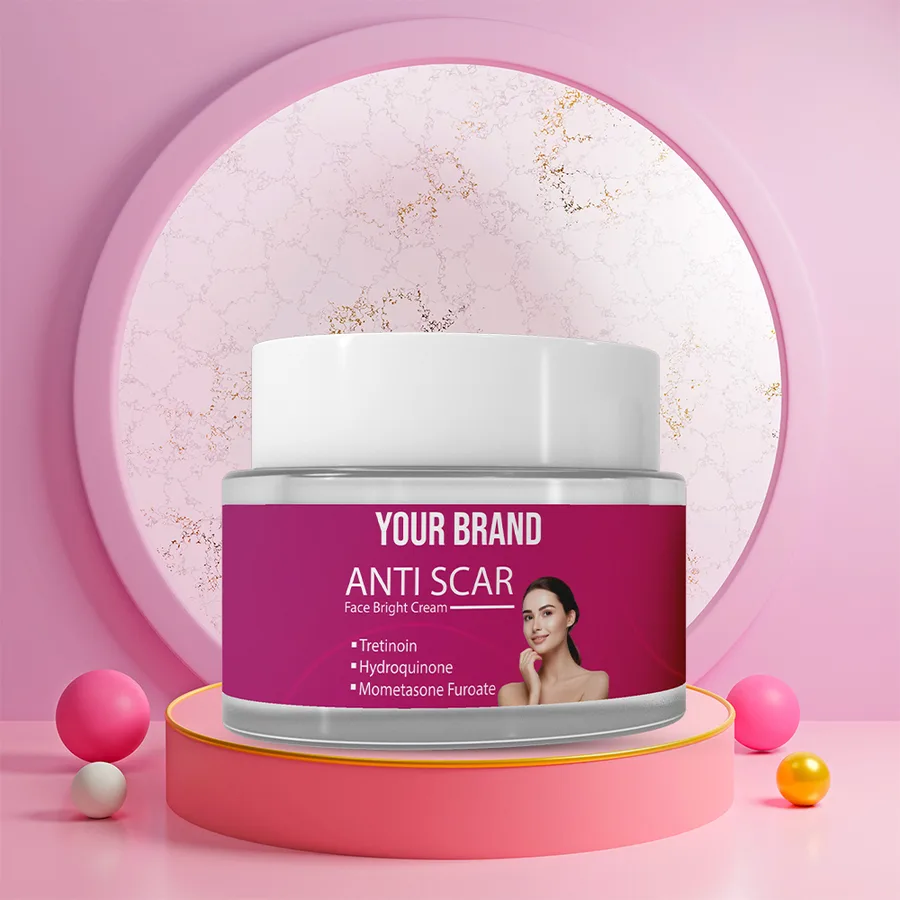
You have been using a cream from a pharmacy or a relative that works dramatically. This deserves its own section.
The steroid cream problem
This is a serious and widespread issue in India and it belongs in any honest article about acne.
Topical steroid creams are widely sold over the counter in India, often in combination products containing a steroid with an antifungal and an antibiotic, and they are frequently used on the face for acne, marks and “fairness”.
They appear to work at first. Redness settles, skin looks clearer, and the person recommends it to others.
What follows with continued use:
- Skin thinning
- Visible blood vessels (telangiectasia)
- Persistent redness
- Steroid-induced acne, often worse than the original
- Perioral dermatitis, a rash around the mouth and nose
- Increased facial hair
- Pigmentation changes
- And a withdrawal reaction on stopping, which is why people keep using it
This is difficult to reverse and sometimes does not fully reverse. Dermatology associations in India have campaigned about it specifically.
The signal: any cream that clears your skin within days is suspect. Acne treatments take weeks. If a cream works that fast, find out what is in it, and if you cannot read the full composition on the label, do not use it on your face.
If you have been using one: do not simply stop, because the rebound can be severe. See a dermatologist to come off it properly.
What a dermatologist can do that you cannot
Worth knowing, because many people delay out of a sense that there is nothing more to be had.
Prescription topicals, stronger retinoids, combination formulations, azelaic acid, and dapsone gel.
Oral antibiotics for a defined course, in moderate inflammatory acne.
Hormonal treatment, combined oral contraceptives and spironolactone for appropriate women. Spironolactone in particular is effective for adult female hormonal acne and is under-used in India.
Isotretinoin, for severe, nodulocystic, scarring or treatment-resistant acne. It is the most effective acne treatment available and it can produce long-term remission.
It requires monitoring, has real side effects including dryness and effects on lipids and liver enzymes, and is absolutely contraindicated in pregnancy, which requires strict contraception and pregnancy testing, managed by the prescriber.
Two things worth saying about it: first, it is often delayed far longer than it should be, and the cost of delay is scars. Second, the anxiety around it is disproportionate to the monitored reality for most patients, but the pregnancy contraindication is absolute and not negotiable.
Procedures, chemical peels, comedone extraction done properly, and intralesional steroid injection for individual large cysts, which settles them quickly.
Investigation, hormonal testing where indicated, which can identify PCOS or other underlying causes.
Scar treatment, though prevention is considerably better than treating what has formed.
The PCOS connection
Worth a specific note, because it is commonly missed.
Acne along the jawline, chin and lower face, particularly if it is deep and persistent in an adult woman, and particularly with:
- Irregular or absent periods
- Unwanted facial or body hair
- Hair thinning at the scalp
- Weight gain, especially around the abdomen
- Difficulty conceiving
- Darkening of skin at the neck or armpits
These together warrant assessment for PCOS. Treating the acne topically without addressing the underlying picture treats a symptom and misses a condition with wider health implications.
What to do before the appointment
Useful, and makes the visit more productive:
Stop any unidentified cream, but if it may be a steroid, ask about stopping rather than stopping abruptly.
Write down what you have tried, for how long, and what happened.
Bring your actual products, or photographs of their ingredient lists.
Note your cycle pattern, if relevant.
List all medications and supplements, including whey protein, B vitamins at high doses, and anything from the gym.
Take photographs in consistent lighting, so progress can be judged against something other than memory.
Do not pick in the week before. Genuinely useful, the doctor can then see the acne rather than the damage.
What a product can and cannot do here
We manufacture in this category, so the boundary matters.
What is sayable: traditional use of neem, manjistha and haridra in Ayurvedic skin formulations; cleansing; support for clearer-looking skin; general skin wellness.
What is not: treats acne, clears acne, removes pimples, treats or removes scars, or lightens skin. These are medicinal claims and we decline artwork that makes them.
And the position we hold: a herbal face wash or supplement is a reasonable product for mild acne and for ongoing care. It is not a treatment for nodulocystic acne, and the person with deep painful cysts who spends a year on herbal products is buying permanent scars at a discount.
So we ask for a referral line on acne artwork, that deep painful lumps or any scarring warrant a dermatologist. In a category whose harm is measured in permanent texture change, that line is the most useful thing on the pack.
The short version
- Scarring is permanent. Everything else about acne resolves. That is why timing matters.
- See a dermatologist now for: deep painful nodules or cysts; any indented scarring; widespread chest and back acne; sudden severe acne; acne with hormonal features; acne causing real distress.
- Flat dark marks fade. Indented scars do not. Texture change means treatment is already overdue.
- Three months is the honest minimum for any acne treatment, but no improvement by then means see someone.
- Jawline acne with irregular periods warrants a PCOS assessment.
- Any cream that clears skin in days is suspect. Topical steroid misuse on the face is widespread in India and hard to reverse. Do not stop it abruptly, get help to come off it.
- Isotretinoin is the most effective treatment for severe or scarring acne, and it is usually delayed too long. It is absolutely contraindicated in pregnancy.
- Spironolactone is effective for adult female hormonal acne and under-used here.
- Bring your products and a timeline to the appointment, and stop picking the week before.
Product detail: Glowo 360. Related: what actually causes acne and a simple routine for acne-prone skin.
Get our product list and minimum orders
Leave your email and we will send the formats we make, the minimum order for each and typical lead times. We use it only to reply to you.
Manufacturing in this category?
We make products in this category for other people's brands. Tell us the format and volume and we will send a specification and a per-unit cost.
Request a quotation ↗NutraHerbal manufactures food supplements, Ayurvedic proprietary medicines and cosmetics for business customers. Product information on this site describes composition, format and commercial positioning for brand owners. It is not medical advice, does not claim to diagnose, treat, cure or prevent any disease, and is not a substitute for consulting a qualified practitioner. Final label claims are the brand owner's responsibility and must be approved for the destination market.
How we write and review content: editorial policy.