Reviewed for accuracy and claims compliance: Claims compliance review
Aloe vera juice has a reputation problem in India, and it is specific: a meaningful share of people who try it once get urgent diarrhoea and never buy it again. They usually conclude that aloe vera does not suit them.
In most cases it is not the aloe. It is a compound called aloin, which sits in a part of the leaf that good manufacturing removes and cheap manufacturing does not.
This article explains the difference, why it matters more than almost any other quality question in this catalogue, and how to tell which product you are holding.
The anatomy, briefly
An aloe leaf has two parts that matter here.
The inner gel, the clear, mucilaginous centre. This is the part used in aloe vera juice, gel and capsules. It contains polysaccharides, some vitamins and minerals, and water.
The rind and the latex layer just inside it, the green outer skin and the bitter yellow sap immediately beneath it. This layer contains anthraquinones, of which aloin is the principal one.
Aloin is a potent stimulant laxative. That is not a side effect; it is what the compound does. Historically, aloe latex was used precisely for that purpose.
What this means for a product
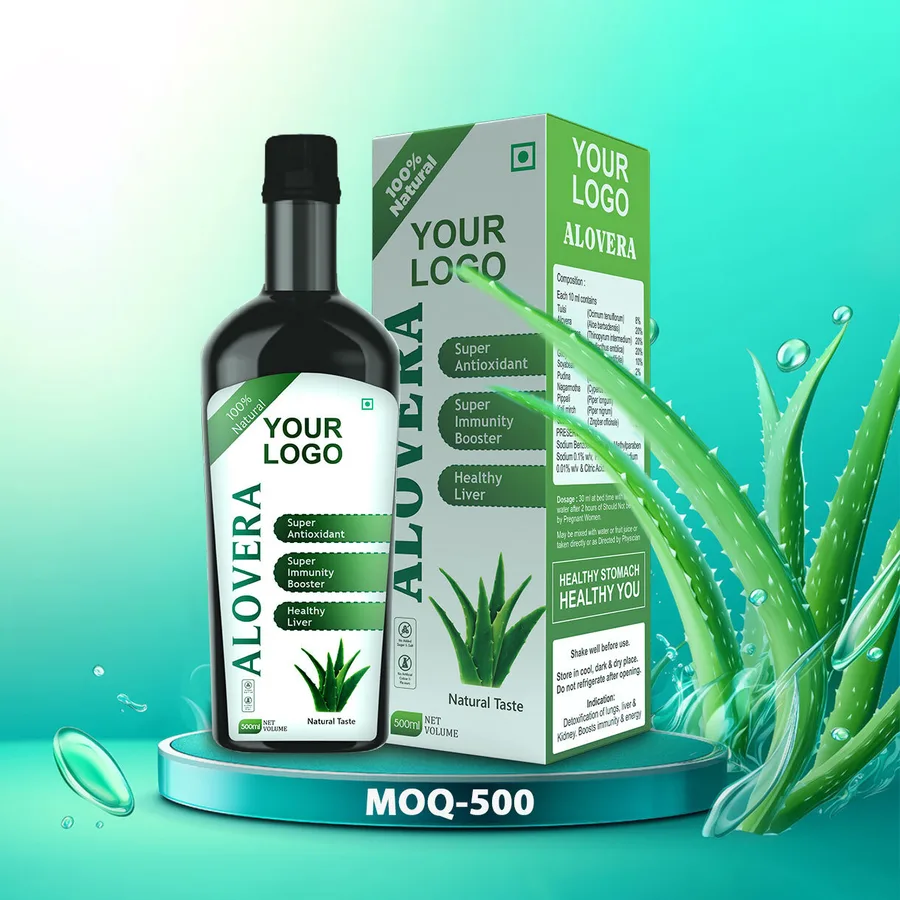
Inner-leaf aloe is made by filleting the leaf, separating the clear gel from the rind, and then usually decolourising it through activated carbon filtration to remove residual anthraquinones. The resulting juice is aloin-reduced and behaves predictably at the labelled dose.
Whole-leaf aloe is made by processing the entire leaf, rind included. It yields more product per leaf, costs less, and, unless carefully decolourised, carries aloin.
The yield difference is the whole commercial story. Filleting discards material. Whole-leaf processing does not. For a manufacturer competing purely on price, whole-leaf is the obvious choice, and the consequences land on the customer rather than on the balance sheet.
How to tell which you have
No single check is conclusive, but these help.
Read the label for the words. “Inner leaf”, “fillet”, “decolourised” or “aloin-free” are what you want. “Whole leaf” is what you are trying to avoid unless it also says decolourised. A label that says only “aloe vera juice” has told you nothing.
Taste and colour. Properly processed inner-leaf juice is mild and pale. Strongly bitter, dark juice suggests rind material, though flavouring can mask this.
Your own response. Blunt but reliable: if a labelled dose produces urgency within hours, you are almost certainly dealing with aloin.
Ask for the specification. A manufacturer or brand that cannot tell you whether the material is inner-leaf and whether it is decolourised is either not in control of its supply chain or would rather not say.
Regulatory context
This is not only a quality preference. Aloe latex and aloin-containing aloe preparations are restricted in several jurisdictions, and aloin content limits exist for aloe products intended as food supplements in various markets.
For export in particular this matters: a whole-leaf product that is fine for a domestic price-led shelf may not be acceptable at destination, and discovering that after a consignment ships is expensive. If export is in your plan, settle the inner-leaf question before the composition is fixed.
What inner-leaf aloe is reasonably used for
With the laxative confound removed, the honest list is shorter than marketing suggests but not empty.
Digestive comfort. The traditional use, and what most Indian customers buy it for. Note the distinction: gentle digestive support, not a laxative effect.
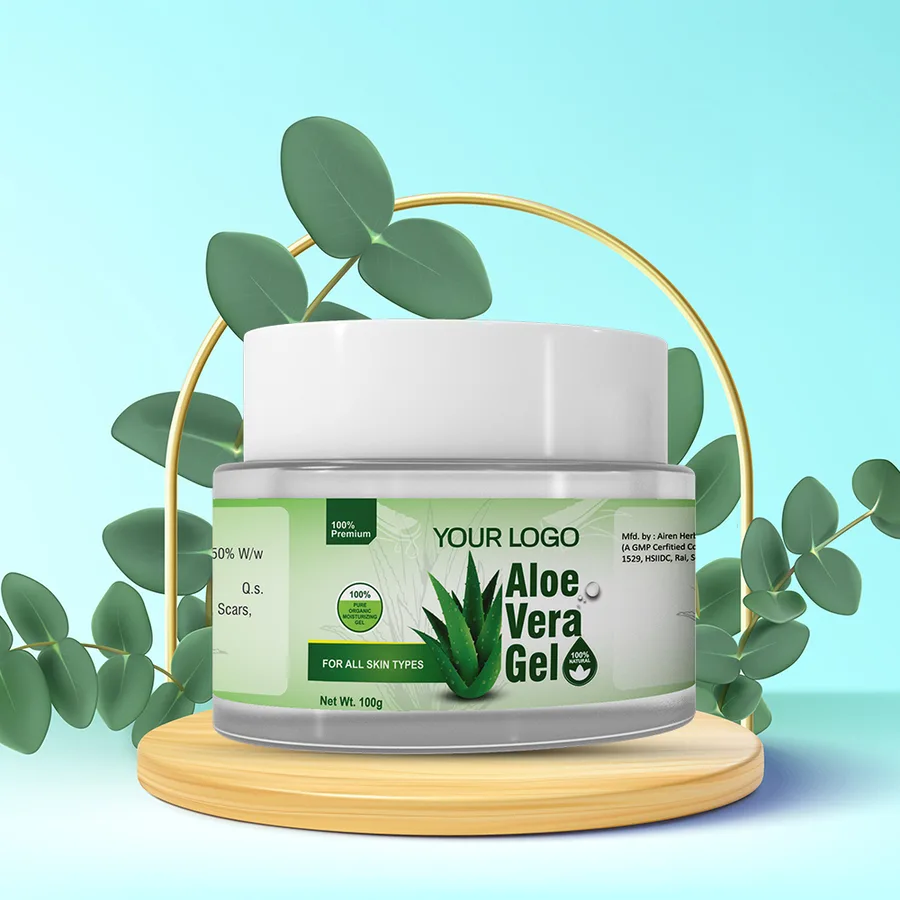
Skin, topically. Aloe gel is genuinely useful as a soothing, cooling topical, after sun exposure, after shaving, for minor irritation and heat rash. This is the least contested use.
Hair, topically. As a conditioning and styling agent.
What it is not: a treatment for any disease, a weight-loss product, or a cure for anything. Those claims are made about aloe constantly and none of them is permissible on a label in India.
The 99% question on aloe gel
A separate but related label issue. You will see aloe gels advertised as 99% and others as 100% aloe vera.
A gel genuinely cannot be 100% aloe and also be shelf-stable, because it needs a preservative system. Aloe gel is water-rich and an excellent growth medium; unpreserved, it is a microbiological problem. So a product claiming 100% is either misleading about its composition or unpreserved, and neither is good.
99% with a declared preservative system and a little vitamin E is an honest formulation. The other common complaint, that cheap aloe gel dries sticky, is usually thickeners substituting for actual aloe content. Texture is a reasonable proxy for quality here, which is unusual and worth using.
If you are manufacturing
Four practical notes.
Specify inner-leaf and decolourised, in writing. This is the single most consequential quality decision in an aloe product. It costs more per litre and it protects your review scores.
Print it on the label. Most competitors do not state it, which makes stating it a genuine differentiator in a crowded commodity category.
Print the dose instruction on the front. Customers who take several times the labelled quantity report problems and leave reviews. A clear instruction materially reduces that.
Consider the 5 L format. Salons and spas buy aloe gel in bulk on a predictable monthly cycle with almost no marketing cost. It is one of the quieter profitable lines in personal care.
Safety notes
- Inner-leaf, aloin-reduced aloe is well tolerated at labelled doses.
- Whole-leaf or aloin-containing preparations act as strong laxatives and are not advised in pregnancy, or for children, or for anyone with inflammatory bowel conditions.
- Prolonged use of stimulant laxatives of any kind is not advisable.
- Topical aloe is well tolerated; patch testing is sensible for anyone with sensitive skin.
- Anyone on regular medication should check with a doctor, as laxative effects can affect absorption.
This article is information, not medical advice.
The short version
If aloe vera juice has ever given you urgent diarrhoea, the likely culprit is aloin from the leaf rind rather than aloe itself. Look for inner-leaf and decolourised on the label; treat an unqualified “aloe vera juice” as unknown. On gels, 99% with a declared preservative is honest and 100% is not. And a non-sticky texture is a real quality signal, not marketing.
For sourcing and processing detail, see the aloe vera ingredient page. For the questions worth asking any supplier, see choosing a contract manufacturer.
Get our product list and minimum orders
Leave your email and we will send the formats we make, the minimum order for each and typical lead times. We use it only to reply to you.
Manufacturing in this category?
We make products in this category for other people's brands. Tell us the format and volume and we will send a specification and a per-unit cost.
Request a quotation ↗NutraHerbal manufactures food supplements, Ayurvedic proprietary medicines and cosmetics for business customers. Product information on this site describes composition, format and commercial positioning for brand owners. It is not medical advice, does not claim to diagnose, treat, cure or prevent any disease, and is not a substitute for consulting a qualified practitioner. Final label claims are the brand owner's responsibility and must be approved for the destination market.
How we write and review content: editorial policy.