Reviewed for accuracy and claims compliance: Claims compliance review
Cleanse products are sold on a claim that does not hold up, and they usually contain two ingredients that do something genuinely worthwhile.
That is an odd situation, and it is worth separating the two. Triphala and psyllium are real, useful, well-tolerated and inexpensive, and what they do is work on your bowel.
We put both in our cleanse product, so this is a description of our own formulation and what we think it should and should not be sold as.
This is information, not medical advice. Difficulty swallowing, suspected intestinal obstruction, or severe abdominal pain, do not take psyllium. Pregnancy and children, ask your doctor. Details below.
Triphala
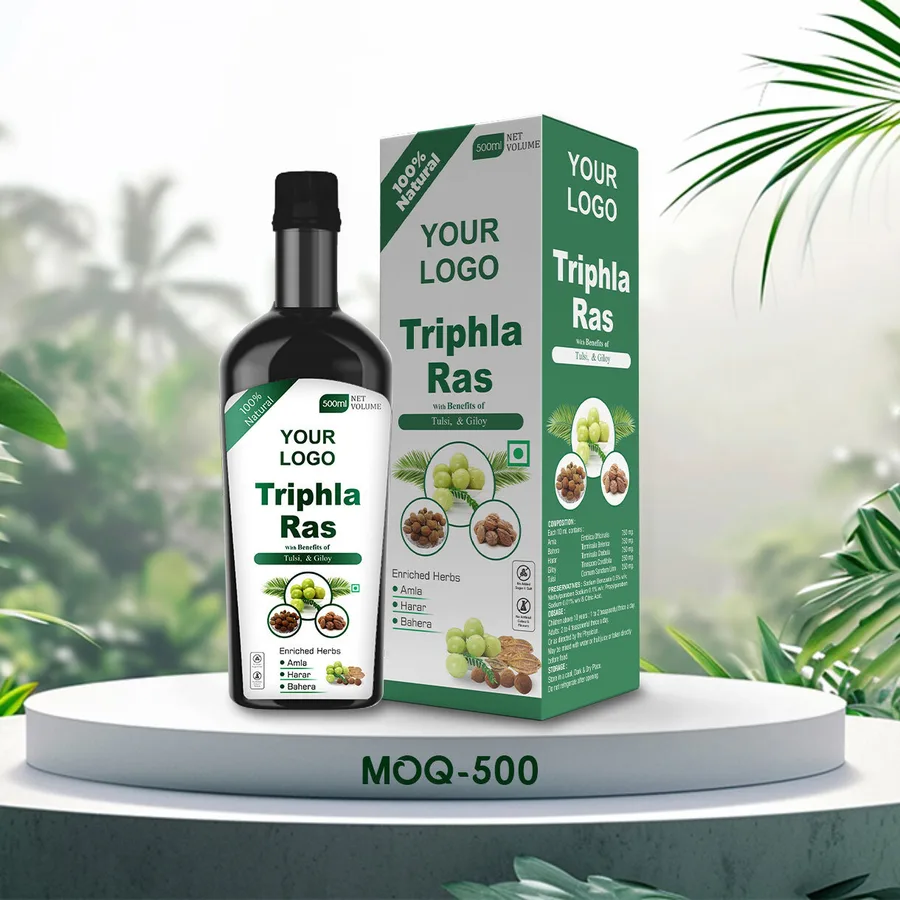
What it is: three fruits in equal parts, haritaki (Terminalia chebula), bibhitaki (Terminalia bellirica) and amalaki / amla (Emblica officinalis).
It is one of the best-known classical Ayurvedic formulations, used as a rasayana and in digestive preparations, and it appears across the classical literature.
What it genuinely does
Bowel regularity. The main effect and the one people notice. Haritaki in particular has mild laxative activity.
And an important distinction: triphala is generally considered mild and is not a stimulant laxative in the way senna is. Users do not typically develop the dependence pattern that senna produces with daily long-term use, which is a meaningful practical advantage and the reason it is the sensible choice if something is going to be taken regularly.
Vitamin C from amla, and antioxidant activity across the three fruits.
Traditional use for eye health, including triphala jal for eye washing, which carries a caution covered below.
What the evidence shows
Honestly: modest.
There is a reasonable body of preclinical work, antioxidant, anti-inflammatory, antimicrobial, and some metabolic findings in animal models.
Human trials are fewer and generally small. There is some work on constipation and bowel function, some on dental plaque and gingivitis (triphala mouthwash has been studied with reasonably encouraging results), and some exploratory work on metabolic parameters.
So: traditional use is substantial, preclinical work is extensive, human clinical evidence is limited. That is the honest position and it is the one that should appear on a label.
How to take it
Form:
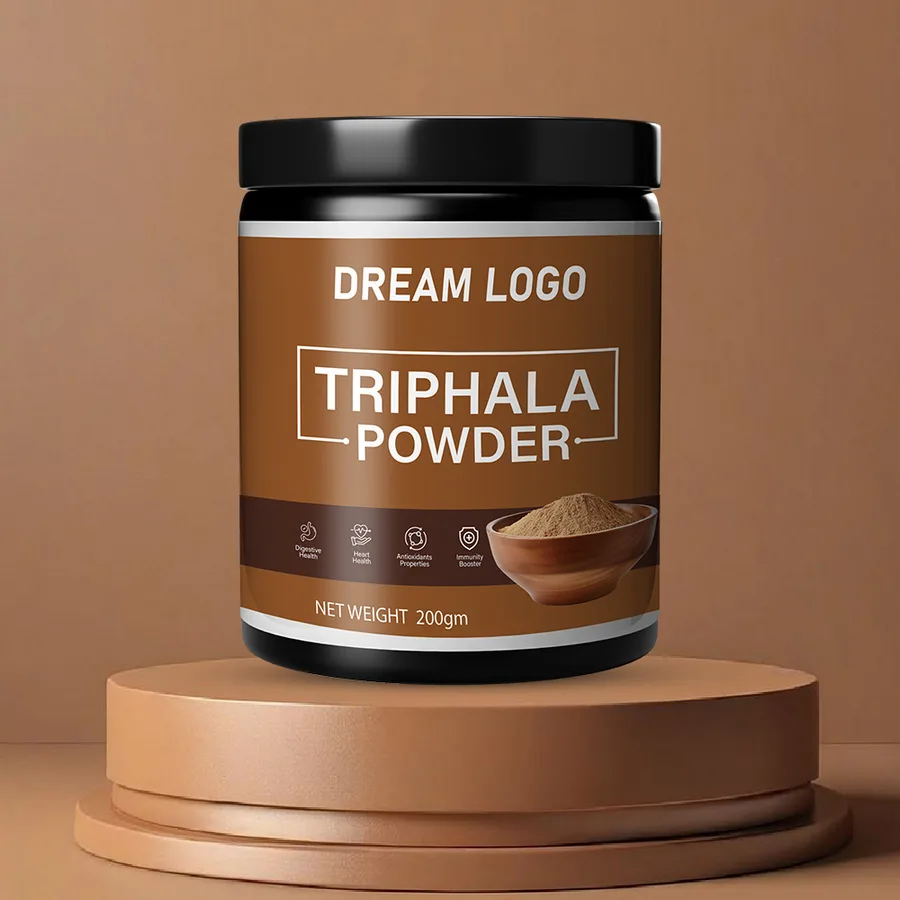
- Churna (powder), traditional, cheapest. Take with warm water, or with honey and ghee as classical texts describe
- Tablet or capsule, convenient, dose fixed
- Juice, check for added sugar
Timing: traditionally at night, with warm water, for the bowel effect next morning. Some classical sources describe different vehicles for different purposes.
Duration: a defined period, typically a few weeks, not indefinitely. We say this on our own label, and the reasoning is in our article on how long to take Ayurvedic preparations.
Who should not take it
- Pregnancy, avoid; haritaki has laxative action
- Breastfeeding, ask your doctor
- Diarrhoea or loose stools already
- Intestinal obstruction, or severe abdominal pain
- IBD, ulcerative colitis or Crohn’s
- Children, paediatrician’s advice
- Before surgery, stop a few days before
- On diabetes medication, possible additive blood sugar lowering; monitor
- On blood thinners, mention it
- Any laxative affects absorption of other medicines, so keep a two-hour gap
And one caution on the eye use: home-prepared triphala water is not sterile. Putting a non-sterile liquid in the eye carries an infection risk, and eye infections can be serious. Oral triphala is one thing; eye washing is another, and that needs an eye doctor’s view.
Psyllium (isabgol)
What it is: the husk of Plantago ovata seeds. Soluble fibre that absorbs water and forms a gel.
And that gel explains everything it does.
What it genuinely does, and this one has better evidence
Psyllium is among the better-evidenced supplements in existence, which is unusual for something this cheap.
Constipation. Holds water in the stool, making it softer and bulkier. It is bulk-forming, not a stimulant, so it does not drive the bowel and does not create dependence.
Diarrhoea. The same gel binds excess water and adds form. One substance for both, which seems contradictory until you understand the mechanism.
LDL cholesterol. It binds bile acids, and the reduction in LDL is one of the more consistent findings in the nutrition literature. Several national authorities permit a cholesterol-related claim for soluble fibre on this basis.
Blood sugar. Slows carbohydrate absorption, reducing post-meal glucose rise.
Satiety. Modest, and real, a gel in the stomach produces fullness.
Haemorrhoids and anal fissure. Softer stool means less straining, which is the actual treatment for both.
And it is not systemically absorbed, it passes through, which is a large part of why its safety profile is good.
How to take it, and this matters more than the dose
Water is non-negotiable. Psyllium absorbs water and swells. Without enough, it draws water from your gut and makes stool harder, not softer.
“Isabgol made my constipation worse” is almost always this.
The method:
- One teaspoon in a full glass of water, drunk immediately before it thickens
- Then another full glass of water. This second glass is the one people skip
- 2.5–3 litres of water across the day
Start small: one teaspoon once daily for three or four days, then increase gradually. Gas and bloating in the first days is normal while gut bacteria adjust, halve the dose, wait a week, then build up rather than stopping.
Timing: night for constipation; 20–30 minutes before a meal for blood sugar; with meals for cholesterol.
Sit up to take it, and stay upright afterwards. Taking it lying down risks it setting in the oesophagus.
Keep a two-hour gap from other medicines, particularly thyroid medication, diabetes medicines, lithium, carbamazepine, digoxin, iron and calcium.
Who should not take it
- Difficulty swallowing (dysphagia), the most important contraindication. It can set in the throat and cause choking
- Suspected intestinal obstruction, or faecal impaction
- Severe abdominal pain, or pain with vomiting
- Oesophageal narrowing or previous oesophageal surgery
- Psyllium allergy, rare but documented, particularly in people who handle it occupationally
- Children, paediatrician’s dose
- Diabetes, monitor, and tell your doctor, as medication doses may need adjusting
- Kidney disease, fluid balance
Pregnancy: generally considered acceptable and commonly used for constipation, with your doctor’s confirmation.
How long before it works
- Constipation: 12 to 72 hours. Not immediate, it is not a stimulant, and this expectation gap makes people abandon it on day two
- Diarrhoea: one to two days
- Cholesterol: 4–8 weeks of consistent use in studies
- Blood sugar: effect at each meal; a meaningful HbA1c change takes weeks
Judge it at two weeks, with the correct water and dose. Not before.
Why they are sold as a detox
The commercial logic is straightforward, and worth naming.
People taking either feel a real effect within days, regularity, less bloating, a lighter feeling. That is a genuine, noticeable, attributable change.
Attributing it to “toxins leaving the body” is a more compelling story than attributing it to softer stool. The felt effect is real; the explanation is borrowed.
And the harm in the borrowing is specific: a customer sold a toxin story is a customer who will be disappointed when their liver enzymes do not change and their fatty liver does not resolve, because neither was ever going to. Whereas a customer told that it helps regularity gets what they were promised.
The second harm is that it crowds out the real thing. Someone worried about their liver who buys a cleanse is not getting an ultrasound.
The honest positioning
What both genuinely offer: bowel regularity, digestive comfort, and in psyllium’s case a defensible cholesterol and blood sugar effect.
What neither does: detoxify the liver, remove toxins, treat fatty liver, cleanse the blood, or cause meaningful weight loss.
Sayable on a label: fibre’s recognised role in normal bowel function; traditional use of triphala and haritaki in Ayurvedic digestive formulations; support for digestive comfort and regularity.
Not sayable: removes toxins, liver detox, treats constipation as a diagnosed condition, lowers cholesterol as a treatment claim, or treats diabetes.
And on cost, since we sell a formulated product: plain isabgol is inexpensive and it works. If all you want is fibre, buy plain husk. A formulated product makes sense for the combination and the convenience, not because it outperforms plain psyllium at what plain psyllium does. We would rather say that than imply otherwise.
See a doctor rather than continuing
- Blood in stool, or black stools
- Unexplained weight loss
- A change in bowel habit over 45–50
- Persistently narrow stools
- Abdominal pain waking you at night
- Alternating constipation and diarrhoea
- Family history of bowel cancer
- No bowel movement at all without a laxative
- Anaemia found on a blood test
The short version
- Both work on the bowel, not the liver. That is the whole correction.
- Triphala, haritaki, bibhitaki, amla. Mild, not a stimulant laxative, so no dependence pattern. Traditional use substantial, human clinical evidence limited.
- Psyllium is among the better-evidenced supplements available, constipation, diarrhoea, LDL cholesterol and post-meal glucose, with a good safety profile because it is not absorbed.
- Water is non-negotiable with psyllium. A glass to mix, a second glass after, and 2.5–3 litres across the day. Without it, stool gets harder.
- Start with one teaspoon and build up. Early gas is normal.
- Sit up to take it, and keep a two-hour gap from other medicines, especially thyroid and diabetes medication.
- Do not take psyllium with difficulty swallowing, suspected obstruction, or severe abdominal pain.
- Triphala: avoid in pregnancy, and take it for a defined period rather than indefinitely.
- Home-made triphala eye wash is not sterile.
- 12–72 hours for constipation; judge at two weeks.
- Plain isabgol is cheap and it works. A formulated product is for convenience, not superiority.
Product detail: Cleanovo 360 and triphala powder. Related: isabgol kaise lein and does your body need a detox?.
Get our product list and minimum orders
Leave your email and we will send the formats we make, the minimum order for each and typical lead times. We use it only to reply to you.
Manufacturing in this category?
We make products in this category for other people's brands. Tell us the format and volume and we will send a specification and a per-unit cost.
Request a quotation ↗NutraHerbal manufactures food supplements, Ayurvedic proprietary medicines and cosmetics for business customers. Product information on this site describes composition, format and commercial positioning for brand owners. It is not medical advice, does not claim to diagnose, treat, cure or prevent any disease, and is not a substitute for consulting a qualified practitioner. Final label claims are the brand owner's responsibility and must be approved for the destination market.
How we write and review content: editorial policy.