Reviewed for accuracy and claims compliance: Claims compliance review
Giloy has the strongest classical reputation of any Indian immunity herb. Its classical name is amrita, the nectar of immortality.
And it is the only ingredient we make where a safety signal emerged recently enough that we have watched the argument happen in real time.
This article is both: the classical standing and the chemistry, and then the liver question, set out properly rather than dismissed or sensationalised, because both of those have been done and neither is useful.
This is information, not medical advice. Do not take giloy if you have liver disease, and stop it if you develop yellowing of the eyes, dark urine or persistent nausea.
The plant, and the classical standing
Tinospora cordifolia, also written Giloya; giloy, guduchi, amrita, heart-leaved moonseed. A climbing shrub, and the stem is the classically used part.
Classical classification:
Rasayana, rejuvenative, and it is among the principal ones. Jvaraghna, fever-relieving, and this is its single most prominent classical indication. Tridoshashamaka, balancing all three doshas, which is an unusual designation and part of why it is so widely used. Deepana and pachana, digestive. And amrita, which is the name that carries the reputation.
It appears in a very large number of classical formulations, Guduchi satva, Amritarishta, Guduchyadi kashayam, Sanshamani vati, and in formulations across fever, joint disease, skin conditions and diabetes.
So the classical standing is genuinely first-rank. That is worth stating plainly before anything else, because what follows is more critical.
The chemistry
A complex profile, and several compound classes are credited:
Alkaloids, berberine, palmatine, magnoflorine, tinosporin. Glycosides, tinocordiside, cordioside, syringin. Diterpenoid lactones, columbin, tinosporide. Steroids, beta-sitosterol, giloinsterol. And polysaccharides, which are the usual focus of the immunomodulation work.
And one of these matters for the safety discussion: berberine, which has its own pharmacology and its own interactions, is present.
What the evidence shows
Honestly graded, because this is a well-studied plant with a thin human literature, a common combination.
Preclinical work is substantial. Reported in laboratory and animal studies: immunomodulation (macrophage activation, cytokine effects), anti-inflammatory activity, antioxidant activity, antipyretic effects, hepatoprotective effects in toxin-induced animal models, blood-glucose-lowering effects, and antimicrobial activity.
That is a wide body of preclinical pharmacology, and it is why giloy attracted so much research attention.
Human evidence is much thinner.
Small trials in allergic rhinitis, with reported symptom improvement. Small work in rheumatoid arthritis and in diabetes, mostly as part of multi-ingredient formulations. And studies on immune parameters, generally laboratory markers rather than clinical outcomes.
And the limitations are the familiar ones: small samples, short duration, frequent absence of adequate blinding, multi-ingredient preparations that prevent attribution, and substantial institutional interest.
There is no trial that would support a claim that giloy prevents or treats any infection.
Honest summary: outstanding classical standing, a substantial preclinical pharmacology, and preliminary human evidence. It is a reasonable traditional ingredient. It is not a demonstrated treatment for anything.
And now the liver question
This needs setting out carefully, because the public discussion was poor in both directions.
What happened
During 2020 and 2021, giloy consumption in India rose enormously, it was widely recommended and widely taken, often daily and for months, frequently as self-prescribed kadha or juice.
And during that period, a number of case reports and case series were published describing liver injury in people taking giloy, including a series from a liver institute in Mumbai that received considerable attention, and subsequent reports from other centres.
The pattern described in several of these cases was an autoimmune-like hepatitis, in some patients with pre-existing but previously stable liver disease, and in some without.
And the response divided. Some clinicians called for caution and labelling. AYUSH and parts of the Ayurvedic profession responded that the cases were confounded, by misidentified plant material, by co-administered medicines, by pre-existing disease, and by inadequate causality assessment.
How to read it fairly
Both of those positions contain something true, and here is our reading.
The arguments for caution:
Multiple independent centres reported similar cases. That is harder to dismiss than a single series.
Some cases followed the expected pattern of drug-induced liver injury, including temporal association and improvement on withdrawal.
And herbal and dietary supplement-induced liver injury is a well-established category generally, it is a recognised and growing proportion of drug-induced liver injury worldwide. Giloy would not be unusual in belonging to it.
The arguments for confounding, which are also real:
Plant misidentification is a genuine and serious possibility, and this is the most important technical point in the whole debate. Tinospora crispa, a related species, has documented hepatotoxicity, and the two are confusable. If some cases involved T. crispa rather than T. cordifolia, the conclusion changes substantially. This is discussed in our stem-versus-leaf article.
Adulteration and heavy metal contamination are documented problems in this market generally.
Many patients were taking multiple preparations simultaneously, which makes attribution difficult.
And causality assessment in several reports was incomplete by formal standards.
Our position, as a manufacturer:
The signal is real enough to act on, and the causality is not settled.
And “not settled” is not a reason to ignore it. The appropriate response to an unresolved safety signal in a food supplement is caution and labelling, not a debate about whether the cases were adequately adjudicated.
So: we print the warning, we restrict duration, and we advise against it in liver disease. That costs us very little and it is the right call under uncertainty.
What this means practically
Do not take giloy if you have pre-existing liver disease, including fatty liver, hepatitis B or C, or any history of drug-induced liver injury, without your doctor’s advice.
Do not take it continuously for months. Use it for a defined short period. Our duration article covers this.
Do not take it alongside other hepatotoxic-potential products, and this is a real issue, because people take several herbal preparations at once.
Know the symptoms, and stop: yellowing of the eyes or skin, dark urine, pale stools, persistent nausea, loss of appetite, pain in the right upper abdomen, unusual tiredness, or itching.
And if you have been taking it for months and have any of those, get liver function tested.
And buy from a manufacturer who can produce botanical identity confirmation, because the misidentification argument cuts both ways: it may exonerate the species, and it makes identity testing essential.
The other safety points
Blood glucose. Giloy has documented glucose-lowering effects. If you take diabetes medication, monitor, and this is a reason to tell your doctor, not necessarily to avoid it.
Autoimmune conditions. This follows from the mechanism: giloy is described as immunostimulant. In rheumatoid arthritis, lupus, Hashimoto’s or multiple sclerosis, and alongside immunosuppressants, ask first. And the autoimmune-like hepatitis pattern in the case reports makes this caution more pointed rather than less.
Pregnancy and lactation, data are absent; avoid.
Surgery, stop before, and mention it.
Constipation has been reported with prolonged use.
And berberine-related interactions, berberine affects drug metabolism and has its own interaction profile, which is a reason for caution on multiple prescription medicines.
And bhasma and rasa preparations containing giloy, we do not make these, and the heavy metal question applies.
Quality, and here it matters more than usual
Because the misidentification argument makes identity the central quality question.
Botanical identity, confirmed, with the species named, Tinospora cordifolia, and specifically not T. crispa. Ask how identity was established, macroscopic, microscopic, HPTLC fingerprint, or DNA barcoding. A supplier who cannot answer is the risk the whole debate is about.
Plant part, stem, which is the classical part. Our comparison article covers why this matters.
Batch-wise heavy metals, lead, mercury, arsenic, cadmium.
Pesticide residues and microbiology, and aflatoxin where relevant.
Marker compound assay, is there a stated figure, or just “giloy extract”?
And for liquids: diethylene and ethylene glycol testing on every solvent batch. Children in India have died from contaminated syrups and this is not optional.
Licensing
Classical giloy formulations, Amritarishta, Guduchi satva, Sanshamani vati, are licensed as Ayurvedic medicines under the Drugs and Cosmetics Act, and may carry the indications their classical texts give.
A giloy juice or capsule sold as a food supplement under FSSAI may make no medicinal claims at all.
And the Drugs and Magic Remedies (Objectionable Advertisements) Act applies regardless, and it bites hard on fever and infection claims, which is exactly where giloy’s classical indications sit.
Taking jvaraghna from a classical text and printing “helps in fever” on a food supplement is the commonest violation in this category.
Claims, what we print and refuse
What is sayable: a traditional-use statement, that giloy has long traditional use in Ayurveda as a rasayana, framed clearly as traditional use, plus authorised nutrient-function claims for any vitamins and minerals in the formulation (vitamin C, D and zinc contributing to the normal function of the immune system).
And the important fact: there is no authorised health claim for giloy.
What is not sayable: boosts immunity, prevents or treats fever, helps in dengue, raises platelets, treats infection, treats diabetes, or protects the liver.
And “helps in dengue” and “raises platelets” deserve naming specifically. These claims circulated widely in India and they are both unsupported and dangerous, because dengue’s serious phase needs monitoring and fluid management, and a herbal product that delays presentation is a real harm. We will not make them under any circumstances.
And “hepatoprotective”, which appears on giloy products, and is an extraordinary thing to print given the case reports. We decline it.
What we require on artwork: a liver-symptom warning, a maximum duration statement, a caution in liver disease and autoimmune conditions, a diabetes-monitoring note, and a statement to tell your doctor.
And the duration statement is the one we would most like to see become standard, because the case reports cluster around prolonged, self-directed use, and a label that says “not for continuous long-term use” addresses the actual risk pattern.
The honest position
Giloy has the best classical credentials of any ingredient in this category, substantial preclinical pharmacology, thin human evidence, and an unresolved liver safety signal.
All four of those are true at once, and any account that leaves one out is doing something.
What we think a buyer should take from it:
It is a reasonable traditional ingredient for short, defined use.
It is not an immunity shield, it does nothing for dengue, and it should not be taken for months.
And if you have liver disease, or you take diabetes or immunosuppressant medication, this is one of the genuinely few herbal ingredients where you should ask first rather than assume.
When to see a doctor
Stop and seek advice urgently:
- Yellowing of the eyes or skin
- Dark urine or pale stools
- Persistent nausea, loss of appetite, or right upper abdominal pain
- Unusual tiredness, or itching without a rash
Before starting:
- Any liver disease, including fatty liver, hepatitis B or C, or past drug-induced liver injury
- Any autoimmune condition, or on immunosuppressants
- Diabetes medication, monitor glucose
- Pregnancy or breastfeeding, avoid
- Before surgery
- On multiple prescription medicines, berberine affects drug metabolism
- For a child
And urgently, for the illness rather than the herb:
- Fever in or after the monsoon, dengue, malaria and typhoid need testing, not giloy
- Dengue warning signs, severe abdominal pain, persistent vomiting, bleeding gums, black stools, extreme lethargy, cold extremities
- Fever beyond three days, or fever that returns
- A cough lasting more than three weeks, tuberculosis testing
The short version
- Giloy’s classical name is amrita, and its classical standing is genuinely first-rank.
- Jvaraghna, fever, is its most prominent classical indication.
- It is designated tridoshashamaka, an unusual classification, which is part of why it is used so widely.
- The stem is the classically used part.
- Preclinical pharmacology is substantial, immunomodulation, anti-inflammatory, antipyretic, glucose-lowering.
- Human evidence is thin, small, short, often multi-ingredient.
- No trial supports preventing or treating any infection.
- Consumption rose enormously in 2020–21, often daily and for months.
- Multiple centres published liver injury case reports and series in that period.
- The described pattern was often autoimmune-like hepatitis.
- Several independent centres reporting similar cases is harder to dismiss than one series.
- Herbal supplement-induced liver injury is an established category generally.
- And the confounding arguments are real too, co-medication, pre-existing disease, incomplete causality assessment.
- The most important technical point: Tinospora crispa is a confusable species with documented hepatotoxicity.
- If some cases involved T. crispa, the conclusion changes, which makes identity testing essential either way.
- Our reading: the signal is real enough to act on, and causality is not settled.
- “Not settled” is not a reason to ignore it, caution and labelling are the right response under uncertainty.
- Avoid in liver disease, and do not take it continuously for months.
- Do not stack it with other hepatotoxic-potential products.
- Know the liver symptoms and stop.
- It lowers blood glucose, monitor on diabetes medication.
- Immunostimulant activity, caution in autoimmune disease, made more pointed by the hepatitis pattern.
- Avoid in pregnancy and lactation.
- Ask how botanical identity was established, and which species.
- There is no authorised health claim for giloy.
- “Helps in dengue” and “raises platelets” are unsupported and dangerous, we will not make them.
- “Hepatoprotective” on a giloy pack is extraordinary given the case reports. We decline it.
- A maximum duration statement addresses the actual risk pattern and should be standard.
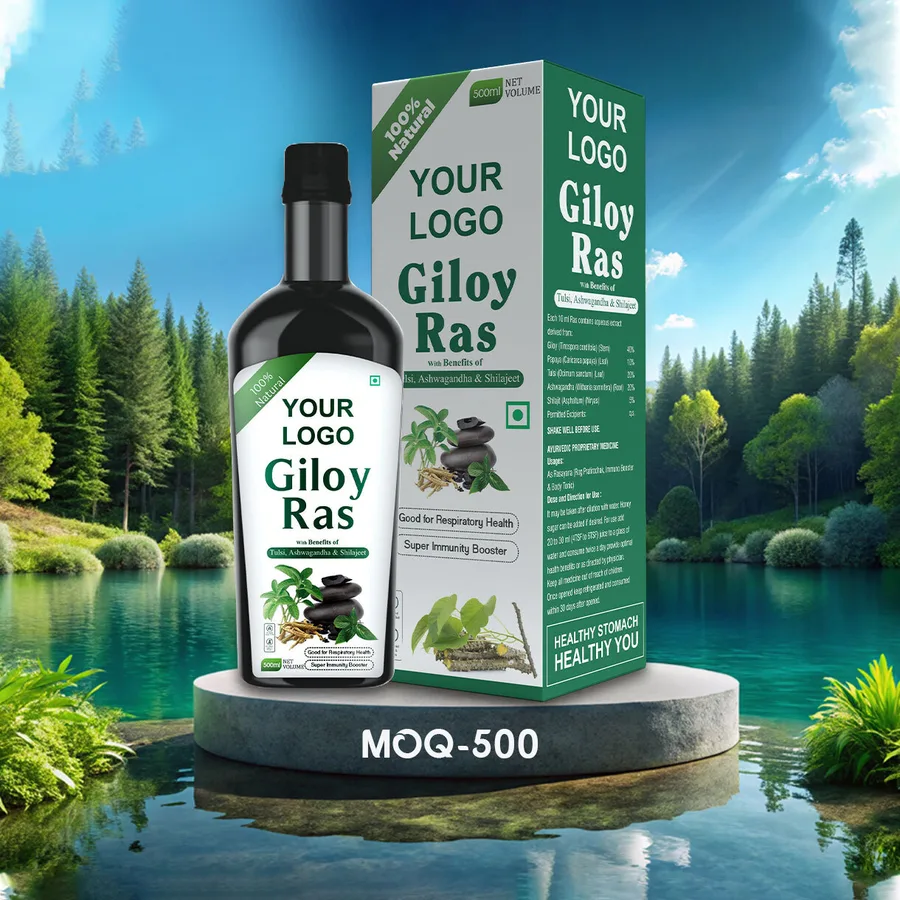
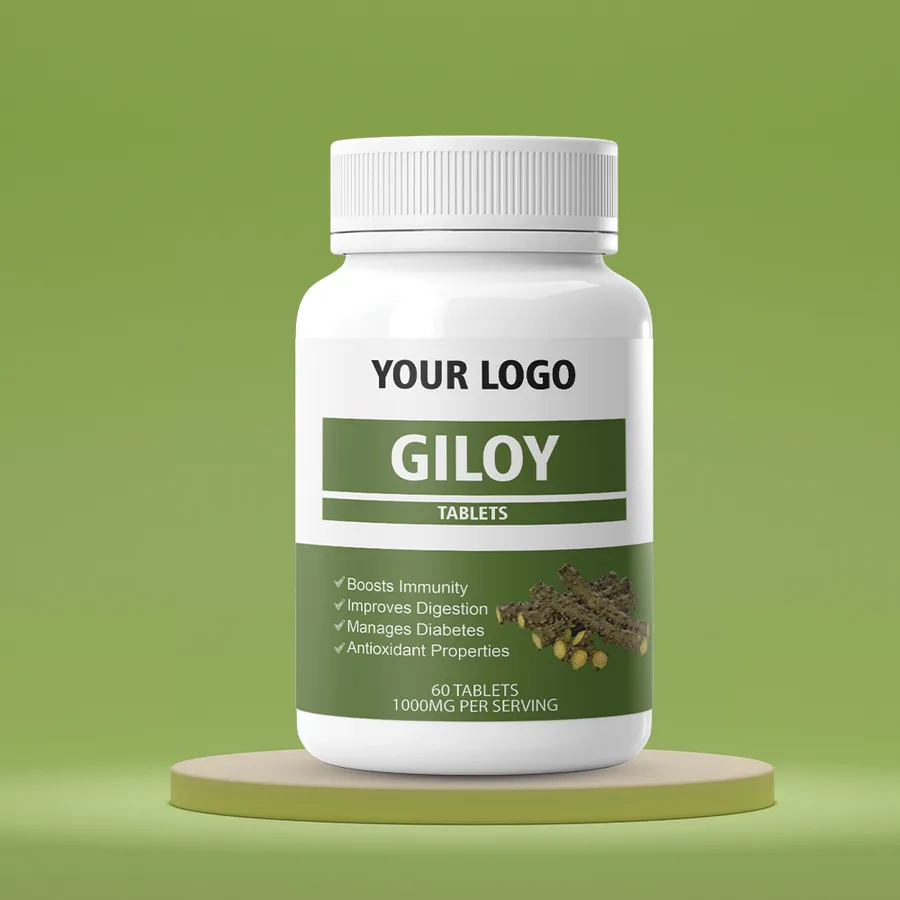
Ingredient detail: giloy. Composition: giloy juice and giloy capsule. Related: giloy kitne din tak le sakte hain, stem vs leaf, which one works, and licences for Ayurvedic manufacturing.
Get our product list and minimum orders
Leave your email and we will send the formats we make, the minimum order for each and typical lead times. We use it only to reply to you.
Manufacturing in this category?
We make products in this category for other people's brands. Tell us the format and volume and we will send a specification and a per-unit cost.
Request a quotation ↗NutraHerbal manufactures food supplements, Ayurvedic proprietary medicines and cosmetics for business customers. Product information on this site describes composition, format and commercial positioning for brand owners. It is not medical advice, does not claim to diagnose, treat, cure or prevent any disease, and is not a substitute for consulting a qualified practitioner. Final label claims are the brand owner's responsibility and must be approved for the destination market.
How we write and review content: editorial policy.