Reviewed for accuracy and claims compliance: Claims compliance review
Most oxalate lists available online are built around Western diets. They are detailed about spinach and rhubarb and silent about the foods an Indian household actually cooks with.
This is a practical list for Indian food, plus the one strategy that matters more than avoidance.
This is information, not medical advice. Dietary advice for stones depends on your stone type, and if you have kidney disease any dietary change should be made with your doctor. Get your stone analysed if you can, it changes the advice substantially.
First: this applies to one stone type
Roughly the majority of kidney stones are calcium oxalate, and that is what oxalate restriction is relevant to.
But not all stones are. Uric acid stones need a different approach, purines rather than oxalate, covered in our purine list. Struvite stones relate to infection. Cystine stones are rare and genetic.
If your stone was retrieved and analysed, you know which you have, and that is genuinely useful information. If it was not, ask your doctor whether it is worth finding out before you restructure your diet around the wrong compound.
The strategy that beats avoidance
Before the lists, the single most useful thing in this article.
Eat calcium-containing food together with oxalate-containing food.
The mechanism is simple and counterintuitive. Calcium in the gut binds oxalate from food, forming a complex that passes out in the stool. That oxalate never reaches the kidneys. If dietary calcium is low, more oxalate is absorbed into the bloodstream instead, reaches the kidneys, and becomes available to form crystals.
This is why cutting dietary calcium to prevent calcium stones is backwards, a point worth repeating because it is the most common and most damaging piece of advice in this area.
In practical Indian terms: have dahi with your palak, paneer in your saag, a glass of milk with a sesame-heavy dish. Timing them together matters more than the absolute amounts.
One caveat: this applies to calcium from food. Calcium supplements are a separate question and should be discussed with your doctor, and if taken, taken with meals rather than between them.
High oxalate, limit portions, always pair with calcium
| Food | Notes |
|---|---|
| Spinach (palak) | By far the highest common Indian food. The main one to moderate. |
| Amaranth leaves (chaulai) | Comparable to spinach |
| Beetroot and beet greens | Both root and leaves |
| Sesame seeds (til) | High, and used in sweets and chutneys |
| Almonds and cashews | A daily handful adds up |
| Peanuts | Moderate-to-high; the quantity people eat matters |
| Sweet potato and yam (shakarkandi, suran) | Notably high |
| Cocoa and chocolate | Including drinking chocolate |
| Colocasia leaves (arbi ke patte) | High |
| Drumstick leaves | Moderate-to-high |
| Tea, in large quantities | Not a problem at normal intake; heavy all-day drinking adds up |
Note the framing: limit portions, not eliminate. Spinach is a nutritious vegetable and removing it permanently from an Indian diet is a real nutritional loss for a modest gain. Eat it a couple of times a week rather than daily, in normal portions, with dahi or paneer.
Moderate, normal portions are fine
- Okra (bhindi)
- Brinjal (baingan)
- Carrot
- Tomato, frequently and wrongly blamed; the oxalate content is modest
- Potato
- Soya and soya products
- Dates and figs
- Wheat bran
- Black pepper, in culinary amounts
Low oxalate, eat freely
- Most dals in normal portions, moong, masoor, toor
- Rice
- Milk, dahi, paneer, buttermilk
- Eggs, chicken, fish
- Cauliflower, cabbage, peas, gourds (lauki, tori), pumpkin
- Onion, garlic, ginger
- Apple, banana, grapes, mango, papaya, melon
- Most oils and ghee
- Coriander, mint, cumin, turmeric in culinary amounts
What gets blamed unfairly
Three recurring myths in Indian stone advice.
“Stop eating tomatoes.” Tomato oxalate is modest and tomatoes are not a major contributor at normal intake. Tomato seeds have nothing to do with stones either, despite the persistence of that belief.
“Stop dal and paneer.” Dal in normal portions is not a significant oxalate source, and paneer is actively helpful because of its calcium. Cutting both damages the protein and calcium content of a vegetarian diet for no benefit.
“Cut calcium.” Addressed above, it increases oxalate absorption rather than reducing stone risk.
What matters more than any of this
Oxalate restriction is one lever and not the biggest one. In rough order of impact:
1. Fluid intake. Dilute urine makes crystal formation harder. The most effective single intervention, and the one most people under-do. Practical marker: urine should stay pale. Requirements rise sharply in Indian summers and for anyone working outdoors.
2. Salt. High sodium intake increases calcium excretion in urine, which raises stone risk. Indian diets tend to be high in salt, pickles, papad, namkeen, packaged and restaurant food. Reducing salt is frequently more useful than reducing spinach, and almost nobody mentions it.
3. Animal protein in excess. Raises urinary calcium and uric acid while lowering citrate, which inhibits stone formation. Normal portions are fine; large daily quantities are not.
4. Citrate intake. Lemon, sweet lime and oranges supply citrate, which inhibits crystal formation. Unsweetened lemon water is a cheap, sensible habit.
5. Then oxalate.
If you only change two things, make them fluid and salt.
A practical day
| Time | Approach |
|---|---|
| Morning | Water on waking; unsweetened lemon water |
| Breakfast | Normal; include dahi or milk |
| Lunch | Roti, dal, vegetable, dahi alongside, especially if the vegetable is palak |
| Afternoon | Water; buttermilk |
| Evening | Fruit; avoid a large handful of almonds daily |
| Dinner | Light, with a calcium source |
| Throughout | Enough water that urine stays pale |
Summer matters in India
Stone presentation rises through the Indian summer, and the reason is straightforward: sweating concentrates urine. The effect is most pronounced in North and West India and among people working outdoors.
April to June deserves deliberate attention to fluid intake. This is also why we flag the seasonal ordering window for this category to brands, demand climbs reliably in those months.
Where supplements sit
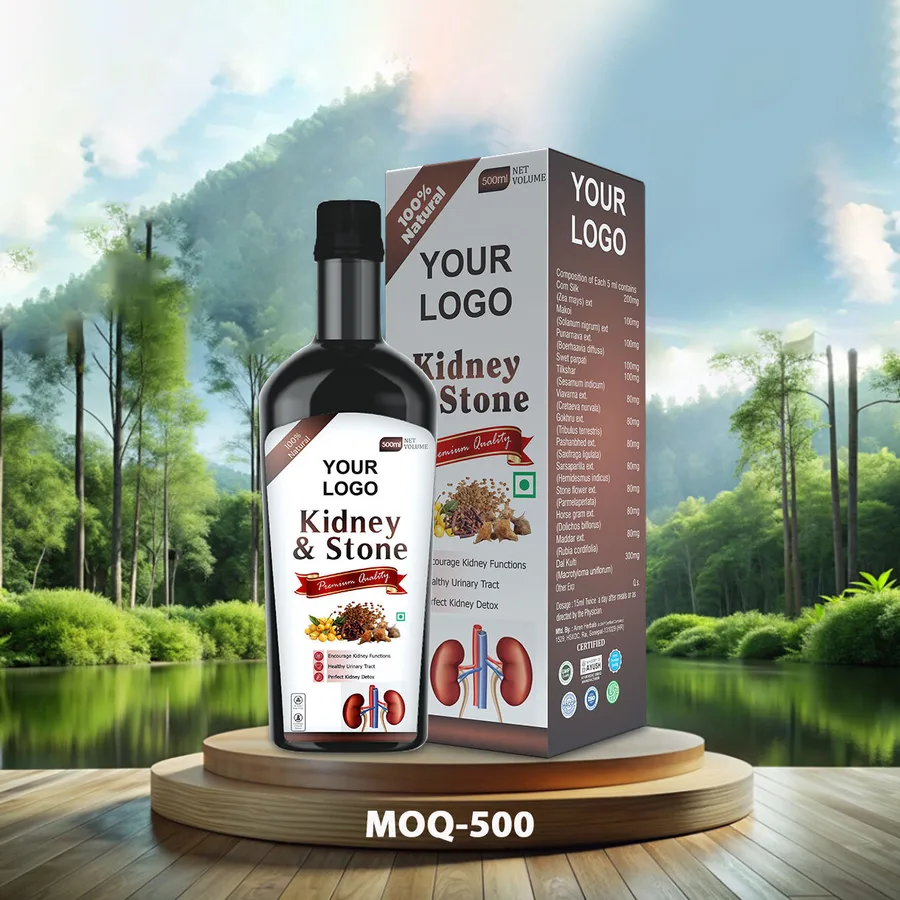
The classical Ayurvedic urinary herbs, pashanbhed, pathar chatta, gokshura, punarnava, varun, have a long traditional record in this area. Pashanbhed’s name literally means stone-breaker, which is why it carries such strong recognition in Indian households.
What can be said: traditional use, urinary comfort, support for the fluid intake that genuinely matters.
What cannot: that any product dissolves stones. That is a medicinal claim, we decline artwork that makes it, and an existing stone of any size is a clinical matter rather than a dietary one.
One more caution: high-dose vitamin C supplementation can increase oxalate excretion, since vitamin C is metabolised partly to oxalate. Anyone with a history of calcium oxalate stones should discuss vitamin C supplements with their doctor.
When to see a doctor
- Severe, wave-like pain in the flank or side
- Blood in urine
- Fever with pain, potentially an emergency
- Vomiting with severe pain
- Markedly reduced urine output
The short version
Oxalate restriction applies to calcium oxalate stones, find out your stone type if you can. Spinach, sesame, beetroot, nuts and sweet potato are the genuinely high items; tomato, dal and paneer are blamed unfairly. Pair oxalate foods with calcium rather than cutting calcium. And fluid and salt matter more than oxalate for most people.
See Kidneo 360 for composition, and the Hindi diet article at पथरी में क्या नहीं खाना चाहिए.
Get our product list and minimum orders
Leave your email and we will send the formats we make, the minimum order for each and typical lead times. We use it only to reply to you.
Manufacturing in this category?
We make products in this category for other people's brands. Tell us the format and volume and we will send a specification and a per-unit cost.
Request a quotation ↗NutraHerbal manufactures food supplements, Ayurvedic proprietary medicines and cosmetics for business customers. Product information on this site describes composition, format and commercial positioning for brand owners. It is not medical advice, does not claim to diagnose, treat, cure or prevent any disease, and is not a substitute for consulting a qualified practitioner. Final label claims are the brand owner's responsibility and must be approved for the destination market.
How we write and review content: editorial policy.