Reviewed for accuracy and claims compliance: Claims compliance review
Urologists in north India see more stones in summer. The pattern is consistent enough that the region sits within what the literature sometimes calls a “stone belt”, and the seasonal rise is one of the better-documented epidemiological features of the condition.
The mechanism is simple, which is good news, it means the prevention is simple too.
This is information, not medical advice. Flank pain with fever or chills is an emergency, an obstructed, infected kidney deteriorates quickly. Go to hospital rather than waiting it out.
The mechanism, in one paragraph
Stones form when the concentration of stone-forming salts in urine exceeds the point at which they stay dissolved. The single biggest determinant of that concentration is how much water the urine contains.
In summer you lose large volumes through sweat. Unless intake rises to match, urine volume falls and urine becomes more concentrated. Concentrated urine supersaturates more easily, crystals form, and crystals aggregate into stones.
That is the whole explanation. Everything below follows from it.
Why north India specifically
Several factors stack up:
Extreme summer temperatures, sustained over months, with 45°C and above common across the plains in May and June.
High sweat losses, particularly in outdoor and physical work.
Low humidity during peak summer in much of the region, which increases evaporative loss, you sweat and it evaporates without you noticing it, so the loss is less obvious than in humid heat and the thirst response lags behind it.
Dietary pattern, relatively high salt, and in some areas high-oxalate staples.
Water availability and habit, intermittent supply in some places, and a widespread habit of drinking tea rather than water through the day.
Vitamin D synthesis is higher with greater sun exposure, which raises calcium absorption somewhat, a smaller contributor, but part of the picture.
A second, often-missed factor: high urine concentration from sweat loss also produces more concentrated uric acid, which contributes to uric acid stones alongside calcium oxalate.
Who is most at risk
Outdoor workers. Construction labourers, farm workers, delivery riders, traffic police, security guards, street vendors. This group carries the highest exposure in the entire condition, and often the least access to water through the working day.
Anyone who has had a stone before. Recurrence risk after a first stone is substantial, and summer is when it shows up.
Hot-kitchen workers, cooks and bakers.
People working in factories, foundries and boiler rooms.
Athletes and heavy gym users training in hot conditions.
Older adults, whose thirst sensation is blunted, they become dehydrated without feeling thirsty, which is a genuine and under-recognised risk.
Children, who may not drink enough unprompted.
People on diuretics for blood pressure.
Anyone with only one kidney, or existing kidney disease, the margin for error is smaller.
The practical target
Generic advice to “drink more water” is too vague to act on. The useful version:
Aim for a urine output of around 2.5 litres a day. In summer and in physical work, reaching that typically requires 3.5 to 4 litres of intake or more, because so much is lost through sweat.
And the best self-check costs nothing: urine colour.
- Pale yellow or nearly clear, adequate
- Dark yellow, insufficient
- Amber or darker, significantly dehydrated
Check it through the day, not just in the morning, the first urine of the day is naturally more concentrated in everyone.
A practical note: some vitamin supplements, particularly B-complex, turn urine bright yellow and make this check unreliable for a few hours.
How to drink it
Distribution matters as much as volume.
Spread it through the day. Two litres at once mostly leaves as a large urine volume; the aim is to keep urine dilute continuously.
Carry a bottle and set a target. For outdoor workers, a measured bottle refilled a known number of times is far more reliable than drinking when thirsty, because thirst lags behind loss in the heat.
A glass before bed. Night urine is the most concentrated of the day, and overnight is when crystallisation has the longest uninterrupted window. This is a small habit with a genuine rationale.
Another before and after any period of heavy sweating.
Do not rely on thirst in extreme heat, particularly if you are older.
What to drink, and what not to
Water, the baseline.
Lemon water, unsweetened. Genuinely useful: citrate binds calcium and inhibits crystal formation, and potassium citrate is a recognised medical therapy in stone prevention. One or two lemons across the day’s water. Without sugar, the sugar undoes the benefit.
Coconut water, reasonable, with natural potassium.
Buttermilk, useful in heat, with fluid, salt and potassium. And dairy is associated with lower stone risk, contrary to common belief.
Nimbu pani, unsweetened, essentially the citrate point above.
What to limit:
Sugary drinks and packaged juices. Fructose is associated with higher stone risk, and these contribute sugar without the citrate benefit. This is the single most common mistake in summer hydration.
Excessive tea. Tea is high in oxalate, and in India many people meet much of their fluid intake through it. Several cups a day in place of water is a meaningful oxalate load. Tea itself is fine; tea instead of water is the problem.
Cola drinks, particularly the phosphoric-acid ones.
Alcohol and beer. Beer increases urine output in the short term but alcohol is a net dehydrator, and beer carries its own uric acid load.
Coffee in excess, moderate coffee is actually associated with lower stone risk, so this is about quantity rather than avoidance.
The salt question
Worth its own section because it is counterintuitive and it matters in summer.
High sodium intake increases calcium excretion in urine, which raises stone risk. So reducing salt reduces stone risk.
But in summer, heavy sweaters lose substantial sodium, and in heavy outdoor work some salt replacement is appropriate to prevent heat illness. These two facts pull in opposite directions.
The practical resolution: reduce dietary salt from pickles, papad, namkeen, chips, packaged food and restaurant meals, which is where most Indian sodium comes from, while allowing appropriate replacement for genuine heavy sweat loss. Buttermilk with a little salt is a sensible vehicle for that.
If you work outdoors in extreme heat, discuss this balance with your doctor rather than guessing, particularly if you have had stones or have blood pressure concerns. ORS is designed for fluid losses from illness; routine daily use as a drink is not what it is for.
Diet points that matter in this season
Do not cut dietary calcium. This remains the most common self-inflicted error in stone prevention. Calcium in food binds oxalate in the gut and carries it out in stool. Reducing it sends more oxalate to the kidney.
Eat oxalate-rich foods alongside dairy, so the binding happens in the gut rather than in your kidney.
Summer fruits are helpful, not harmful. Watermelon, muskmelon, cucumber and coconut water all contribute fluid. Citrus contributes citrate.
Limit the high-oxalate items if you are an oxalate stone former: spinach, amaranth, beetroot, nuts in quantity, and excessive tea.
Moderate animal protein, which raises uric acid and urinary calcium.
Warning signs in the heat
Summer brings two overlapping problems, and distinguishing them matters.
Stone symptoms: sudden severe one-sided flank pain in waves, radiating to the groin, with nausea, restlessness and sometimes blood in urine.
Heat illness: headache, weakness, nausea, muscle cramps, dizziness, and in heat stroke, high body temperature with confusion, which is a medical emergency.
And a sign that applies to both and should never be ignored: passing very little or no urine. In a dehydrated person this can indicate acute kidney injury, and it needs assessment the same day.
Go to hospital immediately for:
- Flank pain with fever or chills, an infected, obstructed kidney. This is the emergency that matters most in this condition
- No urine, or almost none
- Persistent vomiting that prevents keeping fluids down
- Pain not controlled by medication
- Confusion, fainting, or very high body temperature
- Any of the above with only one kidney, existing kidney disease, or pregnancy
A summer plan
| When | What |
|---|---|
| On waking | Two glasses of water |
| Through the morning | Water with lemon, no sugar |
| Mid-morning | Buttermilk, lightly salted |
| Lunch | Dahi with the meal; salad |
| Afternoon | Water on a schedule, not on thirst |
| Evening | Coconut water, or lemon water |
| With dinner | Water; keep salt low |
| Before bed | One glass, night urine is the most concentrated |
| All day | Check urine colour. Pale is the target |
For outdoor workers: a measured bottle, a refill count, and shade breaks. This group needs the plan most and usually has the least opportunity to follow it, so making water physically available at the work site is the single most effective intervention.
What a product can honestly add
We manufacture in this category, so the position is worth stating.
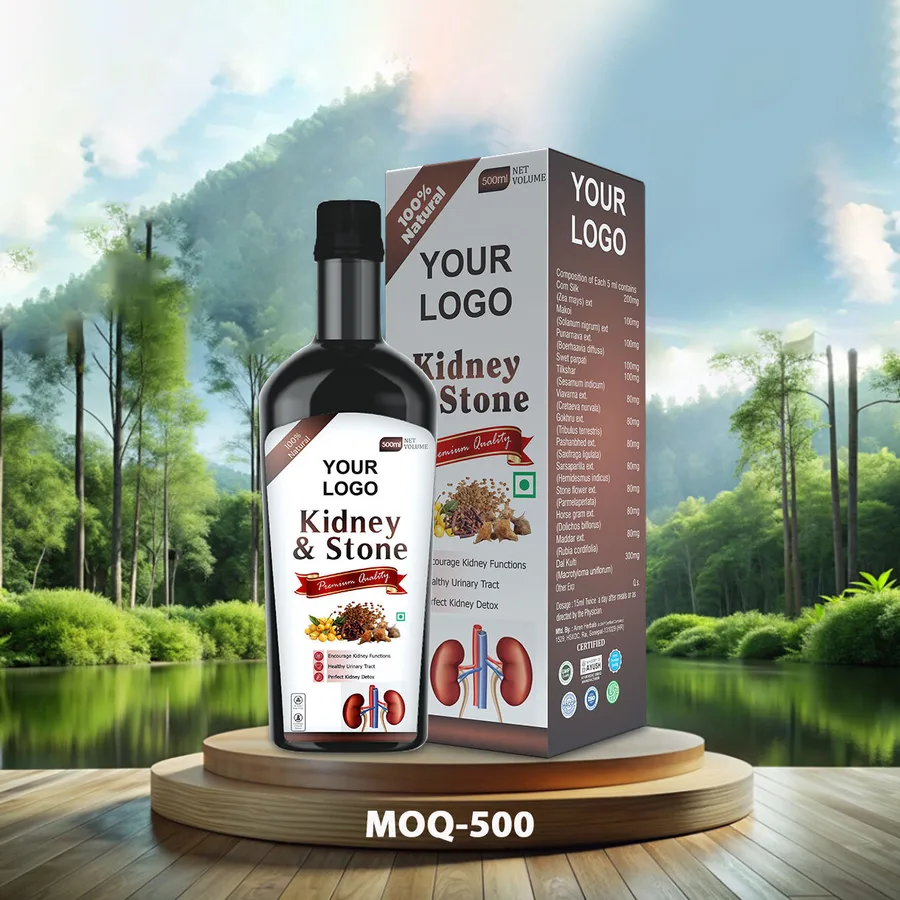
What is sayable: traditional use of punarnava, gokshura and varun in Ayurvedic urinary formulations; support for adequate fluid intake; the role of electrolytes in maintaining normal hydration; general urinary wellness.
What is not: dissolves stones, prevents stone formation, treats or expels stones. These are medicinal claims, and dissolution claims additionally fall foul of the Drugs and Magic Remedies (Objectionable Advertisements) Act.
And the honest hierarchy: the most effective intervention in this entire article is water, in adequate volume, spread through the day, and the second is unsweetened lemon water. Neither requires a product. A supplement can sit alongside those habits; it cannot replace them, and in a season when the failure mode is an obstructed infected kidney, a brand implying otherwise is a liability to its own customer.
If you sell in this category, the useful seasonal product is one that supports hydration honestly, and the useful seasonal message is the urine-colour check.
The short version
- Summer stones happen because urine gets concentrated through sweat loss. That is the whole mechanism.
- Target around 2.5 litres of urine, which in summer heat usually needs 3.5–4 litres of intake.
- Check urine colour. Pale yellow is the goal; dark means not enough.
- Spread intake through the day, and have a glass before bed, night urine is the most concentrated.
- Unsweetened lemon water genuinely helps; citrate inhibits crystal formation.
- Sugary drinks are the common summer mistake. So is meeting fluid needs with tea, which is high in oxalate.
- Do not cut dietary calcium, it raises risk rather than lowering it. Eat oxalate foods with dairy.
- Reduce dietary salt from pickles, namkeen and packaged food, while allowing sensible replacement for heavy sweat loss.
- Do not rely on thirst, especially if you are older or working outdoors.
- Flank pain with fever is an emergency. So is passing almost no urine.
Composition detail: Kidneo 360. Related: पथरी के लक्षण and what no supplement can do about an existing stone.
Get our product list and minimum orders
Leave your email and we will send the formats we make, the minimum order for each and typical lead times. We use it only to reply to you.
Manufacturing in this category?
We make products in this category for other people's brands. Tell us the format and volume and we will send a specification and a per-unit cost.
Request a quotation ↗NutraHerbal manufactures food supplements, Ayurvedic proprietary medicines and cosmetics for business customers. Product information on this site describes composition, format and commercial positioning for brand owners. It is not medical advice, does not claim to diagnose, treat, cure or prevent any disease, and is not a substitute for consulting a qualified practitioner. Final label claims are the brand owner's responsibility and must be approved for the destination market.
How we write and review content: editorial policy.