Reviewed for accuracy and claims compliance: Claims and compliance review
Neem is in almost every Indian acne product. Face washes, soaps, creams, capsules, “blood purifier” syrups.
And the laboratory basis for that is genuine: neem extracts show antibacterial activity, including against the bacterium involved in acne.
The problem is what that result is then asked to prove.
Because acne is not primarily a bacterial infection. It is a condition with four mechanisms, and bacteria are one of them, arguably the third in importance. So an ingredient that addresses only the bacterial part cannot resolve the condition, however good its antibacterial data looks in a dish.
We sell neem products. This article sets out what neem can honestly contribute to acne, and why it is a supporting ingredient rather than a treatment.
General information, not medical advice. And one warning that outranks everything in this article: neem oil is toxic to infants and young children, with documented poisoning cases. Never give it by mouth to a child. We have written about that separately.
What acne actually is
Four things happen, in sequence, and you need all four to get a spot:
1. Excess sebum. Driven by androgens, which is why acne starts at puberty, why it flares premenstrually, and why conditions like PCOS make it worse. Hormones are the upstream cause.
2. Abnormal keratinisation. The lining of the follicle sheds cells that stick together instead of clearing, blocking the pore. This is the comedone, the blackhead or whitehead, and it is a plugging problem, not an infection.
3. Cutibacterium acnes proliferating in the blocked, sebum-filled follicle. This bacterium lives on everyone’s skin normally. It is not an invader; it is an ordinary resident that overgrows in an environment that has changed.
4. Inflammation. The immune response to all of the above, and this is what produces the redness, the pain, and ultimately the scarring.
Now read those four again against what neem offers.
Neem’s documented activity is against step 3.
It does not reduce sebum production. It does not normalise keratinisation. It does not address the hormonal driver.
And this is why the treatments that actually work for acne target steps 1 and 2:
Retinoids, the single most important class, normalise keratinisation. They unblock the pore and prevent the comedone forming. This is why dermatologists reach for them first, and why nothing in the herbal cabinet substitutes.
Benzoyl peroxide, antibacterial and mildly comedolytic.
Hormonal treatment, combined oral contraceptives, spironolactone, addresses step 1.
Isotretinoin, for severe or scarring acne, and it affects all four mechanisms.
And antibiotics, which target step 3, like neem, and which dermatologists increasingly use sparingly and in combination, specifically because targeting the bacterium alone does not hold.
That last point is worth sitting with. If prescription antibiotics, far more potent antibacterials than any neem extract, are insufficient alone, then an antibacterial herb will not be sufficient either. The limitation is not neem’s potency. It is the model of the disease.
What the neem evidence actually consists of
In vitro antibacterial activity, good
Neem leaf and seed extracts show inhibitory activity against a range of bacteria, including C. acnes, in laboratory assays.
Nimbidin, nimbin, nimbolide and azadirachtin are among the compounds implicated.
This work is real and reasonably extensive.
And here is the standard caveat that matters enormously in skin: an extract that inhibits bacteria in a dish must reach the bacteria at an effective concentration to do the same in a person. C. acnes lives deep in the sebaceous follicle, in an oily, anaerobic environment. Getting a water-based plant extract from the skin surface down into that environment at a bactericidal concentration is the actual pharmaceutical problem, and it is not solved by the compound being active in a test tube.
Anti-inflammatory activity, plausible
Laboratory and animal anti-inflammatory work exists, which is relevant to step 4, the redness and the swelling.
This is probably neem’s second real contribution, and it is the part that corresponds to what people report: not fewer spots, but less angry ones.
Human trials for acne specifically, thin
And this is the honest gap.
There is no substantial body of randomised controlled trials of neem for acne, topical or oral. There are small studies, formulation studies and traditional-use reports.
And for oral neem for acne, there is essentially nothing of quality. Which matters, because the “blood purifier” framing sells oral neem for skin, and that framing is the one with the least support.
And the traditional position, which is fair to state
Neem’s classical designation is kushthaghna, acting on skin disorders, and it is one of the most consistent classical skin materials. Its traditional use for skin is long, broad and genuine.
And classical kushtha covers a wide range of skin conditions, not acne specifically. Reading “acne treatment” into it is a modern narrowing, and the texts do not support that precision.
So what can neem honestly do
Three things, and they are modest:
Reduce surface bacterial load, topically. Real, useful in a cleanser, not curative.
Reduce inflammation, somewhat. Which can make existing lesions less red and less painful.
And act as a tolerable, inexpensive adjunct in a routine whose main work is being done by something else.
What it cannot do:
Prevent comedones forming, that needs a retinoid. Reduce sebum production. Address the hormonal driver. Prevent scarring, which requires controlling inflammation properly and early. Clear moderate or severe acne. And “purify the blood”, which is not a mechanism.
The oral-versus-topical question
Most neem acne products in India are oral, capsules, churna, “blood purifier” syrups.
And the evidence is better for topical than oral.
Which makes the market inverted: the format with the weaker rationale is the one most commonly sold for this purpose, because the “blood purifier” idea is culturally powerful.
We have written separately about what raktashodhak actually means, in short, it describes a classical clinical category, not a filtration process, and your blood is not dirty.
Our position: if you are using neem for acne, topical makes more sense than oral. And we sell the capsules, so that sentence costs us something.
What actually helps, honestly ranked
This is the part worth keeping. Neem appears in it, well down the list.
1. A retinoid. Adapalene is available over the counter in many places and is the single highest-value intervention for most acne. Start low frequency, expect initial irritation and purging for several weeks, use sunscreen, and do not give up at week three. Not in pregnancy.
2. Benzoyl peroxide, for inflammatory lesions. Bleaches fabric; start at low strength.
3. A gentle cleanser, twice daily. Not harsh scrubbing, over-washing and scrubbing make acne worse, which is counterintuitive and well established.
4. Non-comedogenic moisturiser and sunscreen. Especially necessary because retinoids dry and photosensitise the skin.
5. Stop picking. This is the single biggest determinant of scarring, it is free, and it is the hardest.
6. See a doctor if there are nodules, cysts, or any scarring at all, because scar prevention has a window, and once scarring has happened, treating it is far harder than preventing it.
7. Hormonal assessment where indicated, irregular periods, excess hair growth, sudden adult-onset acne in women.
8. And then, if you like: neem, as a cleanser or a supporting topical. Here. Eighth.
And the things that matter less than people think: chocolate (no real evidence), oily food (no), “heat in the body” (not a mechanism), face packs (mostly harmless, occasionally irritating). Dairy and high-glycaemic diets have some evidence, and it is modest.
Safety, and this is not a mild herb
Topical neem, generally reasonable. Patch test, because contact dermatitis happens, and neem oil is a common irritant on facial skin. And undiluted neem oil on the face is a bad idea, it is a concentrated seed oil, not a cosmetic.
Oral neem has real cautions:
Pregnancy, avoid. Animal studies document antifertility and abortifacient effects. And this matters specifically for acne, because acne is common in women of reproductive age, which is exactly the group being sold oral neem. We have given this its own article.
Trying to conceive, avoid, both partners. Antifertility effects have been studied in both.
Diabetes medication, neem lowers blood glucose; additive effect; monitor.
Liver, concerns raised at high oral doses and long duration. Stop for jaundice, dark urine or persistent nausea.
Autoimmune disease and immunosuppressants, neem has immunostimulant activity reported, so ask in rheumatoid arthritis, lupus, psoriasis or after transplant.
Children, neem oil must never be given by mouth; documented poisoning with vomiting, drowsiness, seizures, encephalopathy and deaths. And oral leaf supplements for children only via a paediatrician.
What we will and will not say
Sayable: the botanical name (Azadirachta indica) and part used; a traditional-use statement framed as traditional use, including the classical kushthaghna designation described as a classical designation; the quantity; and authorised claims for any vitamins or minerals present.
And the governing fact: there is no authorised health claim for neem.
Not sayable: treats acne, clears pimples, purifies the blood, detoxifies, treats eczema or psoriasis, treats diabetes, boosts immunity.
And two specific refusals:
We will not sell oral neem as a “blood purifier” for skin. It is the strongest-selling framing in this category and the weakest-supported.
And we will not use before-and-after photographs for acne. Acne fluctuates on its own, premenstrually, seasonally, with stress, so any two photographs taken six weeks apart can show improvement that the product had nothing to do with. The format is persuasive precisely because it is uninformative.
And the most honest summary:
Neem has real antibacterial activity, and acne has four mechanisms of which bacteria are one.
Even prescription antibiotics are not enough alone, which tells you the ceiling for any antibacterial agent.
So neem can reduce surface bacteria and calm inflammation a little, topically, as an adjunct.
And the thing that actually prevents the spot forming is a retinoid, which is cheap, available, and not a herb.
When to see a doctor
Go sooner rather than later if you have:
- nodules or cysts, deep, painful lumps
- any scarring at all, or pitting, scar prevention has a window and this is the reason not to wait
- acne that has not responded to several months of over-the-counter treatment
- acne causing significant distress, this is a legitimate reason on its own
- sudden severe acne in an adult, especially a woman, with irregular periods or excess hair growth, this needs hormonal assessment
- acne with marked hair thinning or deepening voice, needs assessment
- acne-like rash with fever or feeling unwell, this may not be acne
Before taking oral neem, if you:
- are pregnant, no
- are breastfeeding, no
- are trying to conceive, no, either partner
- take diabetes medication, monitoring
- have liver or kidney disease
- have an autoimmune condition or take immunosuppressants
- want to give it to a child, paediatrician only, and never neem oil by mouth
Stop and get checked: yellowing of the eyes, dark urine, persistent nausea; signs of low blood sugar; rash or swelling. For a spreading, weeping or crusted rash, or a painful swelling with fever, get seen, that is infection, not acne.
The short version
- Neem’s antibacterial activity in a dish is real
- Acne has four mechanisms and bacteria are one of them
- Excess sebum, driven by androgens, is upstream
- Abnormal keratinisation blocks the pore, a plugging problem, not an infection
- C. acnes is a normal skin resident that overgrows in a changed environment
- Inflammation is what causes redness, pain and scarring
- Neem addresses step 3 only
- It does not reduce sebum, fix keratinisation, or touch hormones
- Retinoids normalise keratinisation, the highest-value intervention
- Prescription antibiotics target the same step as neem and are insufficient alone
- So the ceiling is set by the disease model, not by neem’s potency
- Nimbidin, nimbin, nimbolide and azadirachtin are the implicated compounds
- C. acnes lives deep in an oily anaerobic follicle
- Reaching it at an effective concentration is the real pharmaceutical problem
- Anti-inflammatory activity is probably neem’s second real contribution
- There is no substantial RCT body for neem in acne, topical or oral
- For oral neem for acne there is essentially nothing of quality
- Classical kushtha covers many skin conditions, not acne specifically
- Neem can reduce surface bacteria and calm inflammation, topically
- It cannot prevent comedones, reduce sebum or prevent scarring
- The evidence favours topical over oral, yet oral is what sells
- “Blood purifier” is culturally powerful and the least supported framing
- Start a retinoid at low frequency and do not quit at week three
- Over-washing and scrubbing make acne worse
- Moisturiser and sunscreen are necessary alongside retinoids
- Not picking is the single biggest determinant of scarring, and it is free
- Neem belongs eighth on the list, as a cleanser or supporting topical
- Patch test; undiluted neem oil on the face is a bad idea
- Avoid oral neem in pregnancy, antifertility and abortifacient effects in animals
- Which matters because acne is common in women of reproductive age
- Avoid when trying to conceive, both partners
- Neem lowers blood glucose, monitor on diabetes medication
- Never give neem oil by mouth to a child, documented poisoning and deaths
- We will not use before-and-after photographs, because acne fluctuates on its own
- There is no authorised health claim for neem
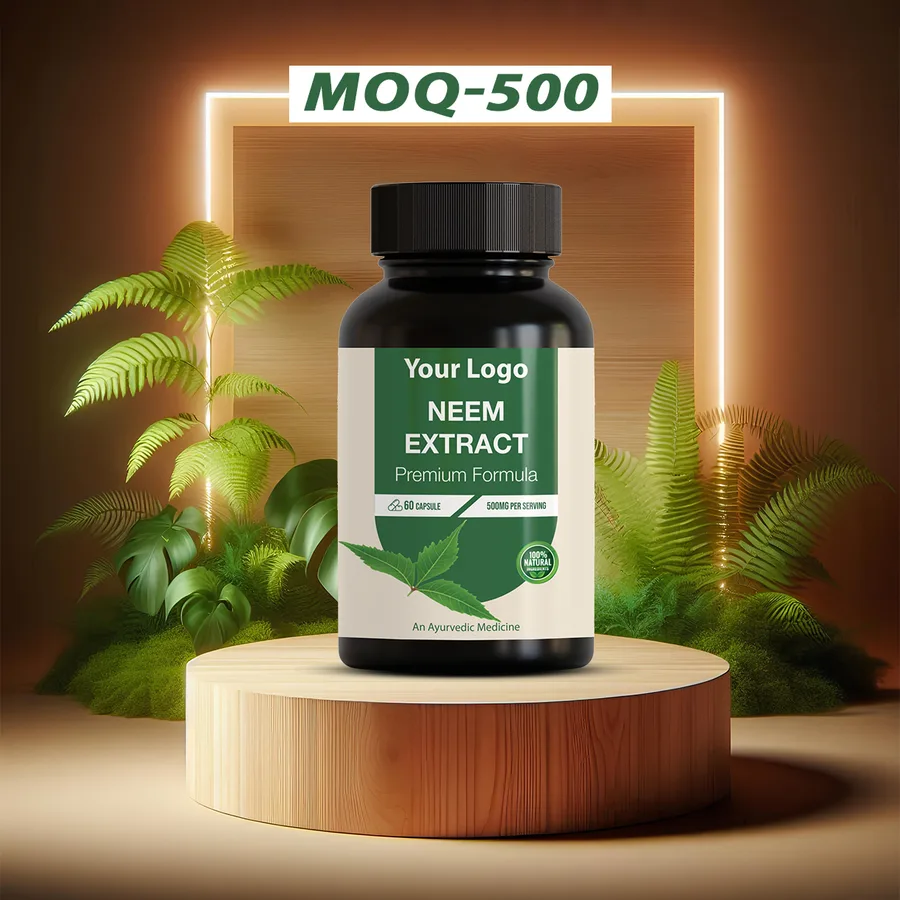
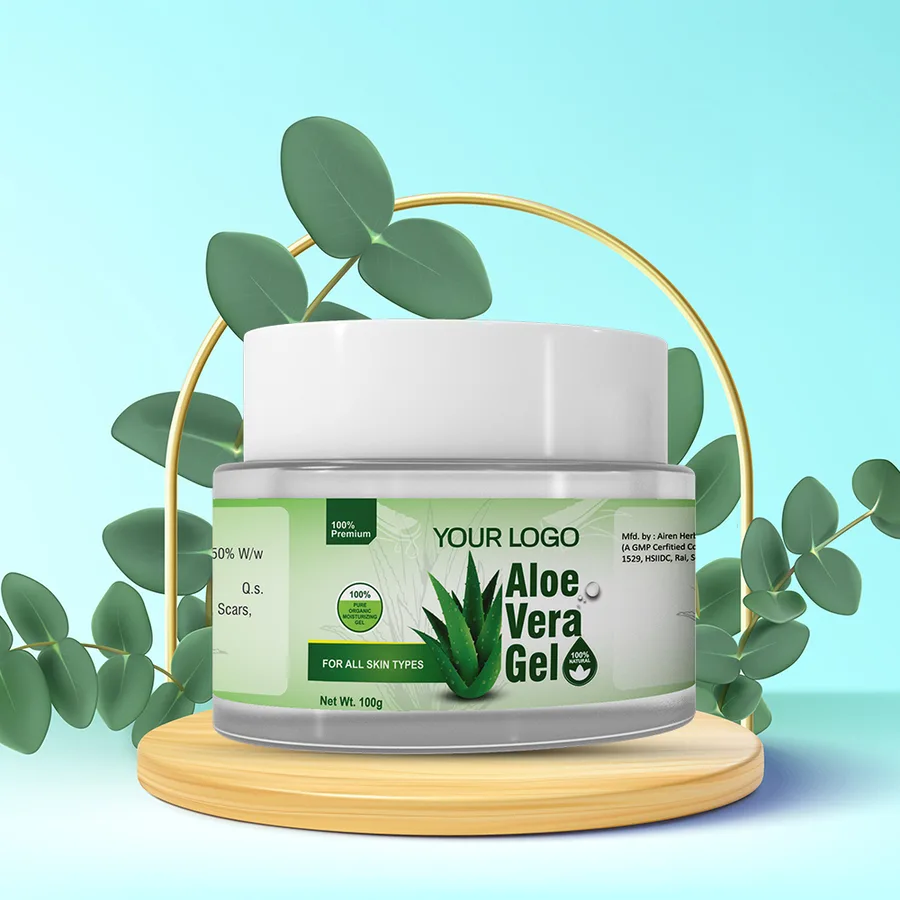
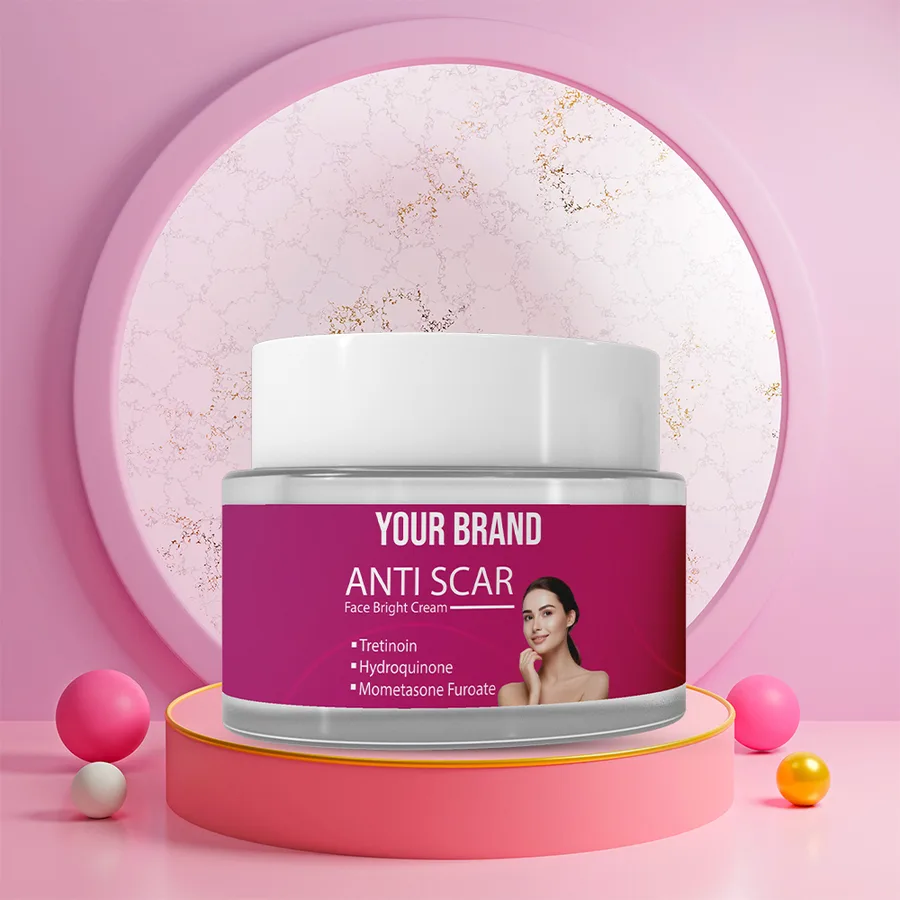
Ingredient detail: neem. Our products: Neem Capsule, Aloe Vera Gel, Anti-Scar Cream. Related reading: नीम के फ़ायदे, त्वचा और ख़ून, the neem pregnancy warning nobody puts on the front, neem for pimples, honest expectations, and नीम, हल्दी और मंजिष्ठा कैसे इस्तेमाल करें.
Get our product list and minimum orders
Leave your email and we will send the formats we make, the minimum order for each and typical lead times. We use it only to reply to you.
Manufacturing in this category?
We make products in this category for other people's brands. Tell us the format and volume and we will send a specification and a per-unit cost.
Request a quotation ↗NutraHerbal manufactures food supplements, Ayurvedic proprietary medicines and cosmetics for business customers. Product information on this site describes composition, format and commercial positioning for brand owners. It is not medical advice, does not claim to diagnose, treat, cure or prevent any disease, and is not a substitute for consulting a qualified practitioner. Final label claims are the brand owner's responsibility and must be approved for the destination market.
How we write and review content: editorial policy.