Reviewed for accuracy and claims compliance: Claims and compliance review
Neem is probably the most trusted plant in India. It is in toothpaste, soap, face wash, capsules and syrups. It grows in school yards. Its leaves go into bathwater. It has a reputation for being, above all, safe.
And there are two things about neem that are documented in the medical literature, that are serious, and that almost no pack in India prints on the front.
One: neem seed oil has been studied as a contraceptive and has documented antifertility and abortifacient effects in animals.
Two: neem oil poisoning in infants and young children is documented in Indian paediatric literature, with vomiting, drowsiness, seizures, encephalopathy, metabolic acidosis, and deaths.
And the second one is not a theoretical risk from misuse. It arises from a traditional practice: giving neem oil to a baby for colic, cold or “worms”.
We sell neem products. This article is the warning label we think the category should carry.
General information, not medical advice. If a child has been given neem oil by mouth, this is an emergency. Go to hospital now and say what was given. Do not wait for symptoms.
Part one: neem oil and infants
This is the most serious thing in this article, so it comes first.
What is documented
Cases of neem oil poisoning in infants and young children appear in the Indian paediatric and toxicology literature, reported over several decades.
The clinical picture described:
Vomiting. Drowsiness progressing to altered consciousness. Seizures. Metabolic acidosis. An encephalopathy resembling Reye’s syndrome, with liver involvement. And in a proportion of reported cases, death.
The amounts involved were small, the reports describe teaspoon-level quantities in young infants. This is not a case of gross overdose. The margin in a small infant is narrow.
Why it happens
Because of a practice, not an accident.
Neem oil is traditionally given to infants in parts of India, for colic, for cold, for “stomach worms”, as a general tonic, or rubbed on the abdomen and the scalp.
And the people doing it are not being careless. They are using a plant with a strong reputation for safety, in a tradition they trust, usually on advice from a family elder. That is precisely why it keeps happening.
Three factors make infants vulnerable:
Immature liver metabolism, an infant handles many compounds differently from an adult. Small body mass, a teaspoon in a 4 kg baby is a very different dose from a teaspoon in a 60 kg adult. And higher absorption through the skin, with a thinner skin barrier and a much larger surface-area-to-weight ratio. So topical application in large amounts is also not safe in a neonate.
What this means in practice
Never give neem oil by mouth to an infant or young child. For any reason. For colic, for cold, for worms, as a tonic, no.
Do not apply neem oil in quantity to a newborn’s or infant’s skin or scalp. A neem-containing soap is a different thing from neem oil applied undiluted and repeatedly.
And for worms, the standard treatment is a single dose of an inexpensive, effective medicine. It costs very little, it works, and it carries none of this risk. There is no reason to take this one.
And if it has already been given: go to hospital now, and tell them exactly what was given, how much and when. Do not wait to see if the child becomes unwell. The presentation can be delayed and it can be rapid, and the diagnosis depends entirely on someone knowing what was taken.
We want to say one more thing here, plainly: if this has happened in your family, the useful response is to get the child seen, not to assign blame. This practice is widespread, it comes from trust rather than neglect, and the reason this article exists is that the warning is not printed anywhere it would be read.
Part two: pregnancy
What is documented
Neem has documented antifertility and abortifacient activity in animal studies.
This is not an incidental finding. Neem seed oil was investigated specifically as a contraceptive agent, including as an intravaginal agent, and neem extracts have documented spermicidal activity. A body of research exists on neem as a fertility-control agent, which tells you what effect the researchers were pursuing and finding.
In animal work, neem extracts have been reported to interfere with implantation and to terminate early pregnancy.
Human data is, as usual, absent. And in pregnancy, absence of human data in the presence of a documented animal abortifacient effect is the clearest possible reason to avoid something.
So
Avoid oral neem in pregnancy. Capsules, churna, decoctions, “blood purifier” syrups, all of them.
Avoid neem oil in pregnancy, including in quantity on the skin.
Incidental use of neem in toothpaste or soap is a different order of exposure and is not what this warning is about. The concern is therapeutic doses taken deliberately.
And the case this matters for most
Acne.
Neem is sold heavily for acne. Acne is most common in adolescence and in women of reproductive age. And “blood purifier” neem syrups and capsules are marketed exactly to that group.
So the population being sold oral neem for skin overlaps substantially with the population for whom the pregnancy caution applies, including women who are pregnant and do not yet know.
That overlap is the reason we think this warning belongs on the front of the pack, not in small print on the back, and not nowhere.
Part three: trying to conceive
This one is almost never mentioned, and it follows directly from the research above.
If neem has been investigated as a contraceptive, then anyone trying to conceive should not be taking it.
And this applies to both partners.
For men: spermicidal activity is documented, and animal studies report effects on sperm parameters and on fertility. Neem seed oil in particular.
For women: implantation interference in animal studies.
So: both partners should stop therapeutic neem while trying to conceive.
And this is worth stating because of a specific and painful irony: a couple struggling to conceive may be taking several herbal products, and in India neem is one of the commonest. Taking a researched antifertility agent while trying to conceive is a genuinely counterproductive situation, and nobody warns about it.
The other cautions, briefly
Because the category is treated as risk-free generally, and it is not.
Diabetes medication. Neem lowers blood glucose, documented in animal studies and some small human work. With metformin, a sulfonylurea or insulin, the effects add. Monitor, and do not reduce your prescribed medication yourself. Signs of low blood sugar: sweating, trembling, anxiety, hunger, confusion.
Liver. Hepatotoxicity concerns have been raised with high oral doses and prolonged use. Avoid in liver disease without medical advice. Stop for jaundice, dark urine, persistent nausea or right-upper-abdominal pain.
Kidney disease. Ask before higher doses.
Autoimmune disease. Neem has immunostimulant activity reported in some work, which is worth noting precisely because “boosts immunity” is used as a selling point. In rheumatoid arthritis, lupus, psoriasis or autoimmune thyroid disease, ask.
After transplant, or on immunosuppressants. No, without your transplant team’s agreement. The combination of an immunostimulant with deliberate immunosuppression is not something to improvise.
Children, generally. Oral neem leaf supplements only via a paediatrician, and neem oil by mouth never.
Surgery. Mention it, as with any supplement.
And breastfeeding. Insufficient data; avoid therapeutic doses.
Why these warnings are missing
Worth asking, because the answer is structural rather than malicious.
Neem’s reputation does the work. A plant this familiar does not read as a pharmacological agent. Nobody expects a warning on something that grows in the school yard.
The part used is often not declared. “Neem extract” could mean leaf or seed, and the seed is the concentrated, more hazardous material. A label that does not say which part cannot carry a meaningful warning.
Traditional use is treated as a safety argument. And here is the limit of that argument, stated fairly: traditional use is good evidence that something is not acutely poisonous to healthy adults at customary doses. It is poor evidence about pregnancy outcomes, about infants, and about rare severe reactions, because those signals are hard to attribute without systematic record-keeping. That is not a criticism of the tradition. It is a limit of observation without statistics.
And commercially, warnings reduce sales. A “blood purifier” syrup carrying “not in pregnancy or when trying to conceive” loses a share of the exact market it is aimed at.
What we put on our own packs
Part used, declared. Leaf, bark or seed, named.
“Not for use in pregnancy or breastfeeding.”
“Not for use if you or your partner are trying to conceive.” Which we have not seen on another neem pack, and which follows directly from the published research.
“Do not give neem oil by mouth to infants or children.” This one in a size someone will read.
A line for diabetes medication.
A line for autoimmune conditions and immunosuppressants.
And nothing about purifying blood, boosting immunity, treating acne, treating diabetes or detoxifying, because there is no authorised health claim for neem, and because the “blood purifier” framing is the one that puts oral neem in front of the people who should not be taking it.
Does this cost us sales? Yes. We think a neem product that reaches a pregnant woman because nobody printed the warning is a worse outcome than a lost sale.
The honest summary
Neem is a real pharmacological agent with a reputation for being a harmless household plant, and that gap is where the harm sits.
Neem seed oil has been studied as a contraceptive, with documented antifertility and abortifacient effects in animals. So it should be avoided in pregnancy, and by both partners when trying to conceive.
And neem oil poisoning in infants is documented, at small doses, with seizures, encephalopathy and deaths, arising from the traditional practice of giving it to babies.
Those two facts should be on the front of every neem pack sold in India. They are on almost none.
When to see a doctor
Emergency, go now:
- a child has been given neem oil by mouth, go to hospital immediately and say what was given, how much and when. Do not wait for symptoms.
- a child who was given neem oil becomes drowsy, vomits repeatedly, or has a seizure
- anyone who develops seizures, confusion or marked drowsiness after taking a neem preparation
Do not take therapeutic neem if you:
- are pregnant
- are breastfeeding
- are trying to conceive, either partner
Ask your doctor first if you:
- take diabetes medication, monitoring
- have liver disease or raised liver enzymes
- have kidney disease
- have an autoimmune condition
- take immunosuppressants or have had a transplant
- have surgery planned
- want to give it to a child, paediatrician only
Stop and get checked: yellowing of the eyes or skin, dark urine, persistent nausea, right-upper-abdominal pain; symptoms of low blood sugar; rash or swelling of the lips or tongue.
And get a diagnosis rather than a remedy for: worms (the standard single-dose treatment is cheap and effective); a spreading, weeping or crusted rash; intense night-time itching, especially between the fingers, which may be scabies and needs the whole household treated; and persistent fatigue with thirst and frequent urination, which needs a blood sugar test.
The short version
- Neem’s safety reputation is the reason its real risks go unwarned
- Neem seed oil has been studied as a contraceptive agent
- Antifertility and abortifacient effects are documented in animals
- Spermicidal activity is documented
- Animal work reports interference with implantation and early pregnancy loss
- So avoid therapeutic neem in pregnancy, all oral forms
- Human data is absent, which in pregnancy is a reason to avoid, not to proceed
- Avoid when trying to conceive, both partners
- A couple trying to conceive may be taking a researched antifertility agent unwarned
- Neem oil poisoning in infants is documented in Indian paediatric literature
- Vomiting, drowsiness, seizures, metabolic acidosis, Reye-like encephalopathy
- And deaths in a proportion of reported cases
- The reported amounts were teaspoon-level in young infants
- This is not gross overdose, the margin in a small infant is narrow
- It happens because of a practice: neem oil given for colic, cold or worms
- The people doing it trust the plant; that is why it recurs
- Infants have immature liver metabolism and small body mass
- And higher skin absorption, so topical quantity is not safe either in a neonate
- Never give neem oil by mouth to an infant or child, for any reason
- For worms, a single dose of standard medicine is cheap and effective
- If it has been given: hospital now, say what and how much, do not wait
- Diagnosis depends on someone knowing what was taken
- Neem lowers blood glucose, additive with diabetes medication
- Hepatotoxicity concerns at high oral doses and prolonged use
- Immunostimulant activity is reported, a caution in autoimmune disease
- Which is awkward, since “boosts immunity” is used to sell it
- No neem with immunosuppressants or after transplant without the team’s agreement
- Labels often do not declare the part, leaf and seed are not equivalent
- Traditional use evidences acute adult safety, not pregnancy or infant outcomes
- That is a limit of observation without statistics, not a fault of the tradition
- Warnings cost sales, especially on products aimed at young women
- Acne sells oral neem to exactly the group the pregnancy warning covers
- There is no authorised health claim for neem
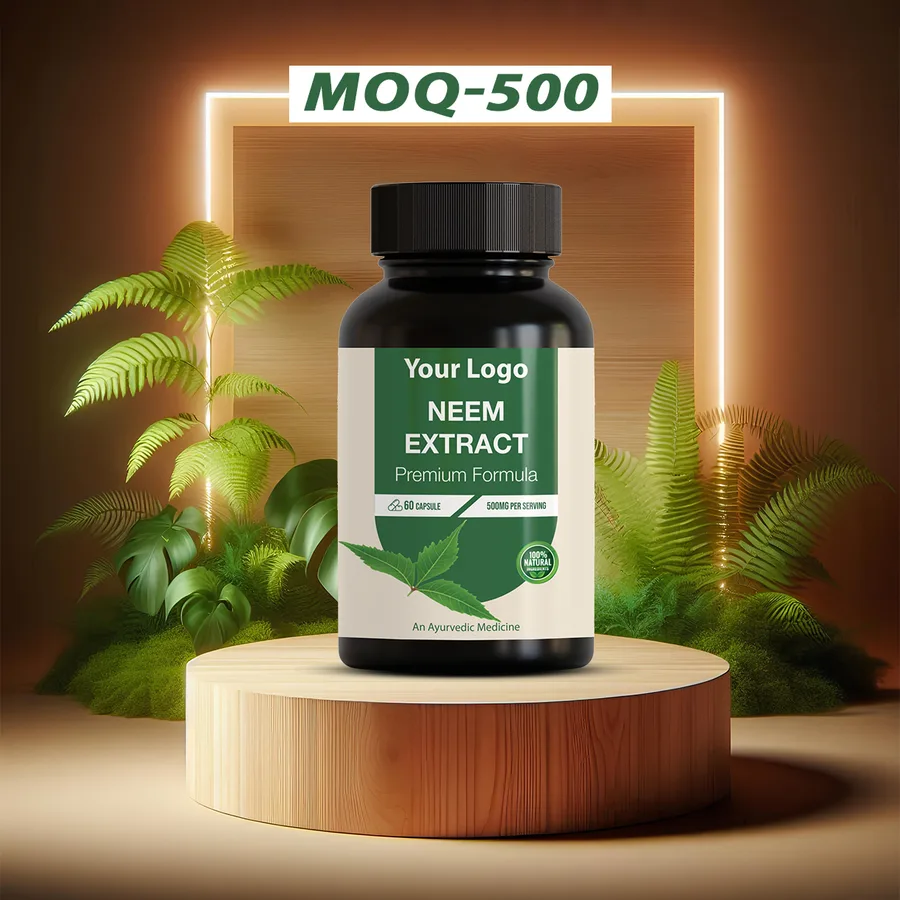
Ingredient detail: neem. Our products: Neem Capsule, Aloe Vera Gel. Related reading: नीम के फ़ायदे, त्वचा और ख़ून, neem for acne, what the evidence supports, नीम कैप्सूल vs पत्ती, and label compliance.
Get our product list and minimum orders
Leave your email and we will send the formats we make, the minimum order for each and typical lead times. We use it only to reply to you.
Manufacturing in this category?
We make products in this category for other people's brands. Tell us the format and volume and we will send a specification and a per-unit cost.
Request a quotation ↗NutraHerbal manufactures food supplements, Ayurvedic proprietary medicines and cosmetics for business customers. Product information on this site describes composition, format and commercial positioning for brand owners. It is not medical advice, does not claim to diagnose, treat, cure or prevent any disease, and is not a substitute for consulting a qualified practitioner. Final label claims are the brand owner's responsibility and must be approved for the destination market.
How we write and review content: editorial policy.