Reviewed for accuracy and claims compliance: Claims and compliance review
Almost everything sold in the Indian supplement market is a plant, a vitamin, a mineral salt or a protein.
Shilajit is none of those, and nearly every misunderstanding about it comes from people assuming it is a herb.
It is not harvested. It is not cultivated. There is no farm, no crop cycle and no seed. It is scraped off rock.
And once you understand what it physically is, three things that otherwise look like marketing noise become obvious: why it is standardised on fulvic acid, why heavy metal testing is not negotiable, and why “purified” is a processing word with a specific classical meaning rather than a reassurance.
This article is the material-science half of shilajit. We make resin, capsules and drops. We have written separately about the claims that should not be believed, and separately in Hindi about telling real from fake, this one is about what the substance is.
General information, not medical advice. The heavy metal issue is real and we have given it its own article; the summary is below but the detail matters.
What it physically is
Shilajit is a blackish-brown exudate that seeps from crevices in rock faces, chiefly in high-altitude regions, the Himalaya, the Hindu Kush, the Altai, the Caucasus, and the Tibetan plateau. It is found at altitude, typically in the thousands of metres.
In Sanskrit, shilajatu, commonly translated as something close to “rock-born” or “conqueror of rock”. The name is literally descriptive.
How it is thought to form: over very long periods, centuries, plant material and microbial matter become trapped and compressed within rock, decompose slowly under pressure, and the resulting humified material seeps out through crevices, especially as temperatures rise in summer.
So it is a slow geological-biological product. Not a resin from a tree, that is guggul or boswellia. Not a mineral salt. Not a fossil. Closest honest description: a humified organic matter concentrate, delivered by geology.
And collection is exactly what it sounds like: people climb to the deposits and scrape the raw material off rock, mixed in with stone, sand, soil, plant debris and whatever else is on the cliff face.
That last sentence is the origin of every quality problem in this category.
What is in it
And this is where shilajit is genuinely unusual, because its active constituents are a class of substance most supplements never deal with.
Humic substances, about 60–80% of good material
Humic substances are what you get when organic matter decomposes very slowly and incompletely. They are the dark material in rich soil and in peat. They are not single molecules; they are heterogeneous mixtures of large, complex, variable organic structures.
Within them:
Fulvic acid, the lower-molecular-weight, water-soluble fraction. This is what shilajit is usually standardised on, and it is the number on most labels. It is water-soluble at all pH values, which is part of why it is the fraction of interest.
Humic acid, larger, soluble in alkali, not in acid.
And an important honesty point: “fulvic acid” is not one compound. It is an operationally defined fraction, defined by how it behaves in a solubility test, not by a molecular structure. Which has a direct consequence: the fulvic acid figure on a label depends on the test method used, and different methods give different answers for the same material. We have written about that number separately, because it is the most manipulated figure in this category.
Dibenzo-α-pyrones (DBPs) and DBP chromoproteins
Less famous, arguably more interesting.
These are smaller, better-defined molecules, and some researchers consider them the more characteristic marker of genuine Himalayan shilajit, precisely because fulvic and humic substances occur in any humified material, including ordinary peat and soil, while the DBP profile is more specific.
And that matters commercially: a material can show a respectable fulvic acid number and not be shilajit at all. DBP content is harder to fake.
This is why a serious specification looks at more than one marker.
Trace elements
Dozens of them, in small amounts, iron, magnesium, zinc, copper, manganese, and others.
And here is the honest framing, which the marketing inverts: shilajit is not a meaningful source of any single mineral. The quantities are small. If you need iron, you need iron.
The trace element content is a signature of the material, not a nutritional claim. And it is also the reason the heavy metal question exists, because a substance that concentrates trace elements from rock does not discriminate between the ones you want and lead, arsenic, mercury and cadmium.
And what else is in raw material
Stone and grit. Sand. Soil. Plant debris. Microbial load. And, depending on the site, animal matter and droppings, which is not a slur on the material but a fact about cliff faces.
All of which is why the classical tradition does not use it raw.
Shodhana, why “purified” is a technical word
This is the part that is most often reduced to a marketing adjective, and it is actually a defined classical process.
Classical Ayurvedic pharmacy does not treat raw shilajit as usable. It requires shodhana, purification, before the material enters a medicine. The AYUSH pharmacopoeial literature describes purification procedures for shilajit, and the principle is consistent across sources even where the details vary.
The classical approach, in essence:
Dissolve the raw material in a liquid medium, water, or a decoction such as triphala kwath, or milk, or, in some classical descriptions, gomutra.
Let the insoluble matter settle, and filter. This is the step that removes stone, grit, sand and insoluble debris, and it is the main point of the exercise.
Concentrate the filtrate by gentle evaporation, classically over low heat or in the sun, to get back a thick resin.
Sometimes repeat the cycle.
And what shodhana achieves, honestly stated:
It removes physical contaminants, the grit and debris. This it does well.
It reduces microbial load, through the heat and filtration steps.
It makes the material consistent and usable.
What it does not reliably do, and this is the critical limitation:
It does not remove dissolved heavy metals. Lead, arsenic, mercury and cadmium, if they are chemically associated with the humic fraction, go through a water-based filtration with the humic fraction. Filtration separates insolubles from solubles; it does not separate one soluble from another.
So “purified as per classical method” and “tested free of heavy metals” are two different statements, and a label that offers the first is not offering the second. This is the single most important sentence in this article.
Modern processing adds controlled-temperature extraction, finer filtration, sometimes membrane filtration, controlled drying, and, crucially, analytical testing at each stage. The testing is the part the classical process could not have.
Raw vs purified, and a word on “raw” as a selling point
“Raw shilajit”, “unprocessed”, “straight from the mountain” appear as premium claims.
They are backwards.
Raw shilajit contains stone, grit, soil, microbial load and whatever was on the rock. The classical tradition itself insists on purification. Selling raw material as superior is contrary to both the classical position and basic food safety.
If a seller is proud that their material is unprocessed, they are advertising the absence of the one step the tradition requires.
The forms, and what the form does to the material
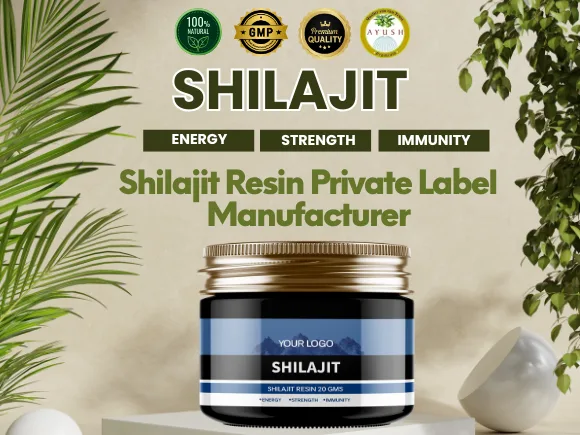
Resin, the closest to the classical preparation. Thick, tar-like, sticky, dissolves in warm water or milk. Hardest to fake convincingly, in our view, because the physical behaviour is distinctive. Messy to use, hard to dose precisely by eye.
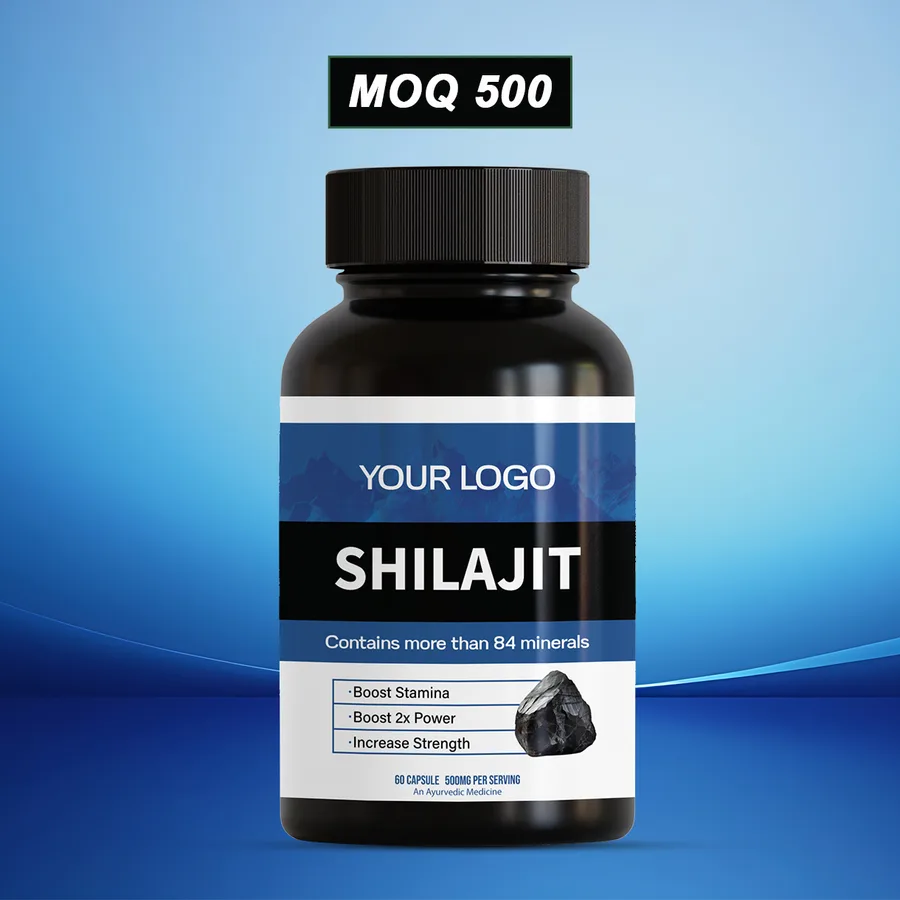
Capsule, usually dried extract powder, often with a carrier. Convenient, measured, and completely opaque to the buyer.
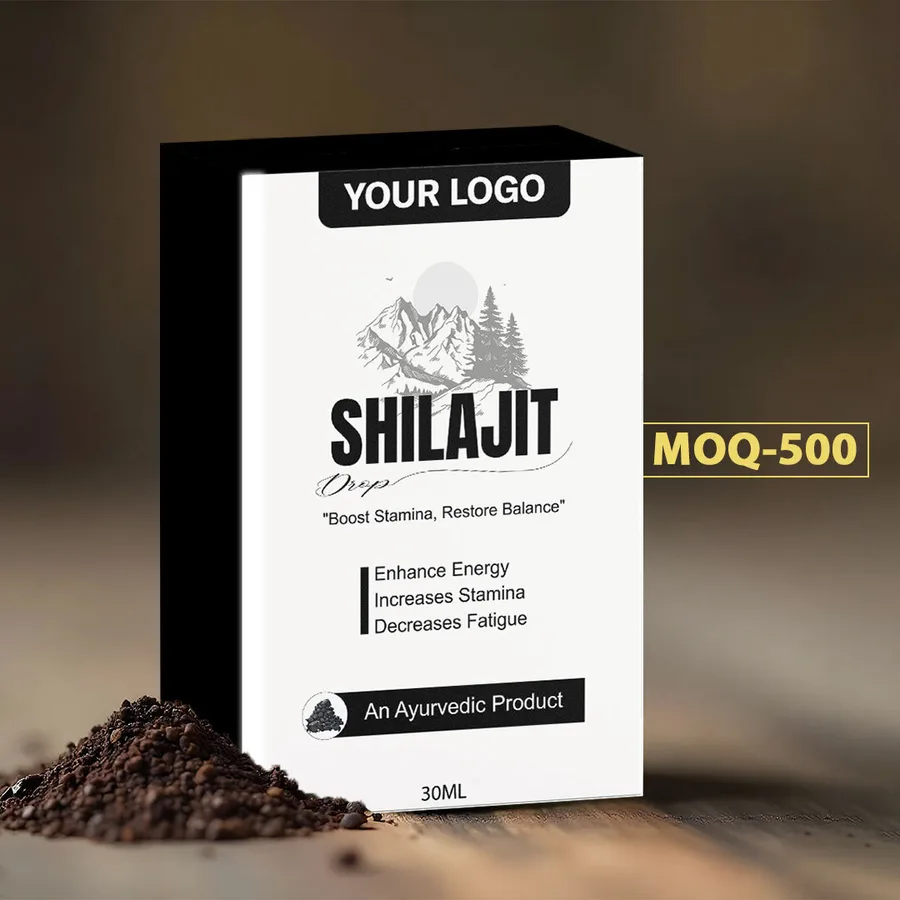
Drops / liquid, resin dissolved in a liquid base. Easy to take, easy to dilute heavily. The one where the actual shilajit content is least visible.
Powder, dried extract, sometimes spray-dried onto a carrier. Check what the carrier is and how much.
And a point that applies to all of them: a dried extract is standardised at the time of testing, and the number on the label should correspond to a batch certificate, not to a brochure.
We have written a separate comparison of the forms, because the choice has real consequences for what you can verify.
So what does it do, the short, honest version
This article is about what shilajit is, and we have written a full article on the claims. The brief version:
The classical position is rasayana, a rejuvenative, and yogavahi, a substance held to carry and enhance other medicines. Classically it appears in contexts including urinary disorders, metabolic conditions and general debility.
The modern human evidence is thin. There are small studies on fatigue, on male fertility parameters, on testosterone in specific populations, and on altitude physiology. Small, often short, several industry-linked, and not sufficient to support the claims routinely printed.
And the governing regulatory fact: there is no authorised health claim for shilajit. Not for energy, not for testosterone, not for stamina, not for immunity.
What we will not claim: increases testosterone, treats infertility, boosts energy, improves stamina or athletic performance, treats diabetes, anti-ageing, detoxifies, cures anything.
Heavy metals, the summary, because it cannot be left out
A substance formed in and scraped off rock, which concentrates trace elements, carries a structural risk of heavy metal contamination. This is not an accusation against any producer. It is what the material is.
And the specific problem: lead, arsenic, mercury and cadmium can be chemically associated with the humic fraction, the very fraction you want. So they do not simply filter out.
What this means practically:
Batch-wise heavy metal testing is not optional, lead, arsenic, mercury, cadmium, at minimum. We do not treat it as a value-add and no serious manufacturer should.
Ask for the certificate for the batch you are buying, not a certificate from some batch, some year.
Be especially careful with unbranded resin sold loose, including material bought directly in hill stations, the romance of buying it “at the source” is exactly the scenario with no testing at all.
And this matters most for children, pregnancy, and anyone with kidney disease, because lead’s effects on children are permanent and a damaged kidney cannot clear what it accumulates.
We have given this its own article because one paragraph is not enough.
What a specification should contain
If you are buying bulk, or private-labelling, this is the list:
Fulvic acid content, with the test method stated. The method is part of the number. DBP content, harder to fake, more specific to genuine shilajit. Total humic substances. Heavy metals, batch-wise, lead, arsenic, mercury, cadmium. Microbiology, total plate count, yeast and mould, E. coli, Salmonella. Moisture and water-insoluble matter, insolubles tell you how well the purification was done. Ash and acid-insoluble ash. Origin stated. And the purification method described, not just the word “purified”.
And for licensing: shilajit sits in the AYUSH/Ayurvedic framework as a classical material, which has implications for how the product is licensed and what may be said on it. The route you choose, Ayurvedic proprietary medicine versus FSSAI nutraceutical, changes both the permitted claims and the testing obligations. We have written about that choice separately.
When to see a doctor
Before taking shilajit, if you:
- are pregnant or breastfeeding, no
- are under 18, no, and the heavy metal risk is the reason
- have kidney disease, a damaged kidney accumulates what it cannot clear
- have liver disease
- have haemochromatosis or any iron-overload condition, shilajit contains iron
- have gout or high uric acid, raised as a caution
- take diabetes or blood pressure medication, monitoring
- have any hormone-sensitive condition
- take any regular medicine, the classical yogavahi description is itself a reason to ask
Get a diagnosis instead of a supplement if you have: persistent fatigue (it needs thyroid, haemoglobin, blood sugar and vitamin B12 checked, not a resin); unexplained weight loss; low libido or erectile difficulty, which can be the first sign of cardiovascular or metabolic disease and is worth a proper check; or infertility, where both partners need assessment.
Stop and get checked: rash, persistent nausea, abdominal pain, yellowing of the eyes, or any new neurological symptom, and tell the doctor what you were taking, including unbranded material, because heavy metal exposure is diagnosable only if someone thinks to look.
The short version
- Shilajit is not a plant, it is not farmed, harvested or cultivated
- It is an exudate seeping from crevices in high-altitude rock
- Shilajatu means roughly “rock-born”, the name is descriptive
- It forms over centuries as trapped plant and microbial matter humifies under pressure
- Closest honest description: a humified organic matter concentrate delivered by geology
- It is collected by scraping rock faces, mixed with stone, sand, soil and debris
- That fact is the origin of every quality problem in the category
- Humic substances make up roughly 60–80% of good material
- Fulvic acid is the low-molecular-weight, water-soluble fraction
- “Fulvic acid” is not one compound, it is defined by a solubility test
- So the label figure depends on the test method used
- Dibenzo-α-pyrones are more specific to genuine shilajit and harder to fake
- Fulvic and humic substances occur in ordinary peat and soil too
- So a good fulvic number does not prove the material is shilajit
- Trace elements are a signature, not a nutritional claim
- Shilajit is not a meaningful source of any single mineral
- The same concentrating behaviour is why heavy metals are a risk
- Classical pharmacy does not treat raw shilajit as usable
- Shodhana means dissolve, settle, filter, and gently concentrate
- It removes stone, grit and debris well, and reduces microbial load
- It does not reliably remove dissolved heavy metals
- Filtration separates insolubles from solubles, not one soluble from another
- “Purified by classical method” and “tested free of heavy metals” are different statements
- “Raw” and “unprocessed” as premium claims are backwards
- A seller proud of unprocessed material is advertising a missing step
- Resin is closest to the classical preparation and hardest to fake convincingly
- Capsules are convenient and completely opaque to the buyer
- Drops are where actual content is least visible
- Classical position: rasayana and yogavahi
- Modern human evidence is small, short and often industry-linked
- There is no authorised health claim for shilajit
- Demand batch-wise lead, arsenic, mercury and cadmium results
- Unbranded resin bought “at the source” is the scenario with no testing at all
- A specification should state the test method, not just the number
Ingredient detail: shilajit. Our formats: Shilajit Resin, Shilajit Capsule, Shilajit Drops. Related reading: shilajit claims you should not believe, heavy metal risk and why testing matters, what the fulvic acid number means, असली और नकली शिलाजीत कैसे पहचानें, and licences for Ayurvedic manufacturing.
Get our product list and minimum orders
Leave your email and we will send the formats we make, the minimum order for each and typical lead times. We use it only to reply to you.
Manufacturing in this category?
We make products in this category for other people's brands. Tell us the format and volume and we will send a specification and a per-unit cost.
Request a quotation ↗NutraHerbal manufactures food supplements, Ayurvedic proprietary medicines and cosmetics for business customers. Product information on this site describes composition, format and commercial positioning for brand owners. It is not medical advice, does not claim to diagnose, treat, cure or prevent any disease, and is not a substitute for consulting a qualified practitioner. Final label claims are the brand owner's responsibility and must be approved for the destination market.
How we write and review content: editorial policy.