Reviewed for accuracy and claims compliance: Claims compliance review
A thyroid report is one of the more confusing lab results to receive, because the main number behaves in the opposite direction to intuition. People see a high TSH and assume an overactive thyroid. It usually means the reverse.
Here is what each line measures and how they fit together.
This is information to help you understand a report, not medical advice. Interpretation depends on your symptoms, history and the specific reference ranges your laboratory uses. Discuss your result with your doctor rather than acting on this article.
The feedback loop, which explains everything
The thyroid gland does not act alone. It sits in a loop:
- The pituitary gland in the brain releases TSH, thyroid stimulating hormone
- TSH tells the thyroid to produce T4 and T3
- When T4 and T3 rise, the pituitary senses it and releases less TSH
- When they fall, the pituitary releases more TSH to push the thyroid harder
This is a thermostat. And once you see it as one, the counterintuitive bit resolves:
- High TSH = the pituitary is shouting because thyroid output is low → underactive thyroid
- Low TSH = the pituitary has gone quiet because output is high → overactive thyroid
TSH moves opposite to thyroid function. That single sentence clears up most of the confusion around these reports.
What each number is
TSH. Not a thyroid hormone at all, it is the pituitary’s signal. It is the most sensitive early indicator because the pituitary responds to small changes before T4 and T3 drift outside their ranges. This is why it is usually the first and sometimes the only test ordered.
T4 (thyroxine). The main hormone the thyroid produces. Mostly inactive until converted. Most circulating T4 is bound to proteins and unavailable, which is why Free T4 is the more useful measurement.
T3 (triiodothyronine). The active hormone. Most of it is produced by conversion from T4 in other tissues rather than by the thyroid directly. Free T3 is the unbound, usable fraction.
Anti-TPO antibodies. Not a function test, this looks for an autoimmune process against the thyroid. A positive result points toward an autoimmune cause, which changes how the condition is understood and followed.
Common patterns
| Pattern | Usually suggests |
|---|---|
| TSH high, Free T4 low | Hypothyroidism, underactive |
| TSH high, Free T4 normal | Subclinical hypothyroidism |
| TSH low, Free T4 or T3 high | Hyperthyroidism, overactive |
| TSH low, Free T4 normal | Subclinical hyperthyroidism |
| All normal, anti-TPO positive | Autoimmune process present, function currently compensated |
“Subclinical” does not mean “ignore”. It means the pituitary is compensating and hormone levels are still in range. Whether it needs treatment depends on how high the TSH is, whether antibodies are present, your symptoms, and whether you are pregnant or planning to be. That is a clinical judgement, not a number you can act on alone.
Why your result may not mean what it appears to
Several things shift thyroid numbers without the thyroid being the problem.
Biotin supplements. This is the one worth knowing. High-dose biotin, the kind in hair and nail supplements, frequently 5,000 or 10,000 mcg, can interfere with the immunoassay method many laboratories use. It can produce falsely low TSH and falsely high T4 and T3, a pattern that can be mistaken for an overactive thyroid.
If you take a hair supplement, stop it for a few days before the test and tell your doctor. This is a documented cause of misleading thyroid results and it is rarely mentioned at the point of sale. We print it on our biotin labels.
Acute illness. Being significantly unwell shifts thyroid numbers temporarily. Testing during an acute illness can produce results that do not reflect your baseline.
Pregnancy. Reference ranges differ in pregnancy and are trimester-specific.
Certain medications. Steroids, lithium, amiodarone and some others affect thyroid results. Tell your doctor what you take.
Time of day. TSH varies across the day, generally higher in the early morning. Consistency in timing helps when comparing results over time.
Reference ranges vary, and that is normal
Reference ranges differ between laboratories because they depend on the assay method and the reference population. A result that reads “high” at one lab may sit inside the range at another.
Two practical consequences:
Compare like with like. When tracking results over time, using the same laboratory makes the comparison meaningful.
Do not self-diagnose from a borderline number. Clinical context, symptoms, antibodies, history, pregnancy status, determines what a borderline result means. This is precisely the situation where a doctor adds something an article cannot.
If you are being treated
Two practical points that affect results more than most people realise.
Timing of your medication matters. Thyroid medication is generally taken on an empty stomach with water, with a gap before food. Calcium, iron, milk, tea, coffee, antacids and fibre supplements all interfere with absorption. Patients whose numbers will not settle frequently turn out to have a timing problem rather than a dose problem.
Take your test before your morning dose, unless your doctor tells you otherwise, and be consistent about it.
Symptoms can persist when numbers normalise
This deserves stating because it affects a lot of people and is often dismissed.
Fatigue, weight difficulty and mental fog sometimes persist even after lab values return to range. That experience is common and it is not imagined. It is a conversation to have with your doctor rather than something to solve by adjusting your own dose.
It is also the gap that supplement marketing moves into, which brings us to the last section.
Where supplements sit
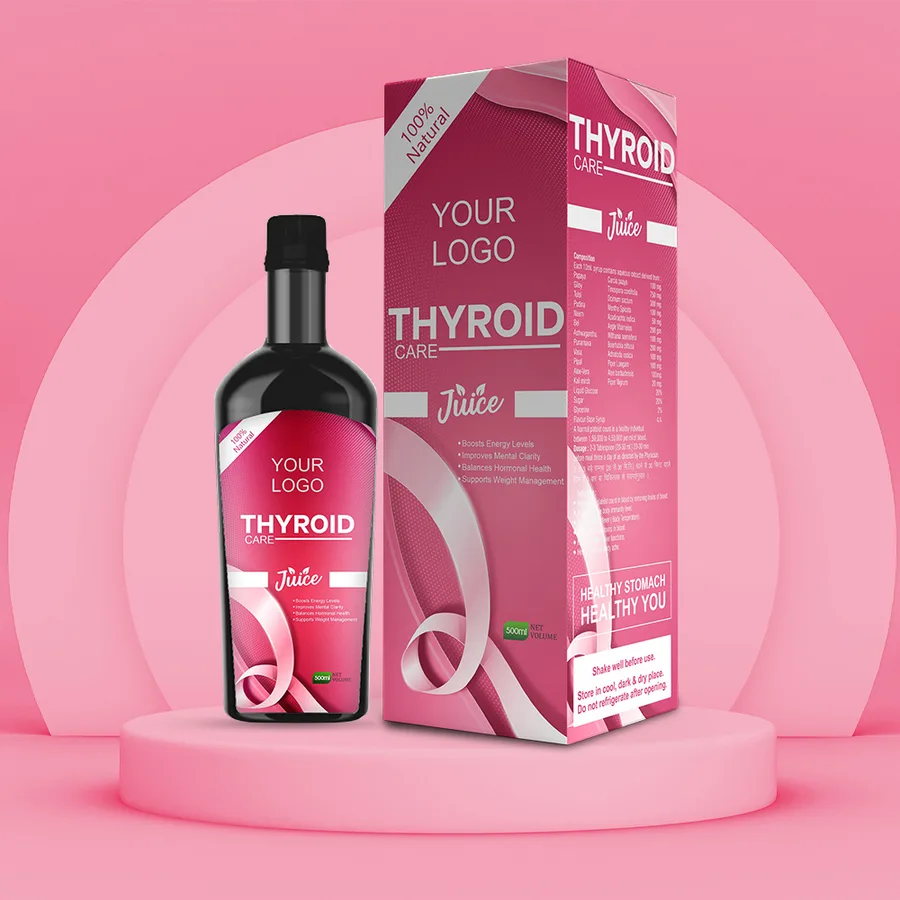
Selenium has a recognised role in thyroid hormone metabolism and is the most defensible nutrient inclusion in this category. Ashwagandha and brahmi are used traditionally in the context of fatigue and mental clarity. Kanchnar guggulu has a long classical record in glandular formulations.
Three things we are firm about:
These are complementary, never a replacement for prescribed medication. Anyone suggesting a herbal product will let you stop thyroid medication is giving advice that can cause real harm.
Iodine is not automatically helpful. Extra iodine can worsen some thyroid conditions, particularly autoimmune ones. We generally advise against including it and against self-prescribing it.
Tell your doctor what you are taking. Ashwagandha in particular can influence thyroid hormone levels, which is relevant both to your treatment and to interpreting your next test.
The short version
TSH is the pituitary’s signal and moves opposite to thyroid function, high TSH means underactive. Free T4 and Free T3 are the usable hormone fractions; anti-TPO looks for an autoimmune cause. Ranges vary by lab, so compare like with like. Stop biotin supplements before testing. And take your test before your morning dose, consistently.
Diet detail is in थायराइड में क्या नहीं खाना चाहिए, and symptoms in महिलाओं में थायराइड के लक्षण.
Get our product list and minimum orders
Leave your email and we will send the formats we make, the minimum order for each and typical lead times. We use it only to reply to you.
Manufacturing in this category?
We make products in this category for other people's brands. Tell us the format and volume and we will send a specification and a per-unit cost.
Request a quotation ↗NutraHerbal manufactures food supplements, Ayurvedic proprietary medicines and cosmetics for business customers. Product information on this site describes composition, format and commercial positioning for brand owners. It is not medical advice, does not claim to diagnose, treat, cure or prevent any disease, and is not a substitute for consulting a qualified practitioner. Final label claims are the brand owner's responsibility and must be approved for the destination market.
How we write and review content: editorial policy.