Reviewed for accuracy and claims compliance: Claims and compliance review
This question gets two confident answers in the market, and both are wrong.
“Wheatgrass is wheat, so obviously it has gluten.”
And: “Wheatgrass is gluten-free, don’t worry about it.”
The accurate answer is more specific and more useful:
Gluten is a seed storage protein. The young wheat leaf does not produce it. So pure wheatgrass leaf is, in principle, gluten-free.
And wheatgrass is grown on a dense mat of wheat seed, which does contain gluten, and the seed mat is physically attached to what you harvest.
So the honest answer is: the leaf is gluten-free and the product depends entirely on how it was grown, harvested and handled.
Which means “is wheatgrass gluten-free” is the wrong question. The right one is “was this batch tested?”
We make wheatgrass products. This article is written so a coeliac reader can make an informed decision, and the conclusion is cautious.
General information, not medical advice. If you have coeliac disease, this is a conversation to have with your gastroenterologist or dietitian, not a decision to make from a web page, including this one.
Where gluten actually comes from
Gluten is not spread through the wheat plant. It is localised, and the localisation is the whole point.
Gluten is the name given to a group of storage proteins, principally gliadins and glutenins, in the endosperm of the wheat seed.
Their biological job is to store nitrogen and amino acids for the germinating seedling. They exist so the baby plant has something to eat before it can photosynthesise.
Which tells you where they are: in the grain, in the starchy part that becomes flour.
And where they are not: in the root, and in the young leaf blade.
The leaf’s proteins are photosynthetic machinery, RuBisCO and chlorophyll-binding proteins, not storage proteins. The leaf is not storing nitrogen for a future seedling; it is making sugar.
So the botany genuinely supports the claim. A clean wheat leaf, before any grain has formed, does not contain gliadin.
And then the growing method undoes it
Here is how wheatgrass is actually produced, which is where the problem enters.
Wheat seed is soaked and spread densely across a tray of soil or a hydroponic mat.
It germinates. Roots form a dense mat through and around the remaining seed husks.
The grass grows up for 7 to 10 days.
And then it is cut, ideally above the seed line.
So the seed mat sits directly beneath what you harvest, with roots binding the two together.
And four things can carry gluten into the product:
Cutting too low. A blade that takes seed husks along with the grass carries endosperm material.
Blending the mat. Home users, and some commercial producers making powder, process more than the blade would take. Any seed in the blender means gluten in the product.
Residual seed fragments clinging to the base of the cut grass.
And shared equipment. A facility that also processes wheat flour, or that dries grass on shared lines, has cross-contact risk regardless of how clean the cut was.
And one more, specific to late harvesting: if grass is left to grow well past the jointing stage toward grain formation, the plant itself begins developing storage proteins. This is not relevant at day 7 to 10, and it is a reason harvest discipline matters here for a second, unrelated reason. We have written about harvest stage separately.
What the guidance actually says
And this is where we have to be careful, because the position is genuinely cautious rather than reassuring.
Coeliac organisations in several countries treat wheatgrass as probably safe if it is harvested before grain formation and is free of seed contamination, while noting that contamination is difficult to rule out and that testing is the only assurance.
Some advise avoiding it altogether, on the grounds that the risk cannot be verified by the consumer.
And the regulatory threshold that matters: a product labelled “gluten-free” generally has to contain less than 20 parts per million of gluten. That is a laboratory measurement, not an inference from botany.
So the chain of reasoning is:
The leaf is gluten-free in principle. True.
Therefore wheatgrass products are gluten-free. Does not follow.
The gap between those two statements is the entire risk, and it can only be closed by testing.
Why this matters more than people assume
And it is worth saying why we are being this careful, because “a bit of gluten” sounds minor to someone without coeliac disease.
In coeliac disease, gluten triggers an immune-mediated reaction that damages the small intestinal lining.
And two things follow:
The damage can occur without obvious symptoms. Many coeliac patients have little or no immediate reaction to a small exposure, while the intestinal damage still happens. So “I tried it and I was fine” is not evidence of safety.
And the consequences of ongoing exposure are real, persistent malabsorption, iron and B12 deficiency, bone loss, and in the long term an elevated risk of certain complications.
Which means a coeliac patient cannot use the usual “try it and see” approach that works for most supplements.
And for wheat allergy, which is different from coeliac disease, the concern is the allergic reaction itself, and allergy to wheat proteins can involve proteins beyond the gluten fraction, including some present in the leaf. So wheat-allergic patients have an additional reason for caution that the gluten discussion does not cover.
So what should a coeliac person do
Our honest advice, as a company that sells this product:
Do not take wheatgrass on the strength of a botanical argument. The botany is correct and it is not sufficient.
Look for a certified gluten-free product with batch testing. A product tested to below 20 ppm, batch by batch, with the certificate available, is a different proposition from one asserting “naturally gluten-free”.
Be sceptical of “naturally gluten-free” as a phrase. It describes the leaf, not the batch. It is accurate and it is not an assurance.
Avoid home-grown wheatgrass if you have coeliac disease. Home growing is where the seed mat gets blended, and there is no testing.
Avoid juice bars and fresh shots unless you can establish how the grass is cut and whether equipment is shared. In practice, you usually cannot.
And discuss it with your gastroenterologist or dietitian, who knows your antibody levels and your history.
And the thing we would actually say if asked directly: wheatgrass offers a small, dull nutritional benefit, a modest amount of a few vitamins and minerals plus chlorophyll. It is not worth a gluten risk. If you have coeliac disease, the sensible choice is a green supplement with no wheat in its history at all, moringa, spirulina or a vegetable-based blend. That advice costs us a sale and it is the correct advice.
And the risk that is larger than gluten
For everyone else, the gluten question is mostly theoretical, and there is a different risk in this product that applies to all buyers and gets no attention.
Mould.
Wheatgrass is grown on soaked seed, indoors, warm and humid, for a week or more. Those are close to ideal conditions for mould growth, and mould on the seed mat is common.
And people blend the mat.
So: batch microbiological testing, including yeast and mould, matters more for this ingredient than for most. And for home growers, a tray with white fuzz at the base should be discarded, not rinsed.
(Fine white root hairs are normal and expected. Mould is fuzzy, patchy and smells musty, that is the distinction.)
And raw juice has no kill step, which puts it in the same category as raw sprouts, a food group with a documented outbreak history. That matters particularly for anyone immunosuppressed, pregnant, or very young or old.
What a label should state
Our view:
The botanical name, Triticum aestivum, and the part used: young leaf.
The harvest stage, jointing, or a day count.
Gluten status with a basis: “tested to <20 ppm, batch certificate available” is a statement. “Naturally gluten-free” is a botanical observation. The two should not be printed as though they were the same.
Allergen declaration, including cross-contact statements where the facility handles wheat flour.
Batch microbiology, including yeast and mould.
And for juices: preservative and process, declared.
And a line for anyone on warfarin, because wheatgrass contains vitamin K.
What we will and will not say
Sayable: the botanical name, part used and harvest stage; a tested gluten figure with the method and threshold; the chlorophyll content as a factual figure; and authorised nutrient-function claims only for nutrients present in significant quantified amounts, in practice usually vitamin K, and vitamin A where the beta-carotene supports it.
And the governing fact: there is no authorised health claim for wheatgrass.
Not sayable: detoxifies, builds blood, treats anaemia, alkalises the body, boosts immunity, anti-cancer, aids weight loss.
And three refusals:
“Gluten-free” without batch testing. The botanical argument is not a test result, and a coeliac customer is entitled to the difference.
“Safe for coeliacs”, we will not say this, because we cannot be the party that makes that determination for someone with an autoimmune condition.
And “chlorophyll builds blood”, the resemblance-as-mechanism claim we have written about separately.
And the most honest summary:
Gluten is a seed storage protein, made in the endosperm so a germinating seedling has something to eat. The young leaf does not make it, and the botany genuinely supports the claim.
And wheatgrass grows on a dense mat of wheat seed, bound to the harvest by roots, so cutting low, blending the mat, residual husks and shared equipment can all carry gluten in.
“Naturally gluten-free” describes the leaf. “<20 ppm, batch tested” describes the product. Only the second one is an assurance.
And if you have coeliac disease, the honest recommendation is a green supplement with no wheat in its history, because wheatgrass’s benefit is small and does not justify an unverifiable risk.
When to see a doctor
If you have coeliac disease: discuss wheatgrass with your gastroenterologist or dietitian before taking it. And do not use “I had some and felt fine” as evidence of safety, intestinal damage from gluten exposure frequently occurs without immediate symptoms.
Get seen if you have: unexplained weight loss; chronic diarrhoea or steatorrhoea; iron deficiency that does not respond to iron; unexplained B12 or folate deficiency; recurrent mouth ulcers; unexplained bone loss or fractures; or persistent bloating and abdominal discomfort, each of these can be undiagnosed coeliac disease, and it is substantially under-diagnosed. And testing must be done before removing gluten from your diet, or the result is unreliable.
Emergency: difficulty breathing, swelling of the lips, tongue or throat, or widespread hives after any wheat-derived product, this is anaphylaxis, and wheat allergy is distinct from coeliac disease.
Ask before taking wheatgrass if you:
- have coeliac disease or wheat allergy, as above
- take warfarin or acenocoumarol, vitamin K content destabilises INR; the rule is consistency, so tell whoever monitors it
- are immunosuppressed, pregnant, or have had a transplant, raw juice microbiological risk
- have kidney disease, green juices can be high in potassium
- have thalassaemia, do not change transfusion or chelation; that is a specialist decision
Stop and get checked: persistent vomiting or diarrhoea after taking it, consider mould or microbial contamination, and tell the doctor what you took.
The short version
- Both confident answers in the market are wrong
- Gluten is a seed storage protein, gliadins and glutenins
- It is made in the endosperm of the seed, not throughout the plant
- Its job is storing nitrogen for the germinating seedling
- So it is in the grain, in the part that becomes flour
- The young leaf’s proteins are photosynthetic machinery, not storage proteins
- So a clean wheat leaf before grain formation does not contain gliadin
- The botany genuinely supports the claim
- And wheatgrass is grown on a dense mat of wheat seed
- Roots bind the seed mat to what you harvest
- Cutting too low carries seed husks and endosperm material
- Blending the mat puts seed directly into the product
- Residual husks cling to the base of cut grass
- And shared equipment creates cross-contact regardless of the cut
- Grass left toward grain formation starts making storage proteins itself
- Coeliac organisations treat it as probably safe only without seed contamination
- And note that contamination is hard to rule out without testing
- “Gluten-free” labelling generally means below 20 parts per million
- That is a laboratory measurement, not an inference from botany
- “The leaf is gluten-free, therefore the product is” does not follow
- The gap between those statements is the entire risk
- In coeliac disease, intestinal damage can occur without symptoms
- So “I tried it and was fine” is not evidence of safety
- Ongoing exposure causes malabsorption, deficiencies and bone loss
- So a coeliac patient cannot use the usual try-and-see approach
- Wheat allergy is different and can involve proteins beyond gluten, including in the leaf
- Do not rely on the botanical argument, look for batch testing below 20 ppm
- “Naturally gluten-free” describes the leaf, not the batch
- Avoid home-grown wheatgrass with coeliac disease, that is where the mat gets blended
- Juice bars rarely let you establish the cut or the equipment
- Wheatgrass’s benefit is small and does not justify an unverifiable risk
- A green supplement with no wheat history is the sensible coeliac choice
- And the larger risk for everyone is mould on the growing tray
- Warm, humid trays of soaked seed are ideal for mould
- White fuzz at the base means discard, not rinse
- Fine white root hairs are normal; mould is fuzzy, patchy and musty
- Raw juice has no kill step, like raw sprouts
- Coeliac testing must be done before removing gluten from the diet
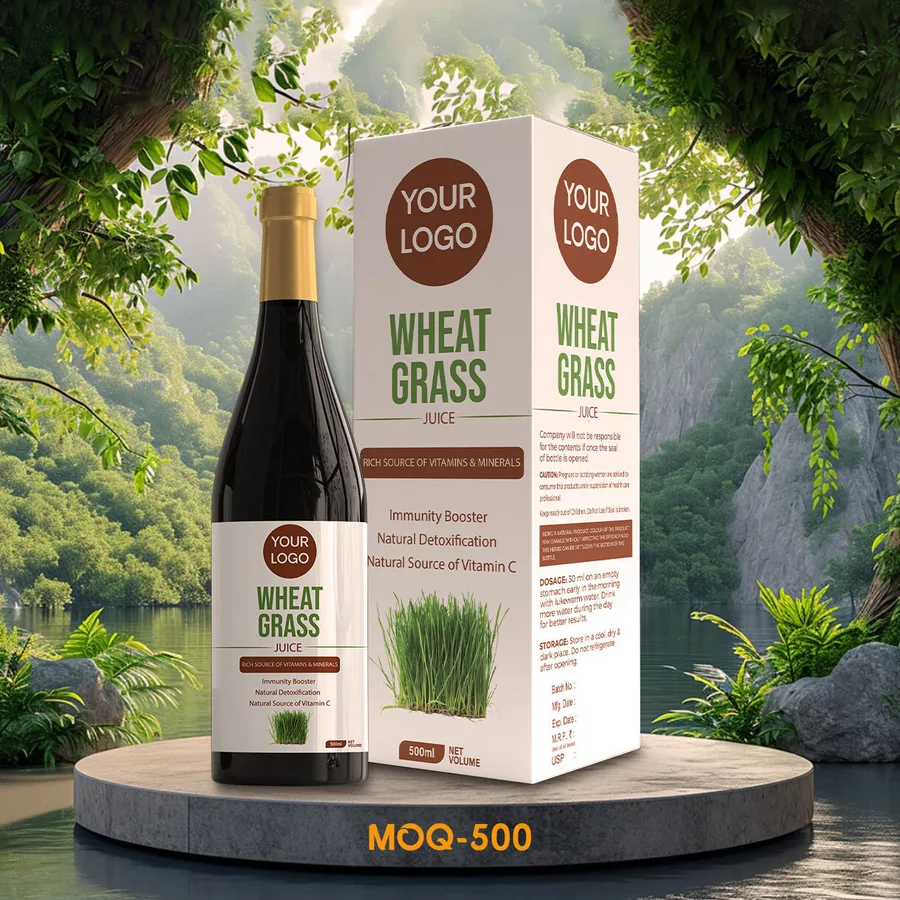
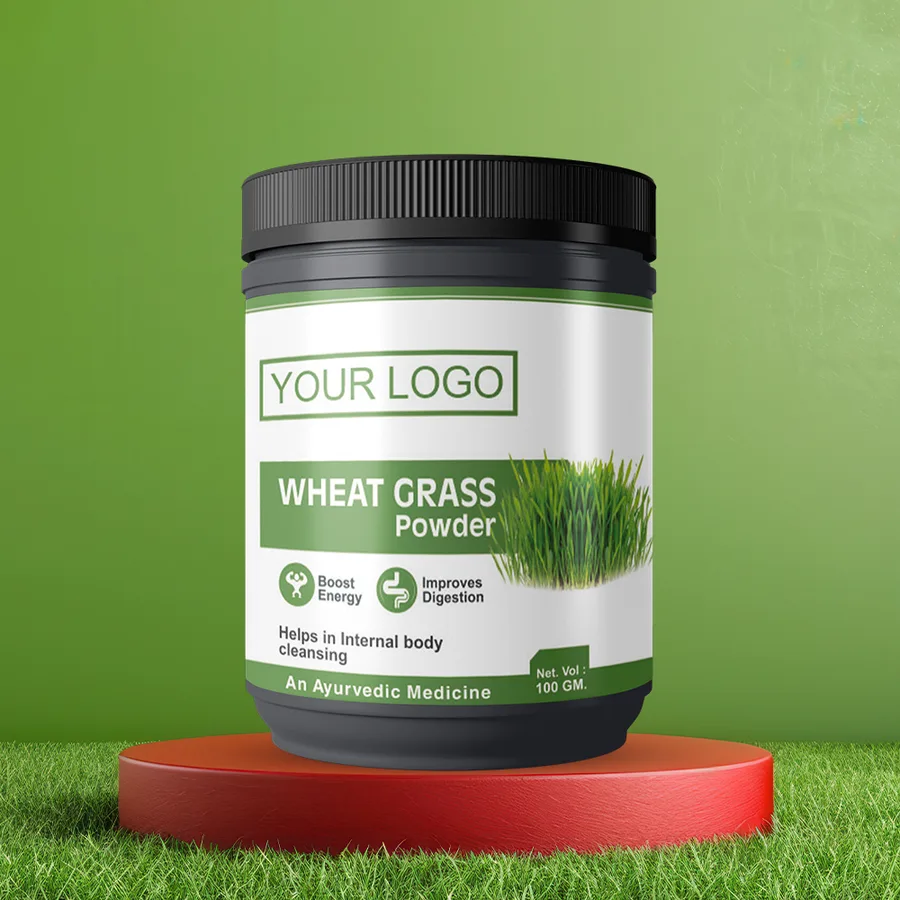
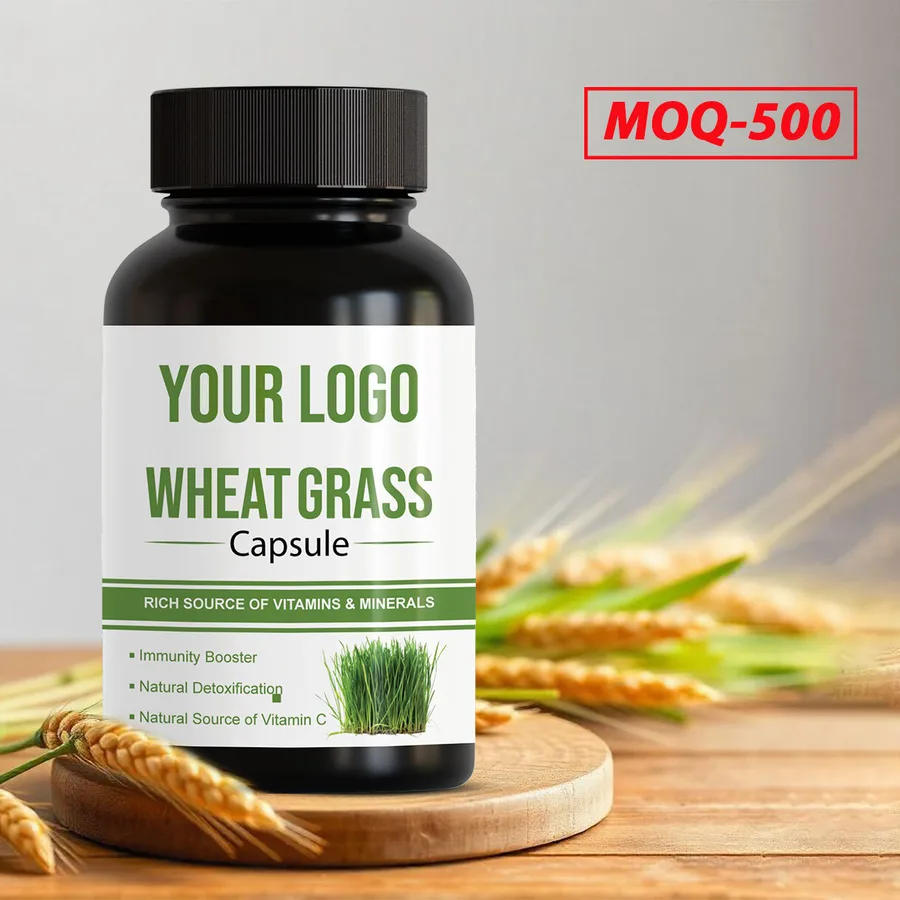
Ingredient details: wheatgrass, spirulina. Our formats: Wheatgrass Juice, Wheatgrass Powder, Wheatgrass Capsule. Related reading: wheatgrass and the jointing stage, व्हीटग्रास जूस या पाउडर, how to take it without hating the taste, and label compliance.
Get our product list and minimum orders
Leave your email and we will send the formats we make, the minimum order for each and typical lead times. We use it only to reply to you.
Manufacturing in this category?
We make products in this category for other people's brands. Tell us the format and volume and we will send a specification and a per-unit cost.
Request a quotation ↗NutraHerbal manufactures food supplements, Ayurvedic proprietary medicines and cosmetics for business customers. Product information on this site describes composition, format and commercial positioning for brand owners. It is not medical advice, does not claim to diagnose, treat, cure or prevent any disease, and is not a substitute for consulting a qualified practitioner. Final label claims are the brand owner's responsibility and must be approved for the destination market.
How we write and review content: editorial policy.