Reviewed for accuracy and claims compliance: Claims and compliance review
Almost every boswellia product in India declares a figure like “standardised to 65% boswellic acids”, and buyers read it the way you would read a purity figure: higher is stronger.
It does not work that way, and the reason is specific enough to be checkable.
“Total boswellic acids” is a sum of several compounds with very different potencies.
The most abundant one is among the least active. And the most active one, AKBA, is typically only a few per cent of the resin.
So two products both declaring 65% total boswellic acids can differ severalfold in the fraction that actually does the work.
That makes it, in our view, the most misleading standardisation figure in the joint supplement category, and we print it ourselves, because the category expects it. We also print the figure that matters.
General information, not medical advice. And the clinical point that outranks the chemistry: joint swelling, warmth, or morning stiffness beyond 30–60 minutes needs a doctor, because inflammatory arthritis has a treatment window.
What boswellia actually is
Boswellia serrata, known classically as shallaki. The part used is the oleo-gum-resin, the gum that exudes when the bark is tapped, like rubber or like the resin of frankincense, to which it is closely related.
So it is not a root, leaf or bark powder. It is a resin, and that matters for how it is extracted and how it behaves in the body.
Classically: shothahara (reducing swelling), vatahara, used in sandhivata, the classical category corresponding closely to osteoarthritis. Kashaya-tikta rasa, ushna virya.
And it is worth distinguishing from guggulu, which is also a resin used for joints but comes from Commiphora, a different plant with different chemistry.
The compounds, and why the sum misleads
The resin contains a family of pentacyclic triterpenic acids collectively called boswellic acids. The main ones:
β-boswellic acid, the most abundant. And comparatively weak as a 5-LOX inhibitor.
11-keto-β-boswellic acid (KBA), more active.
Acetyl-11-keto-β-boswellic acid (AKBA), the most potent, and the one the mechanism research is about. It is the principal 5-lipoxygenase inhibitor in the resin.
Plus acetyl-β-boswellic acid and others.
And the resin also contains 5–9% essential oil and other gum and polysaccharide material.
Now the arithmetic that makes “65%” uninformative:
AKBA is typically a low single-digit percentage of the crude resin, commonly cited in the region of 1–3%.
β-boswellic acid is present in much larger amount.
So when a label says “65% total boswellic acids”, the great majority of that 65% is the weakly active compound.
And a manufacturer can hit 65% total while having very little AKBA, or can concentrate AKBA specifically and reach a much more active product at the same total figure.
Two products, same declared number, materially different.
What a meaningful specification looks like
The figure that matters is AKBA content, declared separately.
Extracts standardised specifically for AKBA exist, some branded preparations declare AKBA in the region of 10% to 30%, achieved by selective enrichment. Those are a different class of product from a 65%-total extract, and they cost more.
So a usable boswellia label states:
The botanical name, Boswellia serrata, and the part: oleo-gum-resin.
Total boswellic acids, as a percentage.
And AKBA content, as a percentage. This is the one that is almost never there.
The extract weight per serving in milligrams, so you can compute the actual AKBA delivered.
And ideally the method, HPLC, because these are quantified chromatographically and the method is part of the number.
And then you can do the sum that matters:
A 400 mg extract at 65% total boswellic acids with 2% AKBA delivers 8 mg of AKBA.
A 400 mg extract standardised to 20% AKBA delivers 80 mg.
Tenfold, from labels that both look respectable.
That calculation is the entire point of this article, and you can do it in a shop.
And the comparison problem in the trial literature
This has a consequence for reading the evidence, which is worth knowing.
Boswellia trials in knee osteoarthritis have used different extracts at different standardisations, some crude extracts, some AKBA-enriched branded preparations, at a range of doses.
Which means:
You cannot read a dose from one trial across to a different extract. “The studies used 500 mg” is meaningless without knowing what was in the 500 mg.
And the meta-analyses pooling these trials are pooling materially different materials, which widens the uncertainty around their conclusions.
So the honest position on boswellia’s evidence: it is genuinely among the better-evidenced botanicals for knee osteoarthritis, with multiple randomised trials and generally positive meta-analyses, and the heterogeneity of the extracts used is a real limitation that the summary statements usually skip.
And where trials used an AKBA-enriched extract, a 65%-total product is not the same intervention.
Bioavailability, the other half of the problem
And this compounds everything above.
Boswellic acids are poorly bioavailable. AKBA particularly so, it is lipophilic, poorly water-soluble, and plasma levels after oral dosing are low.
Which means two practical things:
Take it with food containing fat. Absorption of boswellic acids improves with dietary fat, and this is free. Taking it on an empty stomach wastes part of what you paid for.
And formulation matters. Some products use lipid-based or phospholipid delivery systems to address this, and where they have their own pharmacokinetic data, that is a legitimate premium. Where they just say “enhanced absorption”, it is not.
And a point that is easy to miss: the essential oil fraction of the resin may itself aid absorption, which is an argument for whole-resin extracts over highly purified ones and is not settled either way.
How to read a shelf
Red flags:
“65% boswellic acids” with no AKBA figure. The commonest situation, and sufficient to make the potency unassessable.
No extract weight per serving, just a percentage, with nothing to apply it to.
“Pure boswellia” or “100% shallaki” with no standardisation at all. This may be plain resin powder, which is a legitimate traditional material and is not comparable to a standardised extract.
A very high total figure, above about 70–75%, presented as proof of quality. Total boswellic acids can be pushed up without touching AKBA.
And “boswellia” with no species. Boswellia serrata, Boswellia carterii, Boswellia sacra and Boswellia papyrifera are different species with different profiles, and the joint evidence is for serrata.
Good signs:
AKBA declared as a percentage.
Extract weight stated, so you can calculate.
Species named.
HPLC method mentioned.
And a lipid-based formulation with its own pharmacokinetic data, if you are paying a premium for one.
And the sustainability question
Worth stating because it is specific to resins and almost never mentioned.
Boswellia resin is obtained by tapping living trees, repeatedly, over years.
And over-tapping is documented as damaging: heavily tapped trees produce fewer viable seeds and show poorer regeneration, and Boswellia populations are reported to be declining across parts of their range.
So the supply of this ingredient is not indefinitely elastic, and sustainably managed sourcing is a real question rather than a marketing line.
We ask our suppliers about it. We cannot claim to have solved it.
What we do
We declare total boswellic acids and AKBA separately, with the extract weight, on our boswellia products.
And the commercial consequence is exactly what you would expect: a customer comparing our label against a competitor’s “65%” sees two numbers instead of one big one, and the second number is small, because AKBA percentages are small.
We lose that comparison regularly, to products that disclose less.
And we think the alternative, printing one impressive figure that does not determine potency, is the thing wrong with this category.
What we will and will not say
Sayable: the botanical name, species and part used; total boswellic acids and AKBA, with the method; the extract weight per serving; a traditional-use statement framed as traditional use, including the classical shothahara and sandhivata designations described as classical designations; and authorised nutrient-function claims for any vitamins or minerals present.
And the governing fact: there is no authorised health claim for boswellia.
Not sayable: treats arthritis, treats osteoarthritis, reduces inflammation, rebuilds cartilage, relieves joint pain, replaces painkillers.
And three refusals:
A total boswellic acid figure presented as a potency claim without AKBA.
“Rebuilds cartilage”, no oral supplement has been shown to do this, for any ingredient.
And “natural alternative to painkillers”, because people stop taking things on the strength of it, and because a swollen warm joint needs assessing rather than medicating with a resin.
And the most honest summary:
“Total boswellic acids” sums compounds of very different potency, dominated by the weakest.
AKBA, the active one, is a few per cent of the crude resin, so a 65% total figure can hide a tenfold difference in AKBA.
Do the multiplication: extract weight times AKBA percentage. A 400 mg extract at 2% AKBA gives 8 mg; at 20%, 80 mg.
Take it with fat, because boswellic acids absorb poorly without it.
And ask for the species, because the joint evidence is for Boswellia serrata.
When to see a doctor
See a doctor rather than starting a supplement if you have:
- joint swelling, redness or warmth
- morning stiffness lasting more than 30–60 minutes, suggests inflammatory arthritis, where early treatment prevents permanent joint damage
- several small joints involved symmetrically
- joint pain with fever, rash, weight loss or marked fatigue
- a single hot, very painful, swollen joint with fever, emergency; septic arthritis or gout
- joint pain after injury, with locking, giving way or inability to bear weight
- night pain that wakes you, or pain with a history of cancer
- back pain with leg weakness, numbness, or bladder or bowel disturbance, emergency
Before taking boswellia, ask if you:
- take an anticoagulant or antiplatelet, some antiplatelet activity has been reported, and stop before planned surgery
- are pregnant or breastfeeding, avoid; traditional reports of emmenagogue activity and no adequate safety data
- take any regular medicine, effects on drug-metabolising enzymes have been reported
- have liver disease
- have reflux or a sensitive stomach, GI upset is the commonest side effect, and food helps
Stop and get advice if you develop: a rash, persistent nausea or abdominal pain, or unusual bruising or bleeding.
The short version
- “65% boswellic acids” is read as a purity figure and is not one
- Total boswellic acids sums compounds of very different potency
- β-boswellic acid is the most abundant and comparatively weak
- AKBA is the most potent and the one the mechanism research concerns
- AKBA is typically a low single-digit percentage of crude resin
- So most of a 65% total figure is the weakly active compound
- Two products at 65% total can differ severalfold in AKBA
- The figure that matters is AKBA, declared separately
- AKBA-enriched extracts exist, declaring 10–30%
- Those are a different class of product at the same total figure
- Do the sum: 400 mg at 2% AKBA is 8 mg; at 20% AKBA, 80 mg
- Tenfold, from labels that both look respectable
- Boswellia is an oleo-gum-resin, tapped from the tree, related to frankincense
- Classically shallaki, used in sandhivata, close to osteoarthritis
- Distinct from guggulu, which is a Commiphora resin
- Trials used different extracts at different standardisations
- So “the studies used 500 mg” is meaningless without knowing what was in it
- And meta-analyses are pooling materially different materials
- Boswellia is still among the better-evidenced botanicals for knee OA
- The extract heterogeneity is a real limitation usually skipped in summaries
- Boswellic acids are poorly bioavailable; AKBA particularly so
- Take it with food containing fat, free, and otherwise you waste part of it
- Lipid-based delivery is a legitimate premium only with its own PK data
- The resin’s essential oil fraction may itself aid absorption, unsettled
- Red flag: a total figure with no AKBA and no extract weight
- Red flag: “pure boswellia” with no standardisation, may be plain resin powder
- Red flag: no species named, the joint evidence is for Boswellia serrata
- Resin is obtained by repeatedly tapping living trees
- Over-tapping reduces seed viability and regeneration
- And Boswellia populations are reported to be declining in parts of their range
- We declare both numbers and lose label comparisons because of it
- No oral supplement has been shown to rebuild cartilage
- There is no authorised health claim for boswellia
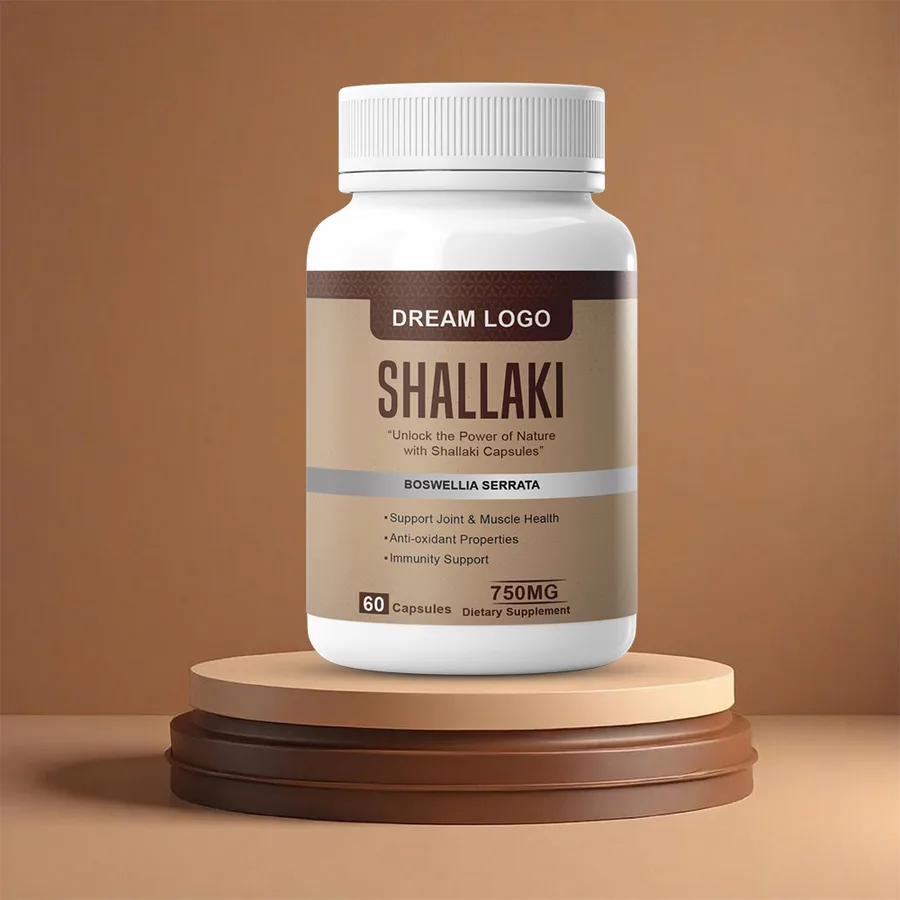
Ingredient details: shallaki, haridra / curcumin. Our formulations: Shallaki Capsule, Arthravo 360. Related reading: boswellia vs glucosamine, शल्लकी के फ़ायदे जोड़ों के दर्द में, शल्लकी कितने दिन में असर दिखाता है, and private label vs custom formulation.
Get our product list and minimum orders
Leave your email and we will send the formats we make, the minimum order for each and typical lead times. We use it only to reply to you.
Manufacturing in this category?
We make products in this category for other people's brands. Tell us the format and volume and we will send a specification and a per-unit cost.
Request a quotation ↗NutraHerbal manufactures food supplements, Ayurvedic proprietary medicines and cosmetics for business customers. Product information on this site describes composition, format and commercial positioning for brand owners. It is not medical advice, does not claim to diagnose, treat, cure or prevent any disease, and is not a substitute for consulting a qualified practitioner. Final label claims are the brand owner's responsibility and must be approved for the destination market.
How we write and review content: editorial policy.