Reviewed for accuracy and claims compliance: Claims and compliance review
We have compared glucosamine, boswellia and curcumin together elsewhere. This article does something narrower and more useful: it sets the two leading joint supplements against each other at the level of theory.
Because they are not two versions of the same idea. They rest on completely different accounts of what is wrong with the joint.
Glucosamine is a structural theory. The claim is that you are supplying raw material for cartilage.
Boswellia is an inflammatory theory. The claim is that you are interrupting a specific inflammatory pathway.
And those two theories predict different things, different onset times, different patients responding, and different kinds of evidence.
Which is the most useful way to decide between them, because you can match the theory to your own pain.
General information, not medical advice. And one thing first: joint swelling, redness, warmth, or morning stiffness lasting over 30–60 minutes points to inflammatory arthritis, where early prescription treatment prevents permanent joint damage. That is not a supplement question.
Glucosamine, the substrate theory
What it is: an amino sugar, normally present in the body, used in building glycosaminoglycans, components of cartilage and joint fluid.
The theory: osteoarthritis involves cartilage loss. Glucosamine is a cartilage building block. Supply more of the building block and you support cartilage.
It is an intuitive theory, which is a large part of why the product sold so well.
And the problems with it are also theoretical before they are empirical:
Oral glucosamine is extensively metabolised, a large fraction is broken down on first pass, and the amount reaching joint cartilage is small.
Cartilage synthesis in an adult is not obviously limited by glucosamine availability. Your body makes it. Supplying more of something you are not short of is the same problem that recurs throughout this industry.
And cartilage has very poor blood supply, which is why it heals badly in the first place. Getting anything into it is hard.
The evidence, honestly
This is a contested area and the honest summary is uncomfortable for the product.
The large independent trial, the NIH-funded GAIT study, did not show a significant benefit for glucosamine on its primary outcome.
Industry-funded trials have been considerably more positive than independent ones, and that pattern is itself informative.
Meta-analyses disagree, and the disagreement tracks funding source and whether glucosamine sulfate or hydrochloride was used, with sulfate faring better in European trials of one particular prescription-grade preparation.
And several professional bodies now recommend against routine use for knee osteoarthritis, while others leave it as an option.
Onset: slow. 4 to 8 weeks minimum, and often longer, before any assessment is meaningful.
Dose: 1500 mg a day is the figure essentially all trials used.
And a practical note: most glucosamine is shellfish-derived, which is an allergy question and a dietary one. Vegetarian glucosamine from corn fermentation exists, and we have written about whether it is equivalent.
Boswellia, the inflammatory pathway theory
What it is: the oleo-gum-resin of Boswellia serrata, known classically as shallaki. Tapped from the tree, like rubber.
The theory is more specific, and that specificity is the interesting part:
Boswellic acids, principally acetyl-11-keto-β-boswellic acid (AKBA), inhibit 5-lipoxygenase (5-LOX).
And 5-LOX is the enzyme that converts arachidonic acid into leukotrienes, which are inflammatory mediators.
Now the detail that makes this worth knowing:
NSAIDs, ibuprofen, diclofenac, naproxen, work on a different enzyme. They inhibit cyclo-oxygenase (COX), which produces prostaglandins.
So boswellia and NSAIDs act on two separate branches of the same inflammatory cascade.
That has two consequences:
It is a plausible reason boswellia might add something to an NSAID rather than duplicating it.
And it is a plausible reason boswellia does not carry the classic NSAID problems, gastric ulceration and kidney effects are largely consequences of COX inhibition, which boswellia does not do.
AKBA has also been reported to inhibit cathepsin G and microsomal prostaglandin E synthase-1.
The evidence
Better than glucosamine’s, and that is not a high bar, so let us be specific.
There are multiple randomised controlled trials of boswellia extracts in knee osteoarthritis, reporting improvements in pain and function against placebo.
Meta-analyses of boswellia in osteoarthritis have generally been positive, and it is among the better-evidenced botanicals for joints.
And the onset is notably faster: several trials report benefit within one to four weeks, which is much quicker than glucosamine and is consistent with an anti-inflammatory mechanism rather than a structural one.
The limits, stated fairly: trials are mostly small to moderate; extracts and standardisations vary considerably between them; many are industry-linked; and durations are short, so long-term data is thin.
So: real evidence, modest effect sizes, better than most of the category, not equivalent to a prescription analgesic.
The mechanisms predict different things, and this is the useful part
Set the two theories side by side and they make different predictions.
If the theory is structural (glucosamine):
Onset should be slow, cartilage changes over months. And it is.
Benefit should show up in structural measures, joint space width on X-ray. Evidence here is weak and contested.
And it should matter more in earlier disease, where there is cartilage left to protect.
If the theory is inflammatory (boswellia):
Onset should be relatively fast, days to weeks, like any anti-inflammatory. And it is.
Benefit should show up in pain and function rather than structure. It does.
And it should help most where there is an inflammatory component to the pain, the warm, swollen, flaring knee rather than the purely mechanical one.
Which gives a genuinely practical way to choose:
If your pain is worse after activity, grinding, mechanical, with stiffness that eases as you move, that is the structural picture, and neither supplement has strong evidence, and exercise and weight management have the best.
If your pain comes with warmth, swelling and flares, that is the inflammatory picture, and boswellia’s mechanism matches it.
And if you have swelling, redness, warmth or prolonged morning stiffness, that is a reason to see a doctor, because it may be inflammatory arthritis rather than osteoarthritis, and that has a treatment window.
Side by side
| Boswellia | Glucosamine | |
|---|---|---|
| Theory | Inflammatory pathway | Cartilage substrate |
| Target | 5-LOX, leukotrienes | Glycosaminoglycan synthesis |
| Same target as NSAIDs? | No, NSAIDs hit COX | No |
| Onset | 1–4 weeks | 4–8 weeks or more |
| RCT evidence | Multiple, generally positive | Contested; large independent trial negative |
| Funding-source divergence | Present | Marked |
| Typical dose | Varies with standardisation | 1500 mg/day |
| Shellfish-derived? | No | Usually yes |
| Main caution | Anticoagulants, pregnancy | Shellfish allergy, blood sugar monitoring |
| Sustainability concern | Yes, tree tapping | No |
The specification problem on each side
Both have a label question, and boswellia’s is worse.
Glucosamine: sulfate or hydrochloride, and the elemental glucosamine content, because “1500 mg glucosamine sulfate” and “1500 mg glucosamine” are not the same quantity. Check which.
Boswellia: “65% boswellic acids” is the usual standardisation figure, and it tells you much less than it appears to.
**Because total boswellic acids are dominated by β-boswellic acid, while AKBA, the most active, is typically only a small percentage of the resin.
So two products both declaring 65% total boswellic acids can differ severalfold in AKBA.
We have written a separate article on that number, because it is the single most misleading figure in the joint supplement aisle.
And one practical point for boswellia: boswellic acids are poorly bioavailable and absorption improves with dietary fat. Take it with a meal containing fat. It is free.
And the sustainability point
Worth raising because nobody does.
Boswellia resin is harvested by tapping living trees, and over-tapping damages them. Boswellia populations are documented as declining in parts of their range, with regeneration failure linked to harvesting intensity.
So sustainably sourced resin is a genuine question to ask a supplier, and one we think buyers of a resin product should know about.
What actually works best for knee osteoarthritis
And this outranks both supplements, which is why it is here.
Exercise. Strengthening, particularly quadriceps, and low-impact aerobic activity. This has the strongest evidence of anything in knee osteoarthritis, it is recommended by essentially every guideline, and it is free.
Weight loss, where relevant. The load through the knee is a multiple of body weight, so this is mechanically direct and the evidence is strong.
Physiotherapy.
Topical NSAIDs, good evidence, and far less systemic risk than oral NSAIDs, which matters for the stomach and kidneys.
Appropriate footwear and walking aids.
And then, as adjuncts: boswellia or curcumin, with better evidence than glucosamine.
We sell joint supplements. Exercise still beats all of them, and nobody can sell it to you.
What we will and will not say
Sayable: the botanical name and part used (oleo-gum-resin); the standardisation, total boswellic acids and, ideally, AKBA; the quantity; a traditional-use statement framed as traditional use, including the classical shothahara and sandhivata designations described as classical; and authorised nutrient-function claims for any vitamins or minerals present.
And the governing fact: there is no authorised health claim for boswellia or for glucosamine in this context.
Not sayable: treats arthritis, rebuilds cartilage, reverses joint damage, cures joint pain, replaces painkillers.
And two refusals:
“Rebuilds” or “regenerates” cartilage, for either ingredient. No oral supplement has been shown to do this.
And “65% boswellic acids” presented as a potency claim without an AKBA figure. We state both, and it makes our label look weaker than a competitor’s.
And the most honest summary:
They are not two versions of one idea. Glucosamine is a substrate theory, supply cartilage building blocks. Boswellia is a pathway theory, inhibit 5-LOX and reduce leukotrienes.
NSAIDs inhibit COX, a different branch, which is why boswellia plausibly adds to them without their gastric and renal profile.
Boswellia’s evidence is better and its onset faster, consistent with its mechanism. Glucosamine’s large independent trial was negative and its literature splits by funding source.
And exercise and weight management outperform both, with the strongest evidence in the field.
When to see a doctor
See a doctor rather than starting a supplement if you have:
- joint swelling, redness or warmth
- morning stiffness lasting more than 30–60 minutes, this pattern suggests inflammatory arthritis, where early prescription treatment prevents permanent damage
- several joints involved symmetrically, especially small joints of the hands
- joint pain with fever, rash, weight loss or fatigue
- a single joint that is hot, very painful and swollen, with fever, emergency; this may be septic arthritis or gout
- joint pain after injury, with locking, giving way or inability to bear weight
- back pain with leg weakness, numbness, or bladder or bowel disturbance, emergency
- night pain that wakes you, or pain with a history of cancer
Before taking boswellia, ask if you: take an anticoagulant or antiplatelet (some antiplatelet activity has been reported, and stop before surgery); are pregnant or breastfeeding (avoid; traditional reports of emmenagogue activity); take any regular medicine (effects on drug-metabolising enzymes have been reported); or have liver disease.
Before taking glucosamine, ask if you: have a shellfish allergy (most is shellfish-derived); take warfarin (an interaction has been reported); or have diabetes (monitor, as glucose effects have been raised).
The short version
- These are not two versions of one idea, they are different theories of the disease
- Glucosamine is a substrate theory: supply cartilage building blocks
- Boswellia is a pathway theory: inhibit a specific inflammatory enzyme
- The theories predict different onset times and different responders
- Oral glucosamine is extensively metabolised on first pass
- Adult cartilage synthesis is not obviously limited by glucosamine availability
- And cartilage has poor blood supply, so delivering anything is hard
- The large independent GAIT trial was negative on its primary outcome
- Industry-funded glucosamine trials are considerably more positive than independent ones
- Meta-analyses disagree, tracking funding source and salt form
- Several professional bodies now recommend against routine use
- Glucosamine onset is 4–8 weeks or longer; dose is 1500 mg/day
- Most glucosamine is shellfish-derived, an allergy and dietary question
- Boswellia is the oleo-gum-resin of Boswellia serrata, tapped from the tree
- AKBA inhibits 5-lipoxygenase, reducing leukotrienes
- NSAIDs inhibit COX instead, producing prostaglandins, a different branch
- So boswellia plausibly adds to an NSAID rather than duplicating it
- And it lacks the gastric and renal profile that comes from COX inhibition
- Multiple RCTs in knee OA report pain and function benefit
- Meta-analyses are generally positive, among the better-evidenced botanicals
- Onset is 1–4 weeks in several trials, consistent with an anti-inflammatory mechanism
- Limits: small to moderate trials, varying extracts, often industry-linked, short
- Structural theory predicts slow onset and structural benefit, the latter is weak
- Inflammatory theory predicts fast onset and pain benefit, both observed
- So match the theory to your pain pattern
- Mechanical, post-activity, grinding pain: neither has strong evidence
- Warm, swollen, flaring pain: boswellia’s mechanism fits
- Swelling or prolonged morning stiffness: see a doctor, not a shop
- For glucosamine, check sulfate vs hydrochloride and elemental content
- For boswellia, “65% boswellic acids” says little about AKBA
- Two products at 65% total can differ severalfold in AKBA
- Boswellic acids absorb better with dietary fat, take it with a fatty meal
- Boswellia resin is tapped from living trees and populations are declining in places
- Exercise has the strongest evidence in knee OA, and it is free
- Weight loss is mechanically direct, since knee load is a multiple of body weight
- Topical NSAIDs have good evidence and far less systemic risk than oral
- No oral supplement has been shown to rebuild cartilage
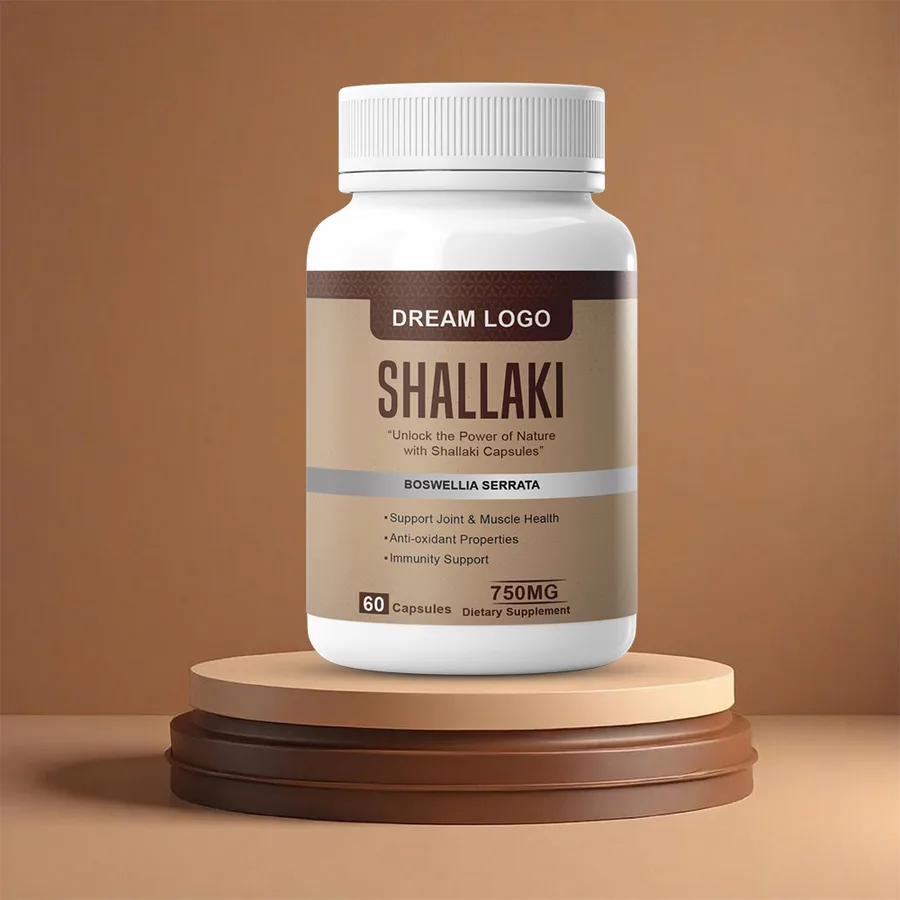
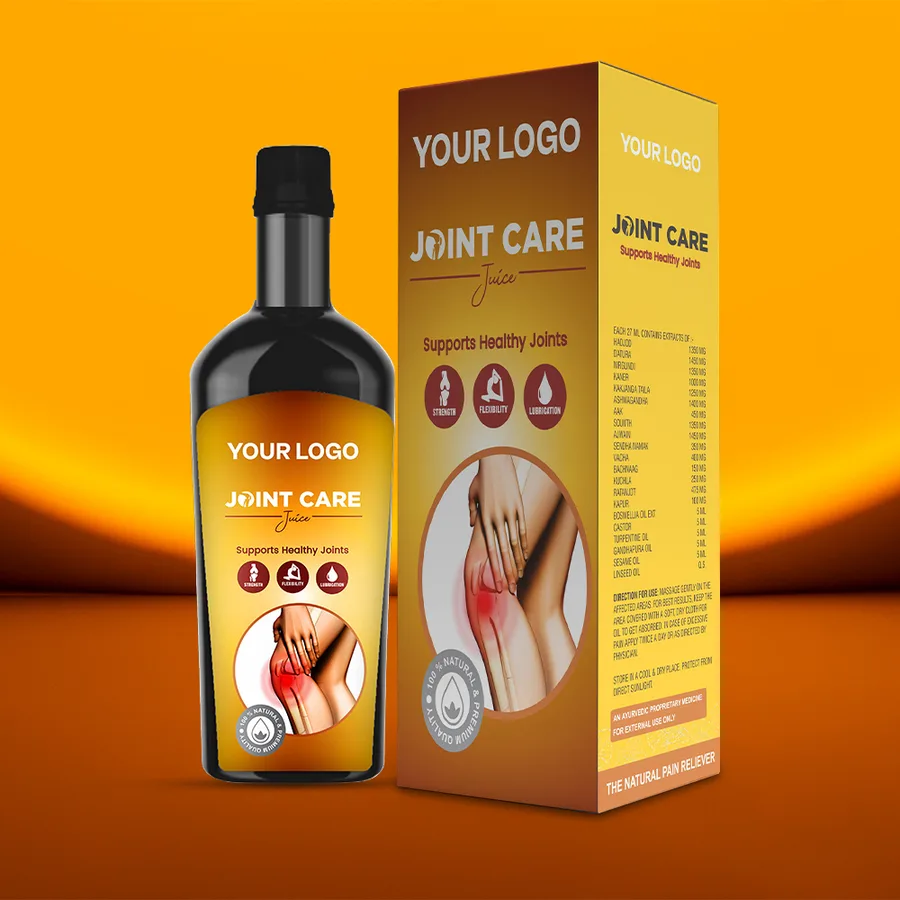
Ingredient details: shallaki, haridra / curcumin, nirgundi. Our formulations: Shallaki Capsule, Arthravo 360, Joint Care Juice. Related reading: what “65% boswellic acids” means on a label, शल्लकी के फ़ायदे जोड़ों के दर्द में, glucosamine, boswellia and curcumin compared, vegetarian glucosamine, is it as good, and exercises that help without making it worse.
Get our product list and minimum orders
Leave your email and we will send the formats we make, the minimum order for each and typical lead times. We use it only to reply to you.
Manufacturing in this category?
We make products in this category for other people's brands. Tell us the format and volume and we will send a specification and a per-unit cost.
Request a quotation ↗NutraHerbal manufactures food supplements, Ayurvedic proprietary medicines and cosmetics for business customers. Product information on this site describes composition, format and commercial positioning for brand owners. It is not medical advice, does not claim to diagnose, treat, cure or prevent any disease, and is not a substitute for consulting a qualified practitioner. Final label claims are the brand owner's responsibility and must be approved for the destination market.
How we write and review content: editorial policy.