Reviewed for accuracy and claims compliance: Claims compliance review
Open any joint supplement and you will find at least two of these three. They are presented as a package, as if they do the same thing more effectively together.
They do not do the same thing, and the evidence behind them is genuinely uneven. Here is the honest comparison.
This is information, not medical advice. Joint pain with swelling, redness, fever, or morning stiffness lasting over half an hour in multiple joints needs a doctor, that pattern suggests inflammatory arthritis, which is a different condition with different treatment.
Quick comparison
| Glucosamine | Boswellia (shallaki) | Curcumin | |
|---|---|---|---|
| What it is | Amino sugar, a cartilage building block | Gum resin of Boswellia serrata | Standardised turmeric extract |
| Typical dose | 1,500 mg daily | 300–500 mg of 65% extract | 500–1,000 mg of 95% curcuminoids |
| Evidence quality | Large trials, mixed results | Moderate, reasonably consistent | Moderate, reasonably consistent |
| Time to assess | 8–12 weeks | 4–8 weeks | 8–12 weeks |
| Absorption issue | Fine | Fine | Significant, needs help |
| Vegetarian | Usually not | Yes | Yes |
| Main caution | Shellfish allergy | Mild stomach upset | Gallstones, drug interactions |
Glucosamine, the famous one, with the shakiest evidence
What it is: an amino sugar occurring naturally in cartilage. The reasoning behind supplementing it is intuitive, supply the building block, support the structure.
What the evidence says: this is the uncomfortable part. Glucosamine has been studied more than almost any supplement in this space, in large trials, and the results have been inconsistent. Some trials and reviews report modest benefit for pain in knee osteoarthritis; several large, well-conducted trials have found results not clearly distinguishable from placebo.
The picture has not resolved despite considerable research effort, which itself tells you the effect, if present, is not large.
The form question: glucosamine sulphate and glucosamine hydrochloride are both sold. Some analyses suggest the sulphate form performed better in trials, though this is confounded by differences in trial design and sponsorship between the two.
The vegetarian issue, which matters in India: most commercial glucosamine is derived from shellfish. That rules it out for a very large share of the Indian market and for anyone with a shellfish allergy. Fermented vegetarian-source glucosamine exists, costs more, and we will say so in a quotation rather than substituting quietly.
Our honest position: it is the ingredient customers recognise and expect to see. Its evidence is the weakest of the three. If cost is tight, this is where we would reduce before touching the other two.
Boswellia (shallaki), the quiet performer
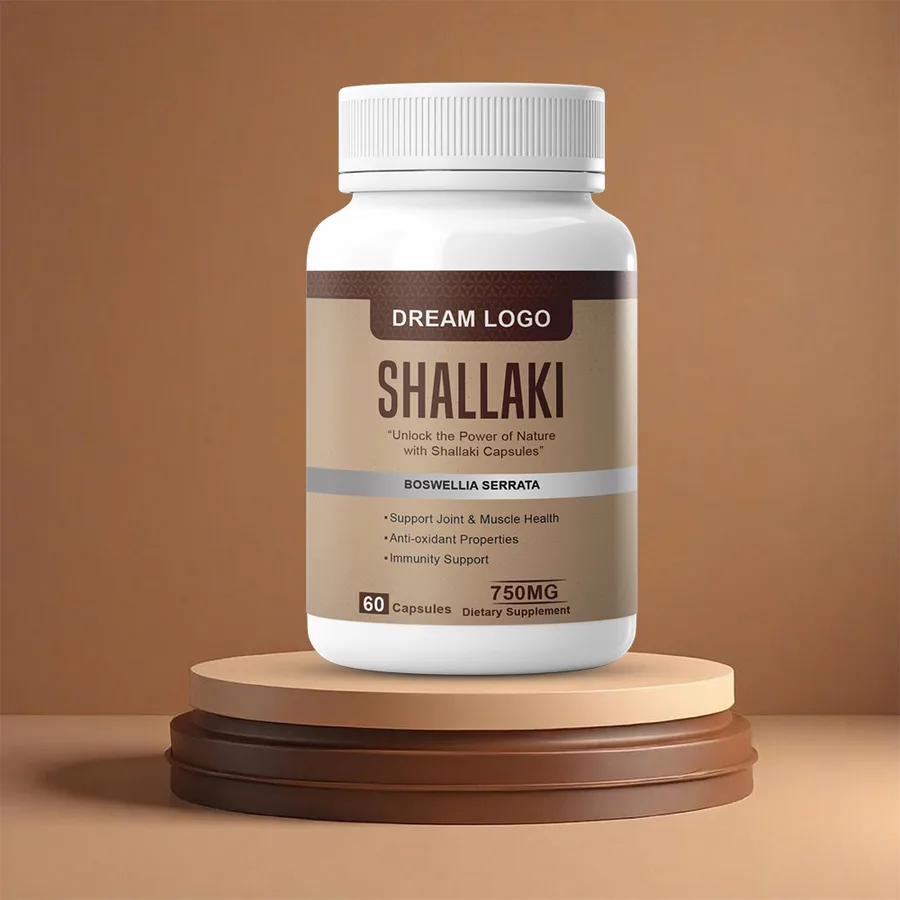
What it is: the gum resin of Boswellia serrata, the principal joint herb in Ayurveda and known internationally as boswellia.
What the evidence says: a moderate body of trials in knee osteoarthritis, generally reporting improvements in pain and function measures against placebo. The trials are smaller than the glucosamine literature but the results have been more consistent.
Notably, several trials have reported effects appearing relatively quickly, within weeks rather than months, which is unusual in this category and practically useful, because customers judge early.
What to check on a label: boswellic acid percentage. Commercial extracts vary enormously, and 65% is a solid grade. AKBA-enriched fractions exist at considerably higher cost. A product saying “boswellia extract” with no percentage has told you nothing.
Caution: generally well tolerated; some people report mild stomach upset on an empty stomach, so take it with food.
Our honest position: the best evidence-to-cost ratio of the three, and the one most under-dosed in cheap formulations.
Curcumin, good evidence, absorption problem
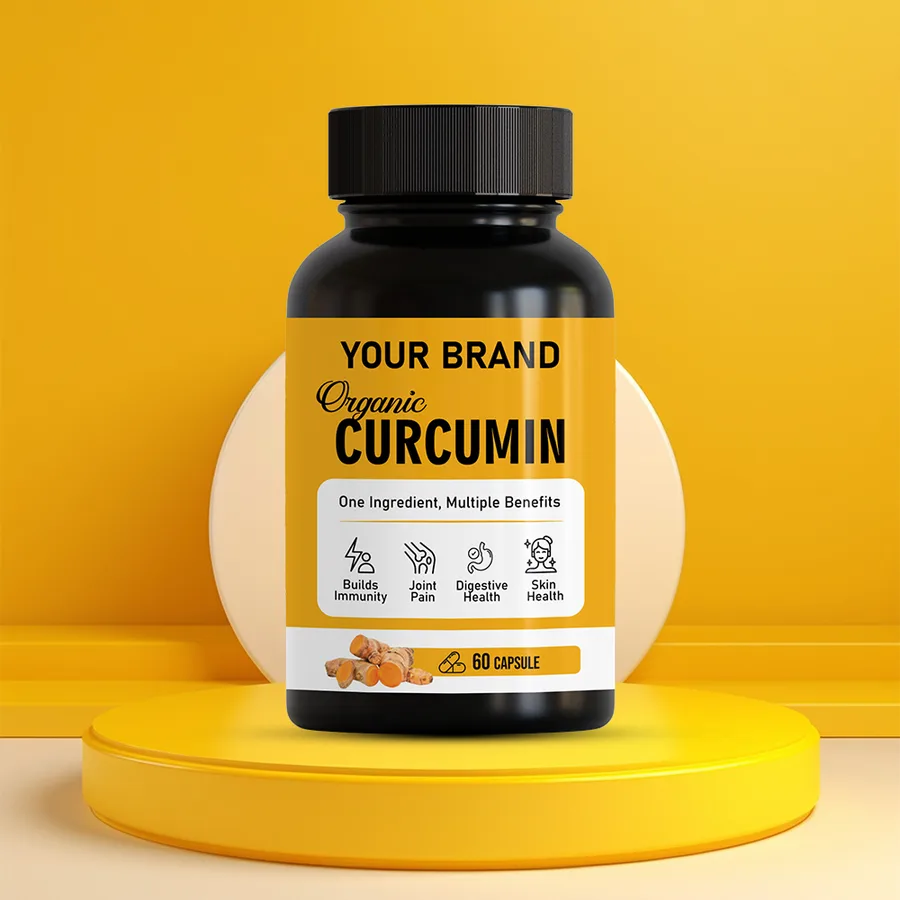
What it is: the standardised extract of turmeric, at 95% curcuminoids. Not the same as turmeric powder, kitchen turmeric is roughly 2–5% curcuminoids, a twenty- to fortyfold difference.
What the evidence says: a reasonable body of trials in knee osteoarthritis, with several comparing curcumin formulations against NSAIDs and reporting comparable pain relief with fewer gastrointestinal side effects. That is a meaningful finding, with the usual caveats, trials are mostly small and several are industry-funded.
The problem that determines whether it works: curcumin on its own absorbs poorly. It is poorly water-soluble and rapidly metabolised. A curcumin product with no absorption strategy is selling you something you will largely not absorb.
Approaches: piperine at around 5 mg per 475 mg of curcumin, cheap and well established. Phospholipid or liposomal systems, better absorbed, considerably more expensive.
Cautions: high-dose curcumin is not advised for anyone with gallstones. Piperine affects the metabolism of several medicines. Anyone on anticoagulants should check with a doctor.
Our honest position: good evidence, but only if the absorption question is addressed. A high curcuminoid percentage with nothing else is half a product.
So which should you prioritise?
If you are buying:
Look for a product with boswellia at a stated percentage and curcumin with an absorption component. If glucosamine is present too, fine, but do not pay a premium specifically for it, and if you are vegetarian check the source before assuming.
If you are formulating:
Put the budget into boswellic acid content and a proper curcumin system. Glucosamine is there for recognition and for the customer who arrived from international supplement content, it is bulky, which eats tablet weight, and its evidence does not justify crowding out the other two.
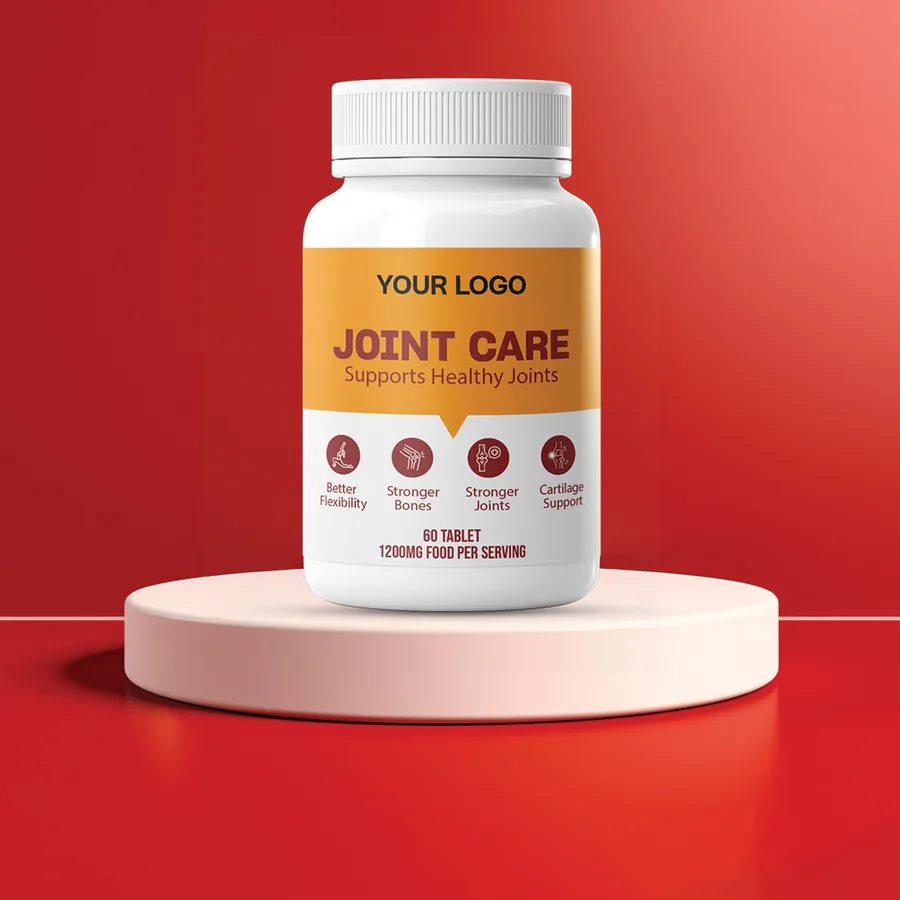
Our own 1,200 mg joint tablet carries all three precisely because the audience splits: customers who trust Ayurveda recognise shallaki and haridra, customers who read international reviews expect glucosamine. One SKU, two conversations.
What none of them do
Worth being direct, because this category overclaims heavily.
None of them regenerates cartilage. Cartilage loss in osteoarthritis is not reversed by any oral supplement. Claims to “rebuild” or “regrow” cartilage are not supportable.
None of them cures arthritis. Osteoarthritis is managed, not cured. Inflammatory arthritis needs medical treatment and supplements are not a substitute.
None works in days. Four to twelve weeks depending on the ingredient.
In India these claims breach advertising rules, and we decline artwork that makes them. If you see them on a pack, treat that as information about the brand rather than about the product.
What outperforms all three
The honest hierarchy, which no supplement company wants to lead with.
1. Quadriceps strengthening. Stronger thigh muscle distributes load away from the joint. The single most effective intervention for knee osteoarthritis, repeatedly demonstrated, and free.
2. Weight management. Load through the knee is a multiple of body weight when walking. Modest loss produces disproportionate relief.
3. Staying active. The pain-avoidance-weakness cycle is what turns manageable joint pain into disability.
4. Then supplements.
We sell the supplements and we would still say this. A customer doing one and two will get more than a customer doing four alone, and a customer doing all four does best.
Safety notes
- Glucosamine: shellfish allergy; caution with anticoagulants; may affect blood sugar, so discuss with your doctor if diabetic.
- Boswellia: generally well tolerated; take with food.
- Curcumin: avoid high doses with gallstones; piperine interacts with several medications; caution with anticoagulants.
- All three: tell your doctor what you are taking, especially before surgery.
This article is information, not medical advice.
The short version
Glucosamine has the most research and the least consistent results, and is usually shellfish-derived. Boswellia has the best evidence-to-cost ratio and acts relatively quickly, check the boswellic acid percentage. Curcumin has decent evidence but needs an absorption component or it is wasted.
None rebuilds cartilage. And thigh strengthening plus weight management will outperform all three.
Composition detail: Arthravo 360. Hindi version with practical remedies: घुटनों में दर्द का आयुर्वेदिक इलाज.
Get our product list and minimum orders
Leave your email and we will send the formats we make, the minimum order for each and typical lead times. We use it only to reply to you.
Manufacturing in this category?
We make products in this category for other people's brands. Tell us the format and volume and we will send a specification and a per-unit cost.
Request a quotation ↗NutraHerbal manufactures food supplements, Ayurvedic proprietary medicines and cosmetics for business customers. Product information on this site describes composition, format and commercial positioning for brand owners. It is not medical advice, does not claim to diagnose, treat, cure or prevent any disease, and is not a substitute for consulting a qualified practitioner. Final label claims are the brand owner's responsibility and must be approved for the destination market.
How we write and review content: editorial policy.