Reviewed for accuracy and claims compliance: Claims and compliance review
Here is a fact that is not on any vitamin D label sold in India, and that a large number of customers would want to know:
Almost all vitamin D3 in the world is manufactured from lanolin, the grease extracted from sheep’s wool.
It is a by-product of wool processing. The sheep is not killed. The wool is washed, the grease recovered, and cholesterol isolated from it is converted to 7-dehydrocholesterol, which is then irradiated with UV light to produce cholecalciferol, vitamin D3.
So D3 is, in the ordinary Indian sense, vegetarian. It is not vegan.
And for a significant number of people, strict vegans, many Jain customers, and anyone who simply wants to know what they are swallowing, that distinction matters, and the label does not tell them.
That is the real issue in this article. The lichen premium is secondary.
General information, not medical advice. And the practical point: lichen D3 and lanolin D3 are the same molecule. The question is sourcing and disclosure, not effectiveness.
The three sources, and what each actually is
Lanolin-derived D3, effectively the whole market
Source: sheep wool grease.
Animal-derived, no animal killed. Vegetarian by the common Indian definition; not vegan.
Cheap, because lanolin is an abundant by-product of an existing industry. This is the entire reason it dominates.
And the molecule produced is cholecalciferol, identical to what your skin makes.
Lichen-derived D3, the vegan option
Source: lichen, a symbiotic organism of algae (or cyanobacteria) and fungus. Certain lichens naturally contain the D3 precursor.
Fully vegan.
Produces the same molecule: cholecalciferol. Not an analogue, not a substitute, the same compound.
Several times more expensive, because lichen is slow-growing, harvested rather than farmed at scale, and yields are low.
And a point worth raising, since nobody does: lichen is slow-growing and ecologically significant, and wild harvesting at scale has a sustainability question attached to it. That is not a reason to avoid it, and it is a reason not to treat it as automatically the “clean” choice.
D2 (ergocalciferol), the old vegan option
Source: UV-irradiated yeast or fungi, including mushrooms.
Fully vegan, and considerably cheaper than lichen D3.
And a different molecule, ergocalciferol rather than cholecalciferol.
And here is the honest problem with it: D3 raises and maintains blood 25-hydroxyvitamin D levels more effectively than D2. This is reasonably well established, D2 has a shorter duration of action and is less potent at equivalent doses.
So D2 works, and D3 works better. D2 remains a reasonable budget vegan option if the dose and monitoring account for it, and it is not the equal of D3.
Is lichen D3 better than lanolin D3?
Chemically: no. They are the same molecule.
Biologically: no. Cholecalciferol is cholecalciferol.
There is no evidence that lichen-derived D3 is better absorbed, better utilised, or more effective. Any marketing claiming superiority on those grounds is claiming something that cannot be true of an identical compound.
So the premium does not buy effectiveness. It buys an ethical and dietary specification.
And that is a legitimate thing to buy. A vegan customer paying more for a vegan product is not being misled, they are paying for the attribute they wanted. The misleading part is when the premium is sold as “more bioavailable” or “plant-based so your body recognises it better”, which is nonsense.
Who it actually matters to
Strict vegans. An absolute requirement. Lanolin D3 is an animal product.
Many Jain customers. Jain dietary practice varies and is a matter for the individual, and for many people the animal origin is the relevant question regardless of whether the animal was harmed. The honest service we can provide is disclosure, not an interpretation of someone else’s religious practice.
Anyone who simply wants to know. And this is the largest group and the most underserved. A great many Indian customers assume a vitamin capsule is vegetarian by default and would be surprised by lanolin. They are entitled to the information.
Who it does not matter to, functionally: anyone whose only concern is correcting a vitamin D deficiency. Lanolin D3 at the right dose does that identically and costs less.
The capsule shell, the thing everyone forgets
This catches more people than the vitamin D source does, and it is a bigger practical problem.
Most softgel capsules are made of gelatin.
Gelatin is derived from animal collagen, bovine or porcine.
So a “vegan vitamin D3 from lichen” in a gelatin softgel is not vegan. And this combination genuinely exists on the market.
What to look for:
HPMC (hydroxypropyl methylcellulose) or plant cellulose capsules, vegetarian and vegan.
Starch-based capsules.
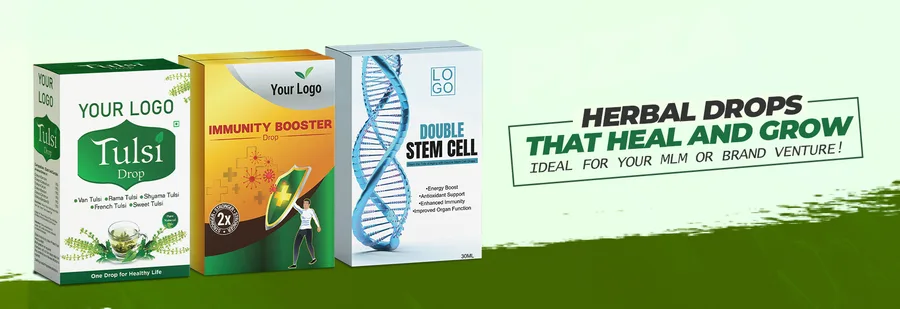
Or a non-capsule format, drops, tablets, liquids, which sidesteps the question entirely. Our drops do, which is one practical advantage of that format that has nothing to do with dosing.
And the carrier oil, which should also be declared: coconut, MCT, olive, sunflower, all plant. Fish oil carriers exist and are obviously neither vegetarian nor vegan.
So the full vegan check is three things: the D3 source, the capsule shell, and the carrier. A product can fail on any one of them, and most labels address none of them.
The disclosure problem, which is the real story
Indian labelling requires a vegetarian or non-vegetarian mark, the green and brown dot system.
And here is where it gets unsatisfying in practice:
Lanolin-derived D3 is commonly treated as vegetarian, since no animal is slaughtered. Which is defensible under the common Indian definition and tells a vegan nothing.
Gelatin is an animal product, and a gelatin softgel should carry the non-vegetarian mark. In practice, enforcement and consistency vary, and consumers encounter products where the mark and the ingredient list do not sit comfortably together.
And “vegan” is not a regulated category in the way vegetarian is, so a vegan claim rests on the manufacturer’s word.
Which produces our position, and it is a disclosure position rather than a product position:
We think the D3 source should be named on the label, lanolin or lichen, regardless of which it is.
Not because lanolin is a problem. It is cheap, abundant, effective, and no animal is harmed. But because a customer who wants to know currently cannot find out, and the information costs a manufacturer nothing except the decision to print it.
And we will say plainly: most of the industry does not print it because most customers do not ask, and because printing “made from sheep wool grease” is not a selling line. That is the whole reason, and it is not a good one.
Is the premium worth paying?
If you are vegan: yes, and it is not really a choice. Check the shell and the carrier too.
If you are Jain, or avoid animal-derived ingredients for religious reasons: that is your call, and the information should be available to you to make it.
If you simply prefer plant-derived ingredients: it is a preference, and preferences are allowed to cost money. Just know what you are buying, a sourcing attribute, not better performance.
If you are correcting a deficiency and have no dietary restriction: no. Buy lanolin D3, take the right dose with a fatty meal, and spend the difference on something else. We sell both and we will tell a customer this.
And the budget vegan route: D2 is cheaper than lichen D3 and genuinely less effective, so if you use it, do so knowing the dose and monitoring need to account for that. For most vegans, lichen D3 at a higher price is the better answer.
What we will and will not say
Sayable: the authorised nutrient-function claims for vitamin D, where present in a significant quantified amount, contribution to normal absorption and utilisation of calcium and phosphorus, normal blood calcium, maintenance of normal bones, teeth and muscle function, normal immune system function, and a role in cell division, in the permitted wording; the source, named; the capsule shell material; and the carrier oil.
Not sayable: that lichen D3 is more bioavailable, better absorbed, or “better recognised by the body”; that plant-derived D3 is superior; or any of the disease-prevention claims, cancer, heart disease, diabetes, that large trials have largely failed to support.
And one refusal: we will not charge a premium for a vegan product and justify it with a performance claim. The premium is for the sourcing. Say so.
And the most honest summary:
Almost all D3 comes from sheep wool grease. No sheep dies, it is vegetarian by the usual Indian standard, it is not vegan, and nobody prints it.
Lichen D3 is the same molecule from a vegan source, at several times the price, with no performance advantage, and also a sustainability question nobody raises.
D2 is a cheaper vegan option that is genuinely less effective.
And the gelatin capsule shell undoes a vegan claim more often than the vitamin source does.
The thing worth fixing here is not the ingredient. It is that the label does not say.
When to see a doctor
Get tested before taking high doses. Serum 25-hydroxyvitamin D. And ask which threshold your lab is applying.
Get seen rather than self-treating if you have: bone pain, especially in the hips, ribs or shins; difficulty rising from a chair or climbing stairs; a waddling gait; fractures from minor falls; or, in a child, bowed legs, delayed walking or a swollen wrist, which needs a paediatrician.
Ask about testing if you: work indoors; cover most of your skin; have obesity; have kidney or liver disease; have coeliac disease, inflammatory bowel disease or bariatric surgery; take anti-epileptics, rifampicin or long-term steroids; are pregnant or breastfeeding; or are elderly or housebound.
And specifically for vegans: ask for both vitamin D and vitamin B12 to be checked. B12 is the non-negotiable one on a vegan diet, since there is no plant source at all, we have written about that separately.
Stop and get urgent advice if, while taking vitamin D, you develop: nausea and vomiting, loss of appetite, constipation, unusual thirst, frequent urination, marked weakness or confusion, symptoms of high blood calcium. Say what dose you took and how often. And if you were given a 60,000 IU sachet and have been taking it daily rather than weekly, stop and speak to a doctor.
The short version
- Almost all vitamin D3 is manufactured from lanolin, sheep wool grease
- It is a wool-industry by-product; no animal is killed
- Cholesterol from it is converted and UV-irradiated to make cholecalciferol
- So D3 is vegetarian by the common Indian definition, and not vegan
- And virtually no Indian label says so
- Lichen D3 is fully vegan and is the same molecule
- Not an analogue, identical cholecalciferol
- It costs several times more because lichen grows slowly and yields little
- Wild lichen harvesting at scale has a sustainability question nobody raises
- D2 from irradiated yeast or mushrooms is vegan and cheaper
- And D3 raises and maintains blood levels better than D2
- So D2 works and D3 works better
- Lichen D3 is not better absorbed or more effective than lanolin D3
- Any superiority claim about an identical molecule cannot be true
- The premium buys a sourcing attribute, not performance
- Paying for the attribute you wanted is legitimate; being told it works better is not
- It matters absolutely to strict vegans
- It matters to many Jain customers, whose own practice is theirs to apply
- And to the largest group: people who simply want to know
- It does not matter functionally to anyone just correcting a deficiency
- Most softgel capsules are gelatin, from bovine or porcine collagen
- So “vegan lichen D3” in a gelatin softgel is not vegan, and it exists
- Look for HPMC, plant cellulose or starch capsules
- Or a non-capsule format like drops, which sidesteps it
- Check the carrier oil too, fish oil carriers exist
- The full vegan check is source, shell and carrier
- Most labels address none of the three
- “Vegan” is not regulated the way the vegetarian mark is
- We think the D3 source should be printed either way
- It is not printed because “sheep wool grease” is not a selling line
- Vegans should get B12 checked alongside D, there is no plant source for B12
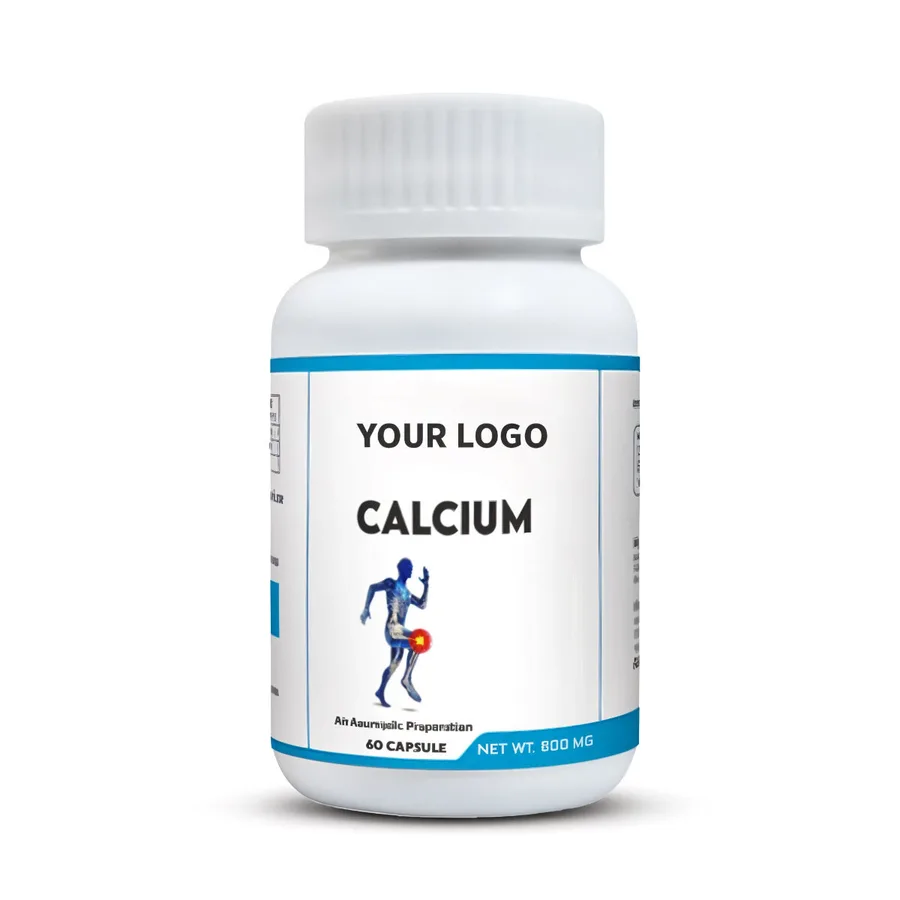
Our formulations: Vitamin D3 Drops, Calcium & D3 Capsule. Related reading: why deficiency is so common in India, drops vs capsule vs weekly sachet, बच्चों के लिए विटामिन D कितनी मात्रा, vegan B12, non-negotiable and why, and label compliance.
Get our product list and minimum orders
Leave your email and we will send the formats we make, the minimum order for each and typical lead times. We use it only to reply to you.
Manufacturing in this category?
We make products in this category for other people's brands. Tell us the format and volume and we will send a specification and a per-unit cost.
Request a quotation ↗NutraHerbal manufactures food supplements, Ayurvedic proprietary medicines and cosmetics for business customers. Product information on this site describes composition, format and commercial positioning for brand owners. It is not medical advice, does not claim to diagnose, treat, cure or prevent any disease, and is not a substitute for consulting a qualified practitioner. Final label claims are the brand owner's responsibility and must be approved for the destination market.
How we write and review content: editorial policy.