Reviewed for accuracy and claims compliance: Claims compliance review
This is an unusual article for a manufacturer to publish, because we make weight-management products and sell them to brands. We would still rather set the expectation correctly, for a straightforward commercial reason: brands built on promises they cannot keep get their listings pulled, their ad accounts banned and their reviews destroyed. The ones that last set honest expectations.
So here is the arithmetic, and where supplements genuinely fit inside it.
The constraint nobody can market around
Body weight change is governed by energy balance. To lose fat you need to be in an energy deficit over time. There is no supplement that changes this, because it is not a biological preference, it is an accounting identity.
That means a capsule can only do one of a small number of things:
- Make you eat less, by affecting appetite or satiety
- Make you absorb less of what you eat
- Make you expend slightly more energy
- Change nothing measurable
Most products are category four. The ones that are not sit in category one, and the effect is modest.
A useful number to hold onto: half a kilogram of fat represents roughly 3,500 kcal. A supplement that somehow increased daily energy expenditure by 50 kcal, which would be a respectable effect for anything you can put in a capsule, would take about ten weeks to account for that half kilogram, assuming nothing else changed. That is the scale we are talking about.
What the popular ingredients actually do
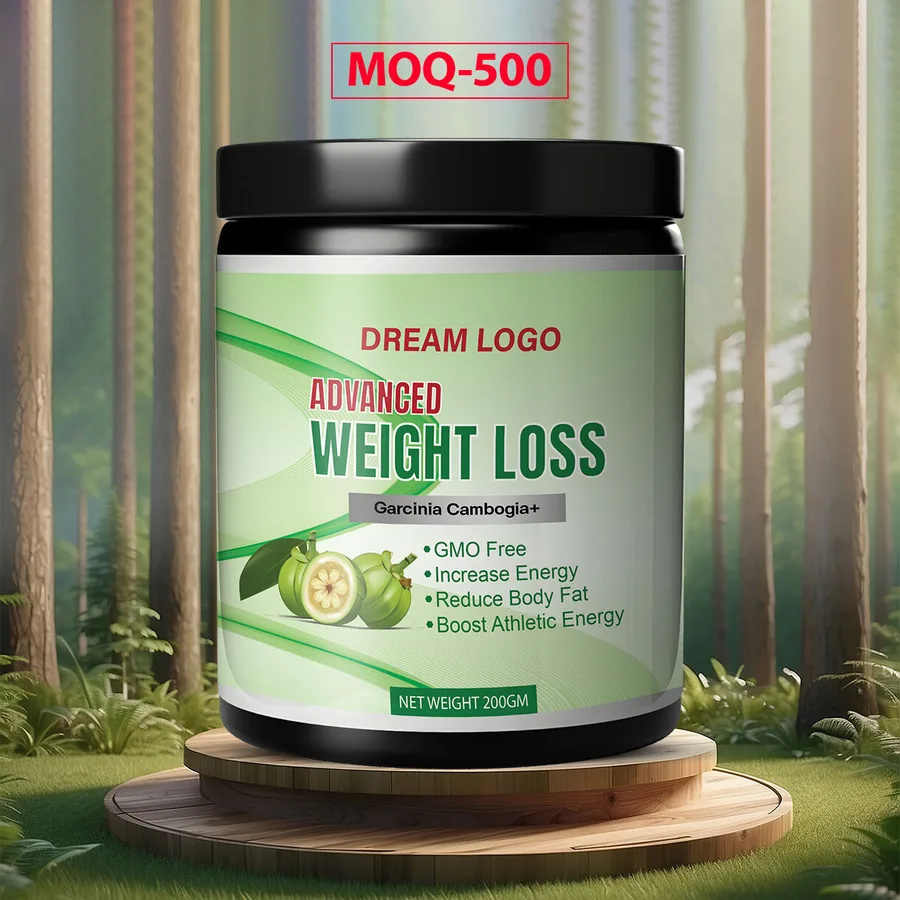
Garcinia cambogia. The most recognised ingredient in the category. Trials have been run and reviews of them have generally found effects that are small, inconsistent, and in several cases not distinguishable from placebo. It is not useless as a formulation component; it is not a mechanism that moves the needle on its own.
Green coffee bean extract. Chlorogenic acid, with some trial evidence that is limited by small studies and quality concerns. Modest at best.
Green tea extract / EGCG. The best-studied of the group for thermogenesis. The measured effects on energy expenditure are real but small, and the clinical weight outcomes in trials are correspondingly small.
L-carnitine. Widely sold for fat metabolism. The evidence for meaningful weight change in people who are not carnitine-deficient is weak.
Soluble fibre, psyllium, inulin, glucomannan. This is the honest one. Soluble fibre taken before a meal increases satiety, and increased satiety can reduce intake. That is a modest, mechanistically sensible, reasonably supported effect. It is the mechanism we build our fibre products around, and it is the only one in this list we are comfortable describing as doing something you will notice.
Triphala. Traditional use for regularity. Customers notice the regularity effect early, which matters for adherence, but regularity is not fat loss and it should not be sold as such.
Where supplements genuinely help
Having been fairly negative, here is the part that is true and useful.
Adherence is the real problem, and products can help with it. Most people know roughly what to do and cannot sustain it. Anything that makes the deficit easier to maintain is doing something worthwhile, even if its direct metabolic effect is negligible.
Meal replacements change a habit rather than adding one. This is the most useful product in a weight range by a clear margin. A tablet is added to a routine and forgotten; a meal replacement replaces something, so the customer either uses it or notices immediately that they have not. It also makes a meal’s calorie content known rather than estimated, which is most of the difficulty for most people.
Fibre before meals genuinely reduces intake for some people. Modest, real, and explicable.
Protein supports satiety and preserves muscle in a deficit. Well established, and a protein supplement is a practical way to hit an intake that is otherwise hard on an Indian vegetarian diet.
Micronutrient cover during restriction. Not a weight effect, but a sensible one.
Notice what all of these have in common: they support the behaviour that does the work. None of them replaces it. That is the honest framing, and it happens to describe a better product than a fat-burner claim does.
The claims that end brands
This is the commercial warning, and it is not hypothetical.
Figures in kilograms. “Lose 10 kg in 30 days” breaches Indian advertising rules. It also gets marketplace listings removed and advertising accounts suspended, often permanently.
Before-and-after imagery implying guaranteed results. Platform policies treat this harshly, and repeat violations cost the account rather than the ad.
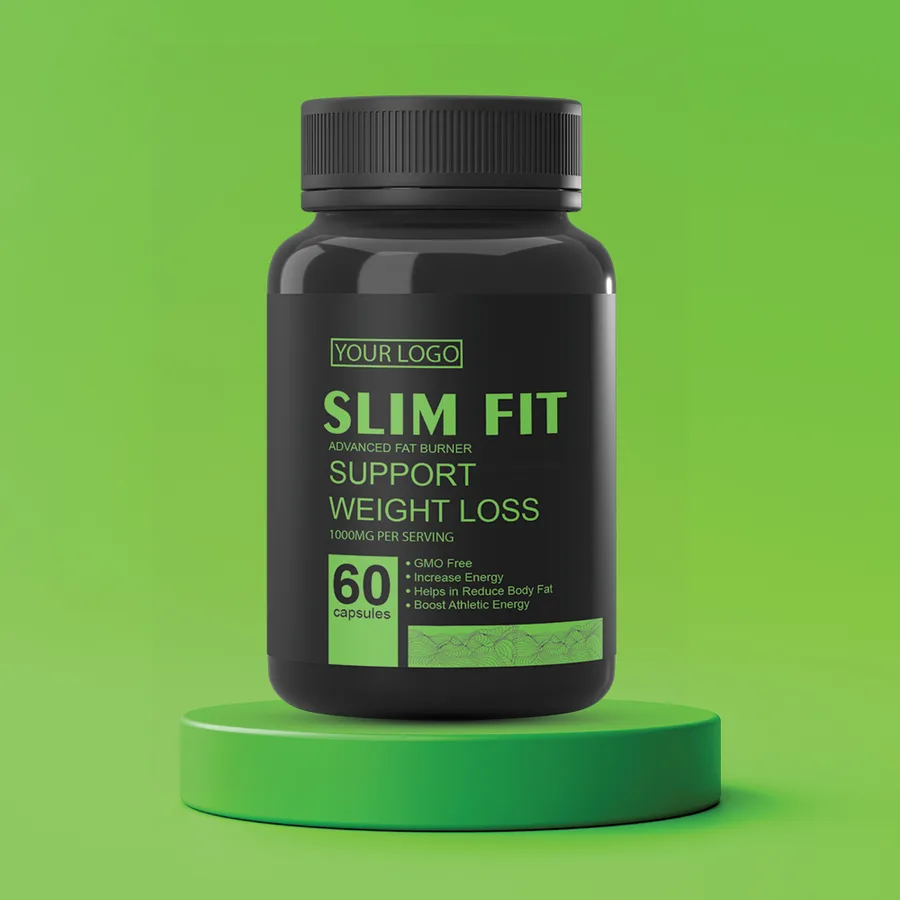
“Fat burner”, “melts fat”, “no diet or exercise needed”. All unsubstantiable. The last one is also the most damaging, because it sets an expectation the product cannot meet and the review section will record that.
In our own manufacturing we decline artwork that carries these. It occasionally costs an order. It has also saved clients from losing a sales channel in week three of a launch.
What a compliant label can say
Plenty, as it turns out:
- Supports metabolic wellness
- Helps support satiety as part of a calorie-controlled diet
- Contains dietary fibre
- Supports a healthy daily routine
- Describes the traditional use of the herbs included
“As part of a calorie-controlled diet” is the phrase that makes this category legitimately marketable worldwide. It is honest, it is permitted, and in practice it does not reduce conversion as much as brands fear, because the customer already suspects the alternative is a lie.
If you are launching in this category
Sell a programme, not a capsule. Tablet, meal replacement and fibre powder cover three different moments in a day. Programme buyers retain considerably better than single-SKU buyers, and the economics follow retention rather than acquisition.
Expect brutal seasonality. January and the wedding months are the peaks. Stock must be landed by late November for January; ordering in January means selling into February.
Price for repeat. Meal replacement is the fastest-consuming product in our catalogue, roughly a tub every three weeks at one meal a day. That is where the revenue actually is.
Set expectations in your content. A customer who was told the truth and lost two kilograms is a repeat customer. One who was promised ten and lost two is a refund request and a one-star review.
Safety notes
- Garcinia has rare reports of liver effects at high intakes; not advised in pregnancy.
- Green coffee and green tea contribute caffeine, relevant for evening dosing and caffeine sensitivity.
- Psyllium must be taken with plenty of water, and that instruction belongs on the front of the pack.
- Anyone on medication for blood sugar, blood pressure or thyroid should consult a doctor before taking metabolic supplements.
- Meal replacements should replace one meal unless under dietary supervision.
This article is information, not medical advice. Consult a qualified practitioner before starting any weight-management programme.
The short version
Energy balance sets a hard ceiling, and nothing in a capsule raises it much. Of the popular ingredients only soluble fibre has a mechanism you are likely to notice. What genuinely helps is anything that makes a deficit easier to sustain, meal replacements most of all, then fibre and protein. And any product promising kilograms is telling you something about its honesty, not its efficacy.
For the formulated products see Trimvo 360 and the meal replacement powder. For what can and cannot be printed, see our label compliance guide.
Get our product list and minimum orders
Leave your email and we will send the formats we make, the minimum order for each and typical lead times. We use it only to reply to you.
Manufacturing in this category?
We make products in this category for other people's brands. Tell us the format and volume and we will send a specification and a per-unit cost.
Request a quotation ↗NutraHerbal manufactures food supplements, Ayurvedic proprietary medicines and cosmetics for business customers. Product information on this site describes composition, format and commercial positioning for brand owners. It is not medical advice, does not claim to diagnose, treat, cure or prevent any disease, and is not a substitute for consulting a qualified practitioner. Final label claims are the brand owner's responsibility and must be approved for the destination market.
How we write and review content: editorial policy.