Reviewed for accuracy and claims compliance: Claims compliance review
This question comes up constantly and gets answered badly, usually by whoever is selling one of the two formats.
The honest version: they are genuinely different products, not better and worse versions of the same thing. Which one suits you depends on three things, what you are optimising for, whether you will actually take it, and whether the dose matters to you.
The actual difference
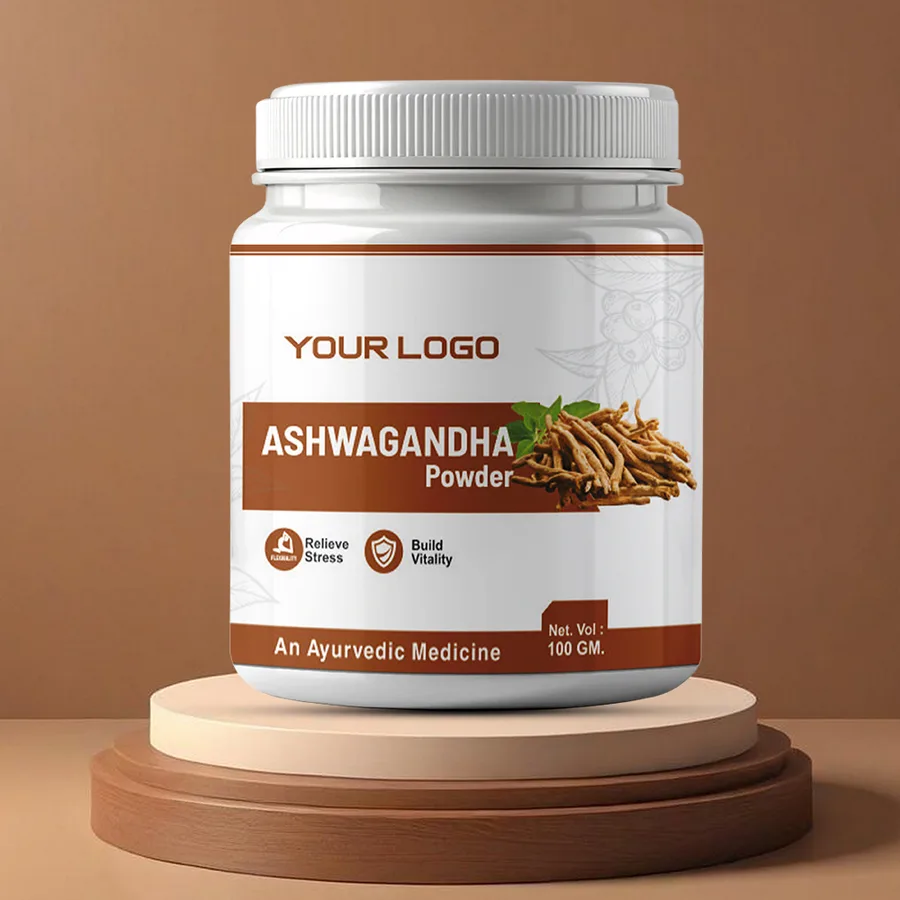
Churna is the dried root, ground. That is the whole process. It is not standardised, which means the withanolide content varies between batches and between suppliers, because it varies in the plant.
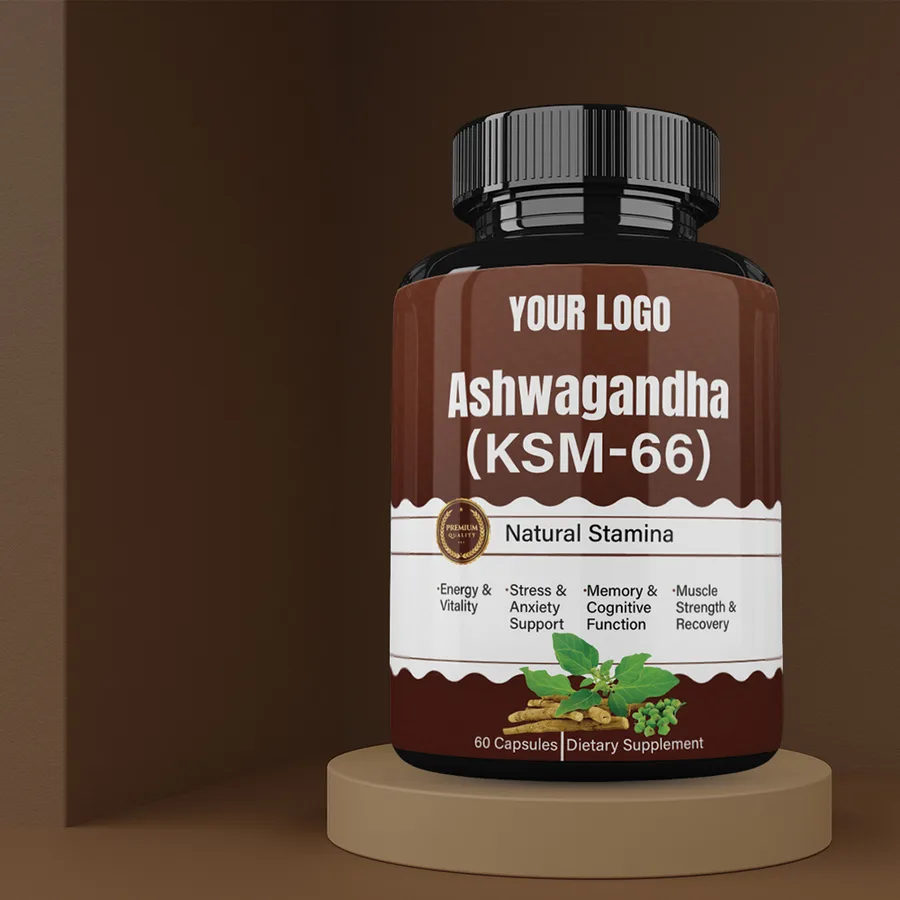
Capsules usually contain a standardised extract, the root processed to concentrate specific constituents, then analysed so a percentage can be printed. 5% withanolides is a common commercial grade.
So a capsule is not “stronger churna”. It is a concentrate with a measured content, in a shell.
The dose maths
This is the part that is rarely laid out, and it changes how the comparison reads.
Clinical studies on ashwagandha generally use 300–600 mg of standardised root extract daily. A 500 mg capsule at that grade delivers that range in one or two capsules.
Traditional churna doses are much larger by weight, typically measured in grams, because the material is not concentrated. A teaspoon is roughly 3–5 grams.
The two are not directly convertible, because the extraction concentrates some constituents and not others. Anyone presenting a neat conversion ratio is overstating what is known.
What this means practically: if your reason for taking ashwagandha is to match what the research examined, the capsule is the format that maps onto it. If your interest is the traditional preparation, the churna is that preparation, and it has a far longer record of use than any extract does.
Both are legitimate. They are answering different questions.
Side by side
| Churna | Capsule | |
|---|---|---|
| Cost per month | Lower | Higher |
| Standardised | No | Yes, withanolide % stated |
| Matches research doses | Not directly | Yes |
| Traditional preparation | Yes, this is it | No |
| Taste | Bitter, earthy | None |
| Convenience | Needs measuring and mixing | Swallow and go |
| Travel | Awkward | Easy |
| Adherence | Lower for most people | Higher |
| Can you verify quality | Harder | Easier, stated grade |
The adherence point, which decides it for most people
Here is the thing that matters more than the technical comparison.
The best format is the one you will still be taking in week eight.
Ashwagandha is assessed over eight to twelve weeks in research. That is the timeframe. A product you abandon after ten days because the taste is unpleasant or because measuring it each night became a chore has delivered nothing, regardless of how good the raw material was.
Most people who try churna and quit, quit over the taste and the faff. If you know that is you, buy capsules, you are paying for the fact that you will actually finish the bottle, and that is a legitimate thing to pay for.
If you have taken churna with milk for years and it is simply part of your routine, there is no reason to switch.
When churna is genuinely the better choice
You want the traditional preparation. Ashwagandha churna with warm milk at night, sometimes with a little ghee or honey, is the classical method. Taking a fat-soluble-constituent-bearing root with milk and fat is a reasonable delivery choice, and the night timing suits what the herb is traditionally used for. This is not an inferior version of a capsule.
Cost is the constraint. Churna is considerably cheaper per month. For someone taking it long-term on a budget, that is a real consideration.
You are using it in a larger preparation. Mixed into a traditional formulation, a laddoo, or alongside other churnas.
When capsules are the better choice
You want a known, stated dose. The withanolide percentage is printed and verifiable.
You travel or take it at work. Churna is not practical outside your own kitchen.
You cannot tolerate the taste. This is not weakness, it is the single most common reason people stop.
You want a named grade. KSM-66 and similar branded extracts are produced to defined processes, and much of the published trial work used one of them. If that matters to you, it only exists in extract form.
What to check on either
On churna: that it says root. Cheaper material includes leaf, which has a different constituent profile and is not what the classical texts specify. Also check it is a single ingredient without fillers.
On capsules: the standardisation percentage. If there is no withanolide figure, you are buying an unspecified extract at extract prices. Also check whether the shell is vegetarian, HPMC rather than gelatin, if that matters to you.
On both: whether the supplier will provide a batch certificate of analysis. A manufacturer who will not is telling you something.
What neither format changes
Switching formats does not change the safety considerations, and these are worth repeating because they are often left off labels:
- Thyroid medication. Ashwagandha can influence thyroid hormone levels. If you have a thyroid condition or take thyroid medication, check with your doctor first. This is the caution we think matters most and the one most often omitted.
- Pregnancy. Traditionally avoided.
- Sedatives and sleep medication. May add to sedative effects.
- Autoimmune conditions. Practitioner advice is sensible.
- Defined courses. Rasayana herbs were traditionally used in courses rather than indefinitely, and there are case reports in the literature associating herbal supplement use including ashwagandha with liver injury, rare, and a reason to prefer a defined period and to stop if jaundice or persistent nausea appear.
This article is information, not medical advice.
If you are launching a brand
Most clients end up carrying both, and the reasoning is straightforward.
The churna captures traditional-preparation demand and gives you a low price point. The capsule carries the margin, travels better, and reaches the younger audience arriving from international supplement content, the ones who will look for a named grade and check the percentage.
They are not competing SKUs; they serve different customers. Content can route people to the right one, which is more effective than betting on a single format.
The short version
Churna is the traditional preparation, cheaper, unstandardised, and harder to stick with. Capsules are standardised, match the research doses, cost more, and get finished. Neither is better in the abstract, pick on whether taste and convenience will stop you, and whether a stated dose matters to you.
Check for root on churna and a withanolide percentage on capsules. And whichever you choose, give it eight weeks.
Full detail in Hindi: अश्वगंधा के फ़ायदे और नुक़सान. In English, the research picture: ashwagandha traditional uses and evidence.
Get our product list and minimum orders
Leave your email and we will send the formats we make, the minimum order for each and typical lead times. We use it only to reply to you.
Manufacturing in this category?
We make products in this category for other people's brands. Tell us the format and volume and we will send a specification and a per-unit cost.
Request a quotation ↗NutraHerbal manufactures food supplements, Ayurvedic proprietary medicines and cosmetics for business customers. Product information on this site describes composition, format and commercial positioning for brand owners. It is not medical advice, does not claim to diagnose, treat, cure or prevent any disease, and is not a substitute for consulting a qualified practitioner. Final label claims are the brand owner's responsibility and must be approved for the destination market.
How we write and review content: editorial policy.