Reviewed for accuracy and claims compliance: Claims compliance review
If you compare two ashwagandha capsules in India, one may cost several times the other for the same stated milligrams. The difference is usually whether it contains a branded, clinically studied extract or a generic one.
And the honest answer to “is it worth it” is: it depends what you are buying it for, and the reasoning is more interesting than either the premium brand’s marketing or the generic’s price argument.
We formulate with both. This is written as a sourcing article.
This is information, not medical advice. Ashwagandha has real cautions in thyroid disease, autoimmune conditions, pregnancy and liver disease, covered in our dosage article.
What a branded extract actually is
Two branded root extracts dominate the ashwagandha literature. Most of the human trials you see cited were conducted on one of them.
And what the brand owns is not the plant. It is a defined manufacturing process. Specifically:
A specified plant part, root only, in the better-known cases.
A specified extraction method, including solvent and conditions.
A specified withanolide range, assayed by a stated method.
Batch-to-batch consistency, maintained by process control rather than by blending to a number.
And a body of clinical trials conducted on that exact material.
That last point is the crux of the whole comparison.
Why “the trials used that extract” matters more than it sounds
This is the argument that actually holds, and it is a scientific one rather than a marketing one.
A botanical extract is not a single compound. It is a mixture, and the mixture depends on the plant part, the solvent, the temperature, the extraction time and the drying.
Change the solvent and you change which compounds come across and in what proportion. Two extracts both standardised to 5% withanolides can have quite different withanolide profiles, different ratios of withanolide A, withaferin A, withanoside IV and the rest.
And the trials were done on one specific mixture.
So when a generic extract cites those trials, it is borrowing evidence generated on a different material. That is a real logical gap, not a brand’s invention.
The honest counter-argument: the gap may not matter much. Nobody has run head-to-head trials of branded versus generic ashwagandha extract on the same outcomes, so the claim that the branded material is clinically superior is also unproven. It is better characterised, which is a different thing from being better.
Our position: “better characterised” is genuinely worth something, and it is not the same as “works better”. Anyone telling you either extreme is overstating.
What the premium actually pays for
Being specific, because “quality” is too vague to act on.
1. The clinical dossier. Trials on that material, which a formulator can cite in a technical file. For an export market or a regulated claim, this matters a great deal.
2. Consistency. Process control rather than blending to hit an assay number. And consistency is itself a quality attribute, because it means your product behaves the same across batches.
3. Documentation. Full certificates, identity, residual solvent, heavy metals, pesticides, microbiology, and stability data, available without argument.
4. Traceability, sometimes to specific farms, and organic certification where offered.
5. Supply reliability, which matters more in practice than buyers expect.
6. And a marketing asset. A recognised ingredient brand on a pack sells. This is a real commercial value and it is worth naming honestly rather than pretending the premium is all science.
What it does not pay for
Equally honest.
It does not make the health claim legal. There is no authorised health claim for ashwagandha, branded or not. A premium extract does not let you say “reduces stress” on a food supplement label. This surprises formulators regularly.
It does not make it suitable for everyone. The thyroid, autoimmune, pregnancy and liver cautions apply to every ashwagandha extract.
And it does not guarantee a result for an individual. The trials showed modest average effects on stress scales; they did not establish that a given person will notice anything.
Where a generic extract is the right choice
This is the part branded suppliers will not tell you, and it is often true.
A well-made generic root extract with proper paperwork is a perfectly reasonable ingredient.
It makes sense when:
Price point is the constraint, a mass-market product where the branded premium would price you out.
It is one of several ingredients in a formulation, at a modest dose, where the ashwagandha is not the product’s entire proposition.
The market does not reward the brand name, domestic Indian retail, where consumers mostly do not recognise ingredient brands.
And a churna-based product, where the whole point is the classical form rather than a standardised extract.
And where it does not make sense:
Export markets that expect a dossier.
A single-ingredient product sold primarily on ashwagandha’s clinical reputation, because then you are selling the evidence, and the evidence belongs to a different material.
And anywhere you intend to reference trial data in your technical documentation.
How to judge a generic extract
If you are buying generic, the paperwork is the product. These are the questions.
1. Plant part, root, or root and leaf?
This is the first and most important question.
Classical use is the root. Leaf is cheaper and contains withaferin A in higher proportion, which raises the withanolide percentage cheaply. And some markets restrict leaf-containing preparations.
A supplier who will not state the plant part clearly is answering the question.
2. Withanolide content, and by what method?
And the follow-up that separates a real supplier from a trader: HPLC or gravimetric?
Gravimetric methods can overstate withanolide content substantially, because they measure a crude fraction rather than the compounds themselves. An HPLC figure and a gravimetric figure for the same material are not comparable, and a very high percentage quoted without a method is a red flag.
3. The withanolide profile, not just the total. Ask for a chromatogram. A supplier who can produce one is working at a different level from one who sends a single number.
4. Extraction solvent, and residual solvent testing. Water, hydroalcoholic, or something else. Residual solvent limits matter and are routinely not tested in commodity material.
5. Extract ratio, and what makes up the rest of the weight. Many “extracts” are a modest amount of extract on a maltodextrin or starch carrier, and the label should say so.
6. Batch-wise heavy metals, lead, mercury, arsenic, cadmium. Ashwagandha is a root and roots take up soil contaminants. This is the single most important safety test and it is not optional.
7. Pesticide residues, aflatoxin, and microbiology.
8. Identity, Withania somnifera, confirmed, with the species named. Adulteration and substitution occur.
9. Stability data in the actual pack.
10. And consistency across batches, ask for the assay results of the last several batches, not just the current one. A supplier whose numbers are suspiciously identical every time is blending to a target; one whose numbers swing wildly has no process control. Neither is ideal, and the second is worse.
Side by side
| Branded clinical extract | Good generic root extract | Churna (root powder) | |
|---|---|---|---|
| Trials on this material | Yes | No | Few |
| Standardised | Yes, defined range | Usually, method varies | Generally not |
| Batch consistency | Process-controlled | Variable | Variable |
| Documentation | Complete | Ask for it | Ask for it |
| Classical form | No | No | Yes |
| Cost | Highest | Moderate | Lowest |
| Legal claim available | None | None | None |
| Best for | Export, single-ingredient, dossier needed | Domestic, multi-ingredient, price-sensitive | Traditional products |
Note the “legal claim available” row. It is the same for all three, and it is the row formulators most often fail to check before building a brand around an ingredient.
The thing both sides get wrong
Two honest corrections.
The premium side overstates by implying the clinical evidence is stronger than it is. The ashwagandha trials are small, short, mostly 8–12 weeks, frequently industry-funded, and report modest effects on subjective scales. A better-characterised extract of a modestly-evidenced botanical is still a modestly-evidenced botanical.
The generic side overstates by implying extracts are interchangeable. They are not, for the chemistry reasons above, and a generic extract quoting branded trial data in its marketing is doing something we would not do.
And both sides skip the question that matters most to a buyer: what is the withanolide content, by what method, from which plant part, with what heavy metal data. Those four answers tell you more than the brand name does.
What we do
We formulate with both, and we say which.
For a single-ingredient ashwagandha product sold on its clinical reputation, we specify a branded clinical extract, because selling the evidence while using a different material is not honest.
For multi-ingredient formulations at modest doses, and for price-sensitive domestic products, we use a well-documented generic root extract, and we do not cite the branded trials for it.
For traditional products, churna, which is the classical form and is not trying to be an extract.
And in every case we state the plant part, the withanolide content and the assay method on the specification, and we require batch-wise heavy metal certificates.
And what we decline: citing branded trial data on a generic-extract product. That is the specific dishonesty in this category, and it is widespread.
Claims, same for everyone
What is sayable: a traditional-use statement for ashwagandha, framed clearly as traditional use, plus authorised nutrient-function claims for any vitamins and minerals present.
What is not sayable, regardless of extract: reduces stress, improves sleep, lowers cortisol, increases testosterone, improves strength, treats anxiety, or “clinically proven”.
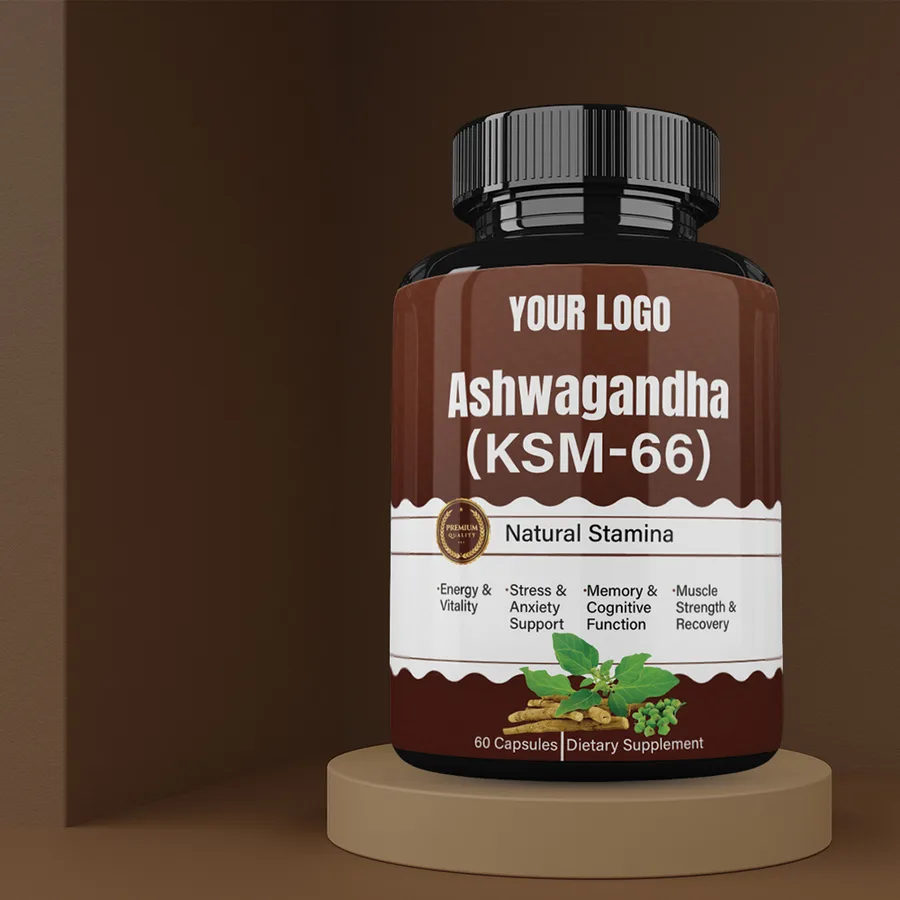
And “clinically studied extract” deserves a note. It is a factual statement about the ingredient if true, and it cannot be used to imply an effect the label may not claim. Saying “contains clinically studied KSM-66” alongside imagery about calm is doing by suggestion what the regulation forbids directly, and that is a judgement call we come down on the conservative side of.
When to see a doctor
Before taking ashwagandha in any form:
- Any thyroid condition, or on levothyroxine
- Any autoimmune condition, or on immunosuppressants
- Pregnancy, trying to conceive, or breastfeeding, avoid
- Liver disease
- On sedatives, sleeping tablets or anti-epileptics
- On blood pressure or diabetes medication
- Before surgery
Stop and seek advice for: yellowing of the eyes, dark urine, pale stools or persistent nausea (liver); palpitations, tremor, heat intolerance or weight loss (thyroid); or a rash.
The short version
- A branded extract is a defined manufacturing process, not a different plant.
- Most ashwagandha trials were run on one of two branded extracts.
- A botanical extract is a mixture, and solvent and plant part change the mixture.
- Two extracts at 5% withanolides can have different withanolide profiles.
- So a generic citing those trials is borrowing evidence from a different material, a real logical gap.
- And nobody has run branded versus generic head-to-head. Superiority is unproven too.
- “Better characterised” is worth something and is not the same as “works better”.
- The premium buys a clinical dossier, consistency, documentation, traceability, supply and a marketing asset.
- It does not make any health claim legal, there is no authorised claim for ashwagandha.
- It does not remove the thyroid, autoimmune, pregnancy or liver cautions.
- A good generic root extract is a reasonable ingredient for domestic, multi-ingredient, price-sensitive products.
- Use branded for export, for single-ingredient products, and wherever you cite trials.
- Ask the plant part first, root, or root and leaf.
- Leaf is cheaper and raises the percentage, and some markets restrict it.
- Ask whether withanolides were assayed by HPLC or gravimetrically, gravimetric overstates.
- A high percentage quoted without a method is a red flag.
- Ask for a chromatogram, not just a number.
- Ask about extraction solvent and residual solvent testing.
- Ask what makes up the rest of the weight, many extracts sit on maltodextrin.
- Batch-wise heavy metals are the most important test, roots take up soil contaminants.
- Ask for the last several batches’ assays, not just the current one.
- Suspiciously identical numbers mean blending; wildly swinging numbers mean no control.
- The premium side overstates the evidence; the generic side overstates interchangeability.
- Four answers beat the brand name: plant part, withanolide content, assay method, heavy metal data.
- We will not cite branded trial data on a generic-extract product.
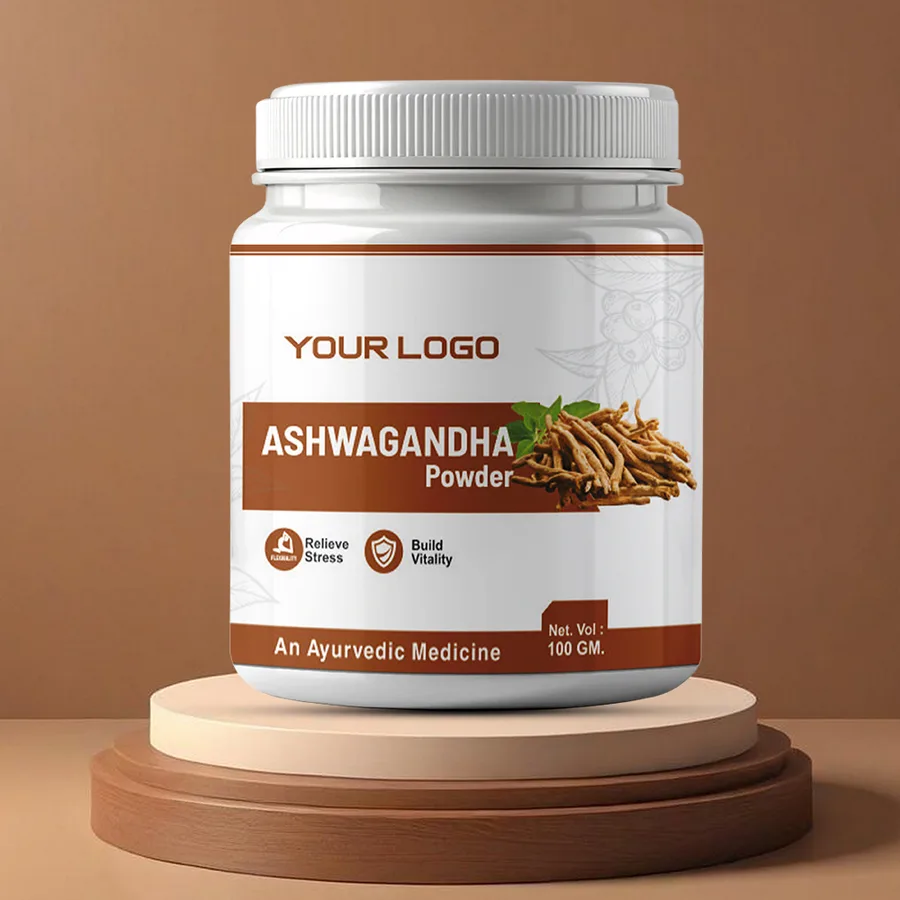
Ingredient detail: ashwagandha. Composition: ashwagandha capsule and ashwagandha powder. Related: dosage, timing and how long to take it, choosing a contract manufacturer, and private label vs custom formulation.
Get our product list and minimum orders
Leave your email and we will send the formats we make, the minimum order for each and typical lead times. We use it only to reply to you.
Manufacturing in this category?
We make products in this category for other people's brands. Tell us the format and volume and we will send a specification and a per-unit cost.
Request a quotation ↗NutraHerbal manufactures food supplements, Ayurvedic proprietary medicines and cosmetics for business customers. Product information on this site describes composition, format and commercial positioning for brand owners. It is not medical advice, does not claim to diagnose, treat, cure or prevent any disease, and is not a substitute for consulting a qualified practitioner. Final label claims are the brand owner's responsibility and must be approved for the destination market.
How we write and review content: editorial policy.