Reviewed for accuracy and claims compliance: Claims compliance review
Ashwagandha is the most-studied classical Indian botanical, and the most inconsistently dosed.
Part of the reason is simple and almost never explained: churna and extract are dosed an order of magnitude apart, and labels rarely make clear which one you are holding.
This article is the numbers, what the trials used, how the forms compare, when to take it, and how long.
This is information, not medical advice. Ashwagandha has real cautions in thyroid disease, autoimmune conditions, pregnancy and liver disease, see the end.
First: churna or extract?
This is the question that makes every dose figure meaningful or meaningless.
Churna, the whole dried root, powdered. The classical form. Doses are in grams.
Extract, the root concentrated with a solvent, standardised to withanolide content. Doses are in hundreds of milligrams.
They are not interchangeable by weight. A 600 mg extract capsule is not a smaller dose than three grams of churna, depending on the extract ratio it may be a larger one.
So the first thing to find on a label is which it is, and if it is an extract, the ratio and the withanolide percentage. If neither is stated, you cannot dose it rationally.
The doses used in trials
Most modern trials used standardised root extract, and the figures cluster in a recognisable range.
Commonly: 300 mg twice daily, or 600 mg once daily, of an extract standardised to withanolides, frequently stated as around 5%.
Some trials used 250 mg daily, some 500–600 mg, and a few went higher.
And duration: 8 to 12 weeks is the usual trial length, with 60 days being especially common.
For the classical churna, traditional use is in the range of a few grams daily, often 3 to 6 g, taken with milk or warm water.
And the honest caveat: the trials are mostly small, many are industry-funded, and several used one specific branded extract, which means the dose figures belong to that material, not to ashwagandha in general. This matters more than it sounds and we come back to it.
Withanolides, the number that actually matters
Withanolides are the steroidal lactones generally credited with the activity, and standardisation is expressed as a percentage.
And here is the arithmetic that most buyers never do:
A 500 mg extract standardised to 2.5% withanolides delivers 12.5 mg of withanolides. A 500 mg extract standardised to 5% delivers 25 mg.
Same capsule weight, double the active.
So “500 mg ashwagandha” tells you very little. The question is 500 mg of what, standardised to what.
And a warning about high percentages: some extracts are standardised to much higher withanolide figures, 10% or above. Those are achieved by different extraction and sometimes by including leaf, which has a different withanolide profile. A very high percentage is not automatically better and is worth asking about rather than assuming.
Timing, and it depends what you want
This is where the generic advice fails, because ashwagandha is taken for two different things.
If sleep is the goal: evening
Take it in the evening, an hour or two before bed.
And the classical method agrees, churna with warm milk at night is the traditional anupana, and we have written about that separately.
And a practical note: some people find it mildly sedating and some find it energising. If evening dosing leaves you alert, move it earlier. This is individual and worth one week of trial each way.
If daytime stress or exercise performance is the goal: split dosing
300 mg morning and 300 mg evening is what most trials used, and it keeps levels steadier.
If it upsets your stomach: with food
Gastrointestinal upset is the commonest complaint, nausea, cramping, loose stools. It is substantially reduced by taking it with food, and on an empty stomach is the commonest way people conclude they cannot tolerate it.
And one timing interaction worth knowing
Thyroid medication is taken on an empty stomach with a gap before anything else. If you take levothyroxine, keep ashwagandha well away from it, and read the thyroid caution below, which is more important than the timing.
How long, and the cycling question
Three honest answers, because this is asked constantly.
What the trials tell us: 8 to 12 weeks. Almost all the human evidence sits in that window.
What that means practically: give it at least 8 weeks before judging it. A two-week trial of ashwagandha tells you nothing, and this is the single commonest reason people conclude it does not work.
And what we do not know: long-term safety beyond a few months is not well characterised. There are no good long-duration human trials. “Traditional use for centuries” is a reasonable argument and not the same as safety data.
Should you cycle it?
The honest answer: nobody knows, and the common advice is invented.
“Eight weeks on, two weeks off” circulates widely and has no trial behind it. There is no evidence of tolerance developing, and no evidence that cycling preserves an effect.
What we would actually suggest:
Take it for a defined period, 8 to 12 weeks, for a defined reason.
Then stop and see. If the thing you were taking it for has improved and stays improved, you have your answer. If it returns, that is also information.
And this is more useful than cycling on a schedule, because it tells you whether the product is doing anything.
And in the classical framework, rasayana use is periodic rather than perpetual anyway, which points the same way.
Which form, practically
| Churna (root powder) | Standardised extract | |
|---|---|---|
| Dose | Grams (3–6 g typical) | Hundreds of mg (300–600) |
| What the trials used | Few | Most |
| Taste | Strong, bitter, horse-like | None in a capsule |
| Classical form | Yes | No |
| Standardisation | Usually none | Withanolide % |
| Cost per day | Lower | Higher |
| Main drawback | Taste and volume | Variable quality; “500 mg” means little alone |
And the name question, since it comes up: “ashwagandha” is said to derive from the smell of the root, which is often described as horse-like. That is not a defect and it is why the churna is hard to take plainly, and why the milk method exists.
Root, or root and leaf?
Worth knowing, because it affects both dose and legality in some markets.
Classical use is of the root. The leaf has a different withanolide profile and contains withaferin A in higher amounts.
Some extracts are root-only; some include leaf, which is cheaper and raises the withanolide percentage.
And the regulatory position differs by country, some markets restrict leaf-containing preparations.
Our position: specify root-only, and say so on the label. A product that does not state the plant part is not telling you what you are taking, and the trials that exist were mostly on root extract.
Safety, and these are real
Ashwagandha is well tolerated by most people and it is not harmless.
Thyroid. It can increase thyroid hormone levels, and there are case reports of thyrotoxicosis. In hypothyroidism on levothyroxine it may require dose review; in hyperthyroidism it should be avoided. This matters a great deal in India, where hypothyroidism is common and often undiagnosed, and it is the caution we think most needs printing.
Autoimmune conditions, it has immunostimulant activity in laboratory work. Caution in rheumatoid arthritis, lupus, Hashimoto’s and multiple sclerosis, and ask before combining with immunosuppressants.
Pregnancy, avoid. It is on standard avoid lists and has traditional abortifacient associations. And in lactation, data are absent.
Liver. Cases of liver injury associated with ashwagandha have been reported, including in regulatory safety communications in some countries. The absolute risk appears low and the signal is real. Avoid in pre-existing liver disease, stop if you develop nausea, dark urine, pale stools or yellowing of the eyes, and get liver function checked. We think this warning belongs on the pack and it almost never is.
Sedatives and alcohol, additive effects. Caution with benzodiazepines, sleep medication and anti-epileptics.
Blood pressure and blood glucose, may lower both. Monitor if on treatment.
Surgery, stop before, and tell the anaesthetist.
Prostate cancer and hormone-sensitive conditions, ask the treating doctor.
Nightshade family allergy, ashwagandha is a Solanaceae.
And gastrointestinal upset, which is dose-related and food-related.
Quality, what to ask
Batch-wise heavy metals, lead, mercury, arsenic, cadmium. Ashwagandha is a root, and roots take up soil contaminants. This is not optional.
Pesticide residues and microbiology.
Withanolide assay, by a stated method.
Plant part, root, or root and leaf.
Extract ratio, and whether any carrier or excipient makes up the weight.
And identity, Withania somnifera, confirmed.
A supplier who provides these readily is a different proposition from one who does not.
Claims, what the label can say
What is sayable: a traditional-use statement, that ashwagandha has long traditional use in Ayurveda as a rasayana and as balya, framed clearly as traditional use, plus authorised nutrient-function claims for any vitamins and minerals in the formulation.
And the important fact: there is no authorised health claim for ashwagandha itself. A label may declare it and its quantity; it may not state what it does.
What is not sayable: reduces stress, improves sleep, lowers cortisol, increases testosterone, builds muscle, treats anxiety, or improves thyroid function.
What we require on artwork: the thyroid caution, the pregnancy avoid, and a liver-symptom warning. And a statement to take it for a defined period rather than indefinitely.
And what we decline: cortisol-reduction claims with a number; testosterone claims; and “adaptogen” used as though it were a function claim.
When to see a doctor
Before starting:
- Any thyroid condition, or on levothyroxine, this is the most important one
- Any autoimmune condition, or on immunosuppressants
- Pregnancy, trying to conceive, or breastfeeding, avoid
- Liver disease, or a history of drug-induced liver injury
- On sedatives, sleeping tablets or anti-epileptics
- On blood pressure or diabetes medication, monitor
- Before surgery, stop in advance
- Hormone-sensitive cancer
Stop and seek advice if:
- Yellowing of the eyes or skin, dark urine, pale stools, persistent nausea or right-upper abdominal pain, possible liver injury
- Palpitations, tremor, heat intolerance, unexplained weight loss, possible thyroid overactivity
- A rash
- Persistent gastrointestinal upset despite taking it with food
The short version
- Churna and extract are dosed an order of magnitude apart. Find out which you have.
- “500 mg ashwagandha” tells you very little, 500 mg of what, standardised to what.
- Most trials used 300 mg twice daily, or 600 mg once daily, of extract standardised to withanolides.
- Classical churna use is a few grams daily, with milk or warm water.
- Withanolide percentage is the number that matters, 2.5% versus 5% is double the active at the same weight.
- Very high withanolide percentages may involve leaf, ask rather than assume.
- Evening for sleep; split morning and evening for daytime stress.
- If evening dosing leaves you alert, move it earlier, this is individual.
- Take it with food, empty-stomach dosing is how most people conclude they cannot tolerate it.
- Keep it well away from levothyroxine, and read the thyroid caution.
- Trials ran 8 to 12 weeks. Give it at least 8 before judging.
- A two-week trial tells you nothing.
- Long-term safety beyond a few months is not well characterised.
- “Eight weeks on, two off” has no trial behind it. The cycling advice is invented.
- Better: take it for a defined period, then stop and see what returns.
- Classical rasayana use is periodic anyway.
- Classical use is the root. Specify root-only and state the plant part.
- Thyroid: it can raise thyroid hormone levels, the caution that most needs printing in India.
- Avoid in pregnancy, and in autoimmune disease ask first.
- Liver injury cases have been reported, avoid in liver disease and know the symptoms.
- Additive with sedatives, and may lower blood pressure and glucose.
- It is a nightshade, relevant for Solanaceae allergy.
- Ask for batch-wise heavy metals, roots take up soil contaminants.
- There is no authorised health claim for ashwagandha. The pack may name it, not claim it.
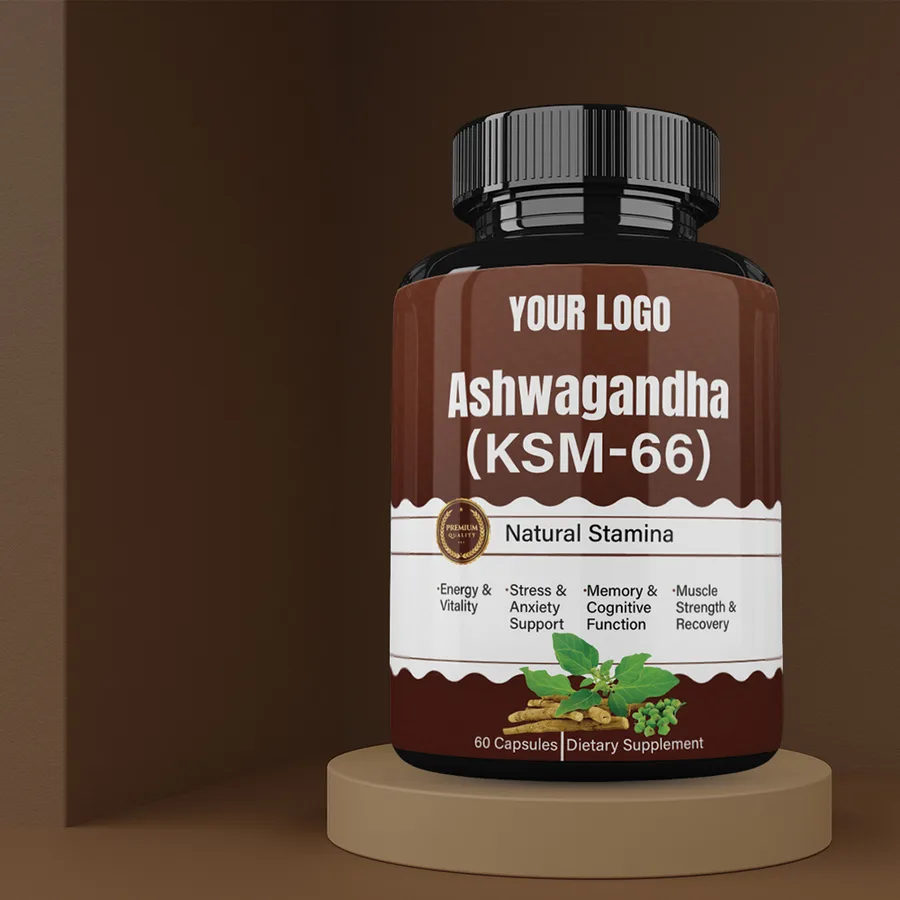
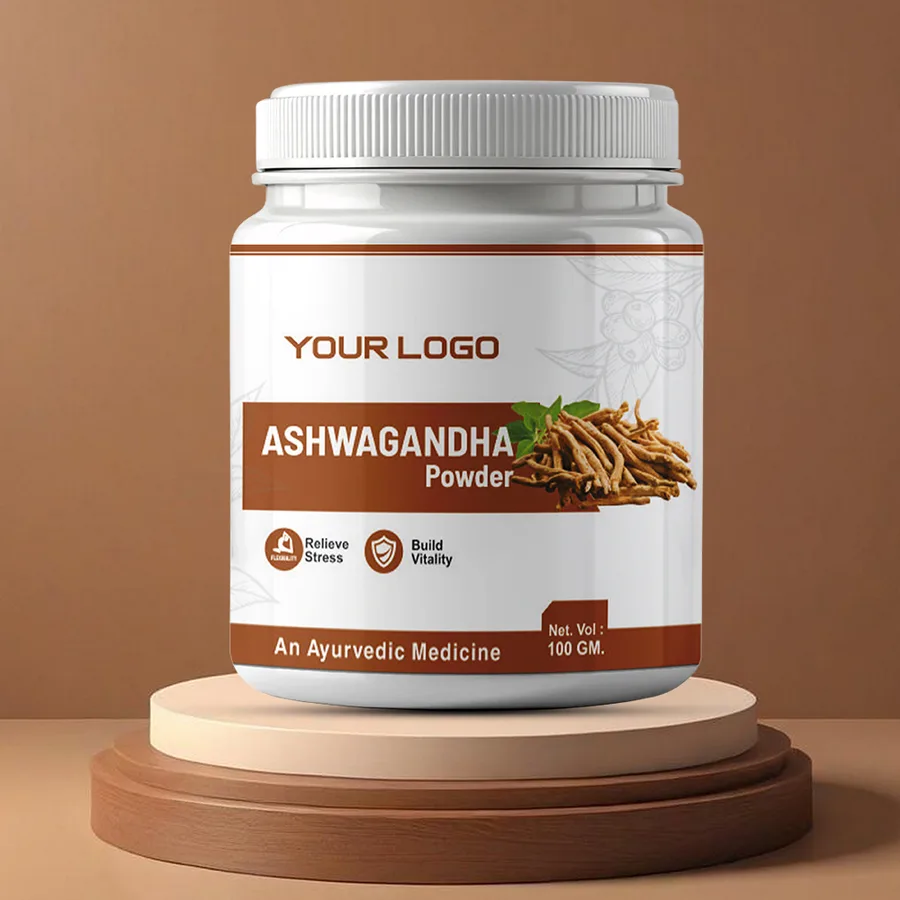
Ingredient detail: ashwagandha. Composition: ashwagandha capsule and ashwagandha powder. Related: KSM-66 vs generic root extract, अश्वगंधा कैसे और कब खाएँ, and ashwagandha with milk at night.
Get our product list and minimum orders
Leave your email and we will send the formats we make, the minimum order for each and typical lead times. We use it only to reply to you.
Manufacturing in this category?
We make products in this category for other people's brands. Tell us the format and volume and we will send a specification and a per-unit cost.
Request a quotation ↗NutraHerbal manufactures food supplements, Ayurvedic proprietary medicines and cosmetics for business customers. Product information on this site describes composition, format and commercial positioning for brand owners. It is not medical advice, does not claim to diagnose, treat, cure or prevent any disease, and is not a substitute for consulting a qualified practitioner. Final label claims are the brand owner's responsibility and must be approved for the destination market.
How we write and review content: editorial policy.