Reviewed for accuracy and claims compliance: Claims compliance review
Ashwagandha is searched more than most vitamins. It is also one of the few Ayurvedic herbs with a research base substantial enough that an honest article can cite studies rather than only tradition. Both of those things make it unusual, and both make it worth writing about carefully.
This article covers what the classical texts actually say, what the modern research has examined, where the evidence genuinely stops, and the safety notes that get left off labels.
What it is
Ashwagandha is the root of Withania somnifera, a shrub found across India. The name is usually glossed as “smell of a horse”, variously attributed to the root’s odour or to the strength it was associated with.
Two details matter and are frequently blurred:
The root is the part used. Classical preparations specify root. Cheaper commercial material often includes leaf, which has a different constituent profile. If a label does not say root, assume it is not root-only.
Withanolides are the marker compounds. These are the constituents extracts are standardised to, commonly at 5%. A plain root powder is not standardised at all, which is fine for a churna but means the comparison with an extract is not like for like.
What the classical tradition says
In Ayurveda, ashwagandha is classed as a rasayana, a rejuvenative taken over a period rather than for an acute complaint. That framing matters, because it is closer to how the modern research treats it than most people expect: as something assessed over weeks, not hours.
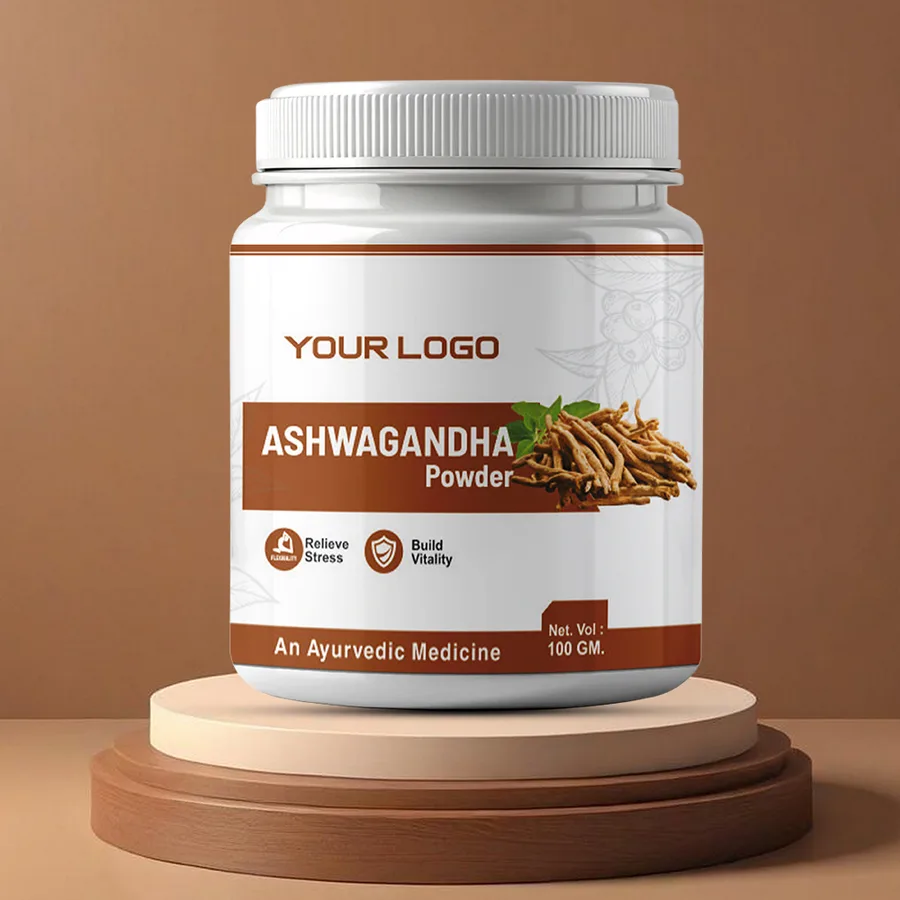
It appears in balya formulations, which concern strength, and in vajikarana formulations, which concern vitality. The traditional preparation most Indian households would recognise is root churna taken with warm milk at night, often with a little ghee or honey.
That preparation is not an inferior version of a capsule. Taking a fat-soluble-constituent-bearing root with milk and fat is a reasonable delivery choice, and the night-time timing suits what the herb is traditionally used for.
What the modern research has examined
This is where care is needed, because the gap between “studied” and “proven” is where most supplement marketing lives.
Stress and perceived anxiety. This is the most studied area. Multiple randomised trials have examined standardised root extracts against placebo over periods of around eight to twelve weeks, generally reporting reductions in self-reported stress scales and in cortisol measures. Reviews have been cautiously positive. The trials are mostly small, several are industry-funded, and the outcome measures are largely self-reported, all of which is normal in this field and all of which limits certainty.
Sleep. A smaller body of work, with some trials reporting improvements in sleep quality and sleep onset. This matters commercially as well as clinically, because sleep is the benefit people actually notice, where “stress reduction” is abstract.
Exercise performance and recovery. Some trials in resistance-training populations have reported improvements in strength and recovery measures. The evidence is thinner than for stress and the effect sizes are modest.
Male reproductive parameters. A number of small trials exist. The findings are mixed and the studies are generally of limited quality. This is also the area where marketing most frequently outruns the data, and where claims are legally constrained in India.
Thyroid markers. Some evidence suggests ashwagandha may influence thyroid hormone levels. This is more relevant as a caution than as a benefit, see safety below.
Where the evidence stops
Being direct about this is the useful part of the article.
Ashwagandha is not demonstrated to treat anxiety disorders, depression, insomnia as a clinical diagnosis, infertility, or any thyroid condition. The trials examined self-reported measures in generally healthy or mildly stressed populations over a few months. That is a legitimate finding and it is not the same as a therapeutic claim.
Anyone selling it as a treatment for a diagnosed condition is going well beyond what the research supports, and in India, beyond what the law permits.
KSM-66 and named grades
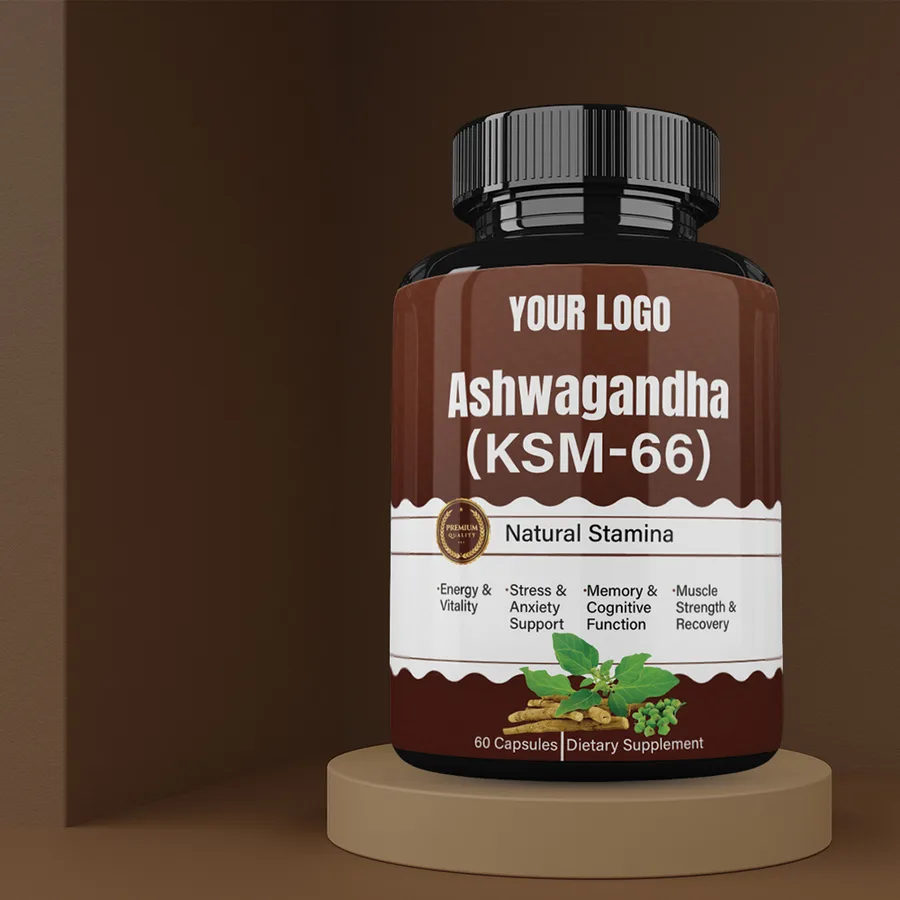
You will see KSM-66 on better-informed labels, and sometimes Sensoril. These are specific branded extracts produced to defined processes and withanolide profiles, and a good share of the published trial work used one of them.
Is the premium worth paying? Commercially, often yes, the segment of the audience that reads supplement forums checks for the name, and a product that lacks it loses that comparison. Pharmacologically, a well-made generic standardised extract at an equivalent withanolide level is a reasonable product, and we will quote both.
What a label must not do is print a named grade on material that is not that grade. That is straightforward mislabelling.
Churna, capsule or decoction
| Format | Suits | Trade-off |
|---|---|---|
| Churna (root powder) | Traditional night-milk preparation, lowest cost | Not standardised; taste; measuring |
| Standardised capsule | Convenience, stated withanolide level, travel | Higher cost per gram of root |
| In a decoction or juice | Morning-routine habit, older customers | Strength harder to state precisely |
| In a nutrition powder | Pairs with protein for the gym audience | Dose shared with other ingredients |
For most people the capsule is the practical choice and the churna is the traditional one. Plenty of households will prefer the churna for reasons that have nothing to do with pharmacology, and that is a perfectly good reason.
Dose and timing
Research commonly uses standardised root extract in the range of 300 to 600 mg per day, often split, over eight to twelve weeks. Churna doses in traditional practice are considerably larger by weight because the material is not concentrated.
Two practical notes:
Timing. For stress and sleep positioning, evening dosing makes sense and builds a habit that sticks. For energy and exercise positioning, morning or pre-workout. Some brands split it into a day and a night product, which is a reasonable idea.
Duration. Give it at least eight weeks before judging. Anything promising a result in a week is not describing this herb.
Safety, the part that gets left off labels
Ashwagandha is generally well tolerated, and that is not the same as “safe for everyone”.
Pregnancy. Traditionally avoided. Do not use without practitioner advice.
Thyroid medication. Because ashwagandha may influence thyroid hormone levels, anyone with a thyroid condition or on thyroid medication should consult their doctor before taking it. This is the interaction we think matters most and it is routinely omitted.
Sedatives and sleep medication. May add to sedative effects.
Autoimmune conditions. Practitioner advice is sensible, as with most immune-active herbs.
Liver. There have been case reports associating herbal supplement use including ashwagandha with liver injury. These are rare and causation is often unclear in such reports, but they are a reason to prefer a defined course over indefinite use and to stop and seek advice if symptoms such as jaundice or persistent nausea appear.
Nightshade family. Some people with nightshade sensitivity report reactions.
This article is information, not medical advice. Consult a qualified practitioner before starting any supplement, particularly if you are pregnant, breastfeeding, taking prescription medication or managing a diagnosed condition.
What a label may claim in India
Permitted: traditional use as a rasayana, general wellness, stress support, support for relaxation and restful sleep, and the composition itself.
Not permitted: claims to treat or cure anxiety, depression, insomnia or any disease; claims about sexual performance; claims to increase sperm count; promises of a specific outcome in a specific time.
In our own manufacturing we decline artwork that makes those claims. For this ingredient in particular the compliant position is also the commercially durable one, because the audience is well informed enough to notice overreach.
The short version
Ashwagandha has a better evidence base than most Ayurvedic herbs, concentrated on stress and sleep over eight to twelve weeks, with thinner evidence for exercise and reproductive measures. Root-only material, stated withanolide standardisation, 300–600 mg of extract daily, evening dosing for the stress and sleep story, and at least two months before judging. Check the thyroid interaction before you start. And treat anything promising a cure as a product whose other claims deserve the same doubt.
For sourcing and quality detail see the ashwagandha ingredient page. For the formulated version, Stressovo 360 pairs it with the classical sleep herbs.
Get our product list and minimum orders
Leave your email and we will send the formats we make, the minimum order for each and typical lead times. We use it only to reply to you.
Manufacturing in this category?
We make products in this category for other people's brands. Tell us the format and volume and we will send a specification and a per-unit cost.
Request a quotation ↗NutraHerbal manufactures food supplements, Ayurvedic proprietary medicines and cosmetics for business customers. Product information on this site describes composition, format and commercial positioning for brand owners. It is not medical advice, does not claim to diagnose, treat, cure or prevent any disease, and is not a substitute for consulting a qualified practitioner. Final label claims are the brand owner's responsibility and must be approved for the destination market.
How we write and review content: editorial policy.