Reviewed for accuracy and claims compliance: Claims and compliance review
There is a distinction running through the entire Indian Ayurvedic market that almost no consumer knows exists, and it changes what a product is, how it was licensed, and what evidence stood behind it.
Some Ayurvedic medicines are classical, shastriya. Their formula appears in an authoritative text, and that is the basis on which they are licensed.
Others are proprietary, a new recipe, composed by a company, licensed on the basis that its ingredients are recognised Ayurvedic materials.
Triphala churna is classical. “Diabetic Care Powder” is proprietary.
And the difference is not cosmetic. It is a different regulatory route, a different evidentiary basis, and a different set of things a buyer can reasonably assume.
We make both. This article explains the distinction, why it matters, and the honest advantages and problems on each side.
This is orientation, not legal or regulatory advice. Rules and requirements change and the details matter. Verify the current position with a competent regulatory consultant before acting on any of it.
The two routes, in outline
Ayurvedic, Siddha and Unani medicines in India are regulated under the Drugs and Cosmetics Act framework, administered through the Ministry of Ayush, and licensed by state licensing authorities.
And within that framework there are two broad categories:
Classical (shastriya) formulations
A formulation whose composition appears in one of the authoritative Ayurvedic texts recognised in the Act’s schedule.
That list includes the texts you would expect, Charaka Samhita, Sushruta Samhita, Ashtanga Hridaya, Sharangadhara Samhita, Bhaishajya Ratnavali, Yoga Ratnakara, the Ayurvedic Formulary of India, and others.
What that means in practice:
The formula is fixed by the text. You make it as written.
The indications come from the text, in the text’s own terms.
You cannot change the composition and still call it that medicine. Triphala is three fruits in a stated relationship. Change them and it is not triphala.
And the licensing basis is textual authority rather than submitted evidence.
Patent or proprietary medicines
A formulation composed by the manufacturer, using ingredients recognised in the Ayurvedic materia medica.
What that means:
The recipe is the company’s.
The name is a brand name, not a classical one.
It can be composed for a modern purpose, “joint care”, “diabetic care”, “liver care”.
And the licence rests on the ingredients being recognised Ayurvedic materials used in a manner consistent with Ayurvedic principles, rather than on clinical trials of the finished product.
That last point is the one worth sitting with.
What each one actually guarantees
And this is where consumer expectation and reality diverge most.
What classical status guarantees
Compositional consistency. Two manufacturers’ Yogaraja Guggulu should contain the same ingredients in the same proportions, because the text specifies them. That is a real and underrated form of standardisation.
Historical continuity. The formula has been in use, in that form, for a long time.
A documented traditional indication, in classical terms.
And an audit trail. You can look up what it should contain.
What classical status does not guarantee
And this needs saying plainly, because “classical” is used as a quality signal.
It does not guarantee the manufacturing was good. Two products with the same classical formula can differ enormously in raw material quality, botanical identity, extraction, and contamination.
It does not guarantee testing. Heavy metals, pesticides, microbiology, these depend on the manufacturer, not the text.
It does not guarantee clinical evidence. Textual authority is not trial data. A formula can be two thousand years old and never have been tested in a randomised trial.
And it does not guarantee safety for you. Classical formulations include preparations containing metals, alcohol, and potent materials. Antiquity is not a safety assessment, we have written about this in the context of bhasma preparations.
What proprietary status allows
Flexibility. A formulator can address something the classical corpus does not frame the same way, and some modern concerns genuinely do not map onto classical categories.
Modern dosage forms. Capsules, standardised extracts, measured tablets.
And the ability to combine what makes sense, including vitamins and minerals in some product categories.
What proprietary status allows that it should not
And here we are criticising the category we also sell in.
Long ingredient lists at token doses. Twenty herbs on a label looks authoritative and usually means nothing is present at a meaningful amount. We have written separately about proprietary blends and what they hide.
Borrowed classical authority. A proprietary product citing Charaka for one of its twenty ingredients is implying an endorsement the text did not give to that product.
Disease-shaped naming. “Diabetic care”, “liver care”, “joint care”, the name implies a therapeutic claim that the label is not permitted to make outright. This is the commonest soft evasion in the category, and we participate in it.
And no obligation to test the finished product clinically. Which means a proprietary Ayurvedic medicine can be sold without anyone ever having studied whether it works.
And the third route, which complicates everything
A great many products that look Ayurvedic are not licensed as Ayurvedic medicines at all.
They are licensed as food, as nutraceuticals, health supplements or food supplements, under the FSSAI framework.
And this matters because the two routes have different rules:
An Ayurvedic medicine may carry indications in Ayurvedic terms, drawn from traditional use.
A food supplement may not make disease claims at all, and may only make nutrient-function claims for nutrients present in significant amounts, in authorised wording.
So the same botanical can be in two products on the same shelf, under two different regulatory regimes, with different permitted statements.
And the practical consequence for a buyer: the licence number tells you which rules the product is playing by. An Ayush licence number and an FSSAI licence number mean different things.
We have written a separate guide on the licensing routes, because for anyone manufacturing, this choice determines everything downstream.
How to tell which you are holding
Reading a pack:
A classical name is usually recognisable, it ends in a form word (churna, vati, guggulu, arishta, ghrita, taila, avaleha) and begins with a classical term. Triphala churna. Dashamoola kwath. Ashokarishta.
A proprietary name is a brand name. It describes a benefit or a body part in English or in marketing Hindi.
The licence number and the issuing authority should be on the pack.
A classical product should state the text it is drawn from, and good manufacturers do.
A proprietary product should list every ingredient with its quantity, and the absence of quantities is the single most useful warning sign in the category.
And “Ayurvedic proprietary medicine” is sometimes printed explicitly, which is helpful when it happens.
So which is better?
Neither, and the question is the wrong one. What matters is a different set of things:
Does the label state every ingredient with its quantity? This matters more than classical status.
Is the botanical identity confirmed on the raw material? Powdered roots and barks cannot be identified by eye, so this is a laboratory question.
Is there batch-wise heavy metal testing? Lead, arsenic, mercury, cadmium. Roots and barks accumulate from soil; this is not optional.
Pesticide residues and microbiology?
Does it declare alcohol content (for asava and arishta) and sugar content (for avaleha)?
Does it declare whether any ingredient is a bhasma or metal-containing preparation? This is the one with documented poisoning cases behind it.
And is the dose anywhere near what the tradition or the research used? A 500 mg capsule against a 5 g classical churna dose is a tenth, and that arithmetic defeats both classical and modern reasoning.
Those seven questions do more work than the classical/proprietary distinction ever will.
Our position, stated plainly
We make classical formulations and we make proprietary ones, and we think both are legitimate.
What we think is not legitimate:
Using “classical” as a quality claim. It describes the formula’s provenance, not the manufacturing, the testing, or the evidence.
Citing a classical text to support a proprietary product. The text endorsed a formula, not your formula.
Twenty-ingredient lists without quantities. We state quantities on every ingredient, which makes our labels longer and less elegant, and lets a customer or a doctor actually assess the product.
And disease-shaped product names. Here we have to admit we are inconsistent: we sell products with names like “Diabetic Care Powder”, because that is how the category is bought and a differently-named product does not get found. We do not think that is defensible so much as commercially unavoidable, and the honest mitigation is that the page and the pack make no disease claim and say plainly what the evidence does and does not support.
We would rather name the compromise than pretend we do not make it.
What we will and will not say
Sayable: the formulation’s classical name and the text it is drawn from, where it is classical; the botanical names, parts used and quantities of every ingredient; the dosage form; alcohol and sugar content where applicable; a traditional-use statement framed as traditional use, in Ayurvedic terms; and authorised nutrient-function claims for any vitamins or minerals present in significant amounts.
And the general fact: botanicals in India do not carry authorised health claims. Vitamins and minerals do.
Not sayable: that a product treats, prevents or cures any disease; that classical status implies proven efficacy; or that a classical citation endorses a proprietary formula.
And the restriction that overrides all of this: the Drugs and Magic Remedies (Objectionable Advertisements) Act restricts advertising for a schedule of conditions, including diabetes, heart disease, sexual potency, infertility and others, regardless of which licence a product holds. A classical licence does not permit advertising those.
And the most honest summary:
Classical means the formula is in an authoritative text, which guarantees compositional consistency and nothing about manufacturing, testing or evidence.
Proprietary means a company wrote the recipe, which allows useful modern formulation and also allows twenty herbs at token doses with a disease-shaped name.
Many Ayurvedic-looking products are neither, they are licensed as food, under different rules entirely.
And the seven questions about quantities, identity, heavy metals, pesticides, microbiology, alcohol and bhasma content tell you far more than which of the three boxes a product sits in.
When to see a doctor
Show your doctor the pack, not the name, because classical formulations contain many ingredients, and the name reveals none of them.
Ask before taking any Ayurvedic preparation if you:
- take any regular prescription medicine, particularly for the heart, blood thinning, diabetes, thyroid, epilepsy, or after a transplant
- are pregnant, breastfeeding, or trying to conceive
- have liver or kidney disease
- are giving it to a child, and never give unbranded metal-containing preparations to a child
- have surgery planned
Ask specifically whether the product contains: a bhasma or metal-containing ingredient; alcohol (any asava or arishta); significant sugar (any avaleha); or guggulu.
Stop and get medical advice if you develop: yellowing of the eyes, dark urine or persistent nausea (liver); abdominal pain with constipation and unexplained anaemia, or tingling and weakness in the hands and feet (a heavy-metal question, say what you took and for how long); unusual bruising or bleeding; a rash or swelling of the lips or tongue.
And do not stop a prescribed medicine in order to take an Ayurvedic one. That decision belongs to the doctor who prescribed it.
The short version
- Indian Ayurvedic products split into classical, proprietary, and food-licensed
- Almost no consumer knows the distinction exists
- Classical means the formula appears in an authoritative text in the Act’s schedule
- The composition is fixed by the text, you make it as written
- Change the composition and it is no longer that medicine
- The licensing basis is textual authority, not submitted trial evidence
- Proprietary means the company wrote the recipe from recognised materials
- Its licence rests on the ingredients, not on trials of the finished product
- Classical status guarantees compositional consistency between manufacturers
- Which is a real and underrated form of standardisation
- It does not guarantee the manufacturing was good
- It does not guarantee heavy metal, pesticide or microbial testing
- It does not guarantee clinical evidence, antiquity is not trial data
- And it does not guarantee safety; classical formulations include metals and alcohol
- Proprietary status allows genuinely useful modern formulation
- And allows twenty ingredients at token doses
- And allows borrowed classical authority for a formula the text never saw
- And disease-shaped names implying claims the label may not make
- A proprietary Ayurvedic medicine can be sold with nobody having studied it
- Many Ayurvedic-looking products are licensed as food under FSSAI instead
- Food-licensed products may not make disease claims at all
- So the licence number tells you which rules apply
- A classical name ends in a form word, churna, vati, guggulu, arishta
- A proprietary name is a brand name describing a benefit or body part
- Absence of per-ingredient quantities is the most useful warning sign
- Seven questions matter more than the category: quantities, identity, heavy metals, pesticides, microbiology, alcohol, bhasma
- Powdered roots and barks cannot be identified by eye, that is a lab question
- A 500 mg capsule against a 5 g classical dose is a tenth
- That arithmetic defeats both classical and modern reasoning
- “Classical” describes provenance, not quality
- We state quantities on every ingredient, which makes our labels uglier
- We do use disease-shaped product names, and we name that compromise rather than deny it
- The Drugs and Magic Remedies Act restricts advertising for a schedule of conditions regardless of licence
- Show your doctor the pack, not the name
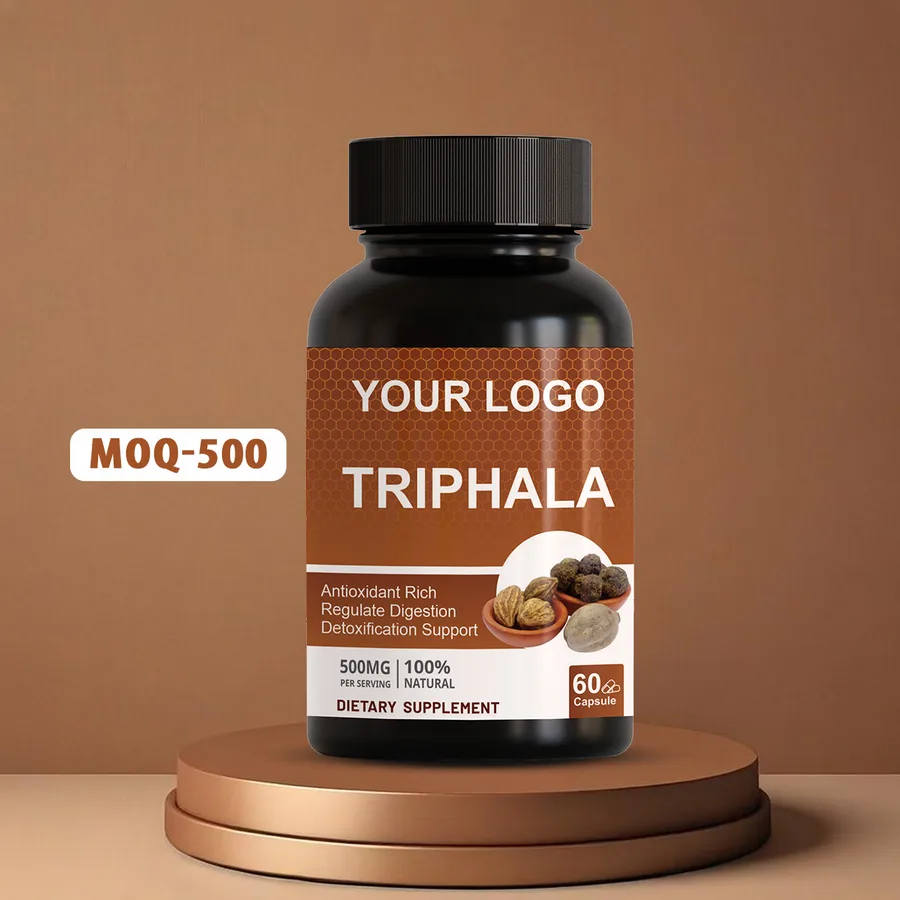
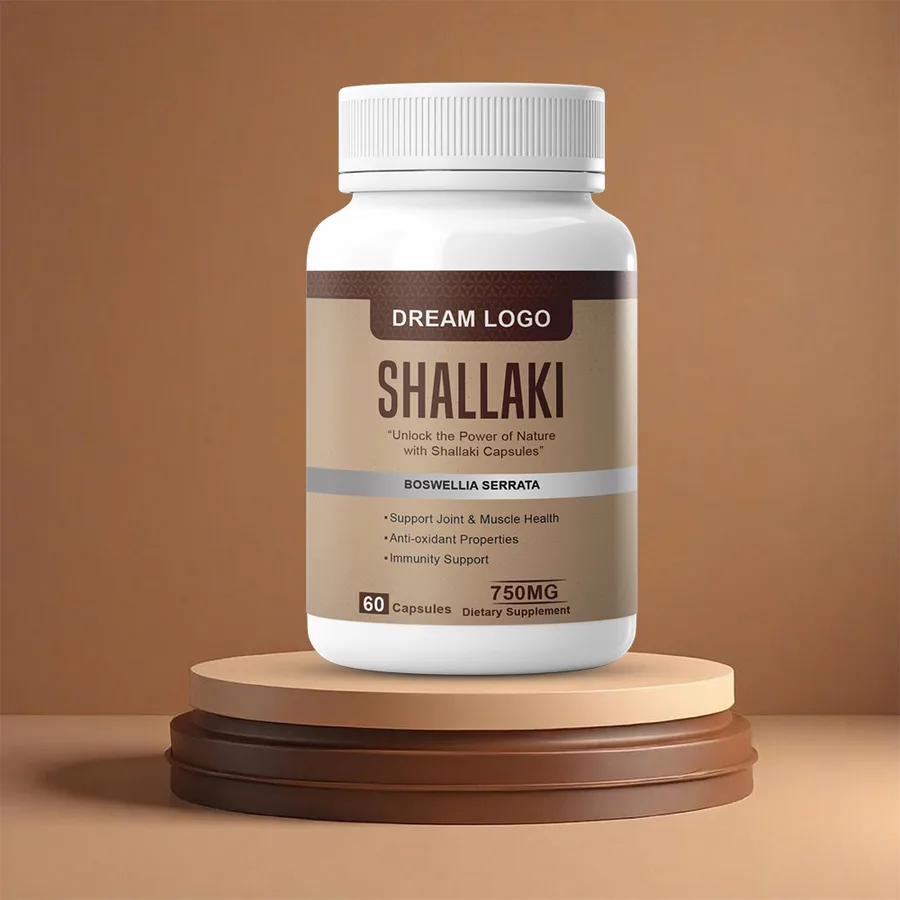
Ingredient details: triphala, guggul, shallaki. Examples of each route: Triphala Capsule (classical formula), Shallaki Capsule, Diabetic Care Powder (proprietary). Related reading: licences for Ayurvedic manufacturing, चूर्ण, क्वाथ, वटी, अरिष्ट, proprietary blends, why they usually hide something, and label compliance.
Get our product list and minimum orders
Leave your email and we will send the formats we make, the minimum order for each and typical lead times. We use it only to reply to you.
Manufacturing in this category?
We make products in this category for other people's brands. Tell us the format and volume and we will send a specification and a per-unit cost.
Request a quotation ↗NutraHerbal manufactures food supplements, Ayurvedic proprietary medicines and cosmetics for business customers. Product information on this site describes composition, format and commercial positioning for brand owners. It is not medical advice, does not claim to diagnose, treat, cure or prevent any disease, and is not a substitute for consulting a qualified practitioner. Final label claims are the brand owner's responsibility and must be approved for the destination market.
How we write and review content: editorial policy.