Reviewed for accuracy and claims compliance: Claims compliance review
A lipid profile has five or six lines on it, most people look at one, and it is usually the wrong one.
Here is what each line is, which one actually matters, and why a single figure flagged in red is rarely the whole story.
This is information to help you read a report, not medical advice. What your numbers mean depends on your overall risk, age, blood pressure, blood sugar, smoking, family history, which is exactly what a doctor adds and an article cannot.
The lines, one by one
LDL cholesterol, the one that matters most
Often labelled “bad cholesterol”, which is a crude description but points the right way. LDL carries cholesterol to tissues and is the fraction most associated with arterial plaque.
This is the primary target. If you only look at one number, look at this one.
Target levels are not universal. They depend on your overall cardiovascular risk, someone with diabetes and high blood pressure is held to a stricter target than someone with no other risk factors. This is why you cannot read your LDL against a generic range and conclude anything definitive.
HDL cholesterol, higher is generally better
Carries cholesterol back to the liver. Generally, higher is considered favourable.
What raises it: regular exercise, stopping smoking, weight loss. What does not: supplements, mostly.
Indian populations tend to run lower HDL on average than some other populations, which is one of several reasons cardiovascular risk calculators built elsewhere can under-estimate risk here.
Triglycerides, the most diet-responsive number
This is the line most directly affected by what you eat and drink, and in India it is very frequently the one that is raised.
The main drivers: sugar, refined carbohydrate, and alcohol. Not dietary fat, which surprises people.
Good news: it is also the number that responds fastest to change. Cut sugary drinks and alcohol and this figure often moves within weeks.
Total cholesterol, the least useful line
It is roughly LDL plus HDL plus a fraction of triglycerides. Which means a high total can result from a high HDL, a favourable thing, and look alarming.
This is the number people fixate on and it is the one that tells you least on its own.
Non-HDL cholesterol, quietly useful
Total minus HDL. It captures all the potentially atherogenic particles rather than LDL alone, and some clinicians consider it a better single indicator than LDL, especially when triglycerides are raised.
If your report includes it, it is worth looking at.
Ratios
Some reports give total:HDL or LDL:HDL. Useful context, not a substitute for the individual values.
What the report does not tell you
This is the part that matters most and gets least attention.
A lipid profile is one input into cardiovascular risk, not a verdict. The same LDL value means something quite different in two different people.
What else counts:
- Age and sex
- Blood pressure
- Blood sugar / diabetes status
- Smoking
- Family history of early heart disease
- Weight, particularly around the abdomen
- Existing heart or kidney disease
A 35-year-old non-smoker with normal blood pressure and a mildly raised LDL is in a very different position from a 55-year-old smoker with diabetes and the same LDL. Risk calculators exist to combine these, and your doctor will use one.
So: do not panic at one red flag, and do not relax because the total looks fine. Both are incomplete readings.
Practical notes on getting tested
Fasting or not? Many guidelines now accept non-fasting lipid profiles for routine screening, though triglycerides in particular read higher after a meal. Follow whatever your doctor asks for, and if you are comparing to a previous test, keep the conditions the same.
Do not test during illness. Acute illness shifts lipid values temporarily. Wait a few weeks after a significant infection.
One bad result is not a trend. Values fluctuate. A single reading, especially a borderline one, is usually repeated before any decision is made.
Use the same lab when tracking over time. Methods differ enough to matter for comparison.
The Indian context
Worth knowing rather than alarming.
South Asian populations tend to develop cardiovascular disease at younger ages and at lower body weights than many other populations, and often with a pattern of lower HDL and higher triglycerides. Abdominal fat tends to carry more metabolic significance here than overall weight.
Practically, that means:
- “I am not overweight” is not a reason to skip screening
- Waist measurement is worth tracking alongside weight
- Screening earlier rather than later is reasonable, particularly with family history
Discuss timing with your doctor rather than deciding from an article.
If a number is raised
Do not start a supplement and recheck in a month. That is the common instinct and it skips the useful step.
Do:
- Ask your doctor about your overall risk, not just the one number
- Get blood sugar and blood pressure assessed at the same time, they travel together
- Address the big levers: trans fats out entirely, soluble fibre up, sugar and alcohol down, regular exercise
- Recheck at the interval your doctor suggests, usually three months, not three weeks
- If medication is recommended, discuss it properly rather than dismissing it
And if you are already on medication: do not stop it because a herbal product promised to replace it. This happens regularly and it is the single most dangerous thing in this subject area.
Where supplements sit
We manufacture in this category, so the declaration is made.
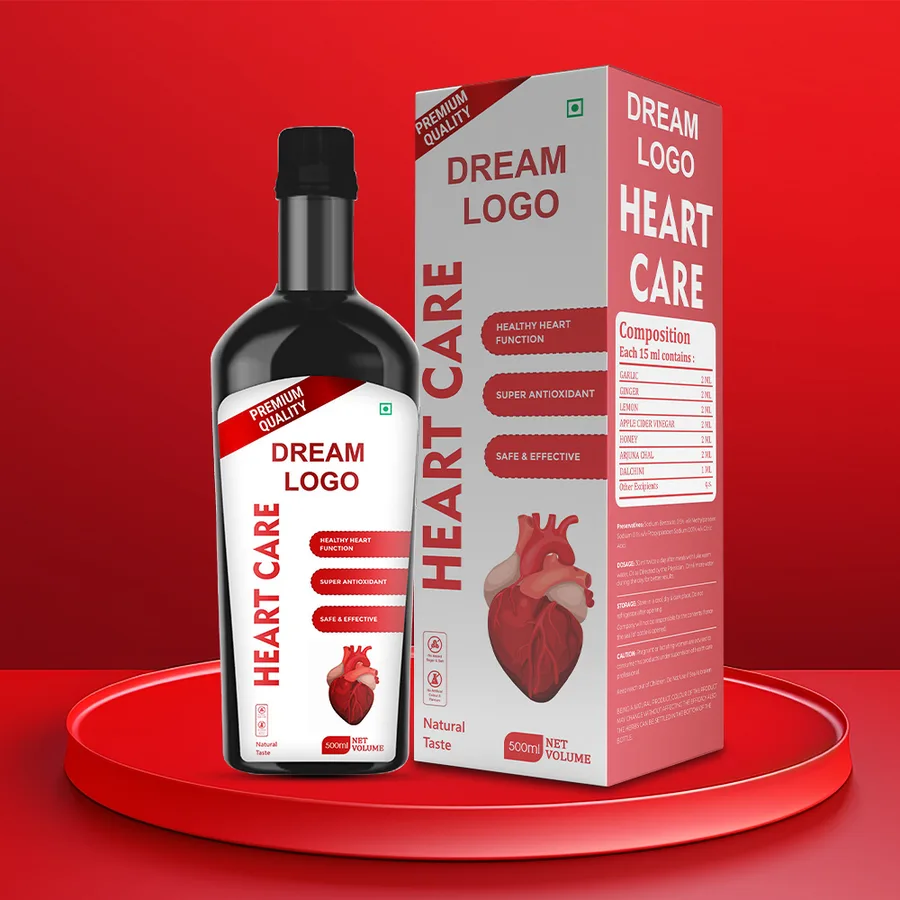
Arjuna has the longest traditional record in Ayurveda for cardiac use. Guggul appears in classical lipid-related formulations. Garlic and CoQ10 both have their own bodies of discussion, CoQ10 particularly in the context of statin use, which is a conversation to have with your doctor rather than to act on alone.
What can be said: traditional use, general cardiac wellness, the composition itself.
What cannot: that a product lowers cholesterol or blood pressure. Those are medicinal claims requiring clinical substantiation. We decline artwork that makes them, and a product making them is telling you something about the rest of its label.
One real safety point: garlic and several herbs can interact with anticoagulant medication. If you take anything for your heart, tell your doctor before adding a supplement.
The short version
Look at LDL first, triglycerides second, and treat total cholesterol as the least informative line. Triglycerides respond fastest to cutting sugar and alcohol. One number in red is not a verdict, overall risk is what matters, and that needs blood pressure and blood sugar alongside.
Use the same lab, do not test during illness, and recheck in three months rather than three weeks.
Hindi version on what to change: कोलेस्ट्रॉल कम करने के उपाय. Composition detail: Cardio 360.
Get our product list and minimum orders
Leave your email and we will send the formats we make, the minimum order for each and typical lead times. We use it only to reply to you.
Manufacturing in this category?
We make products in this category for other people's brands. Tell us the format and volume and we will send a specification and a per-unit cost.
Request a quotation ↗NutraHerbal manufactures food supplements, Ayurvedic proprietary medicines and cosmetics for business customers. Product information on this site describes composition, format and commercial positioning for brand owners. It is not medical advice, does not claim to diagnose, treat, cure or prevent any disease, and is not a substitute for consulting a qualified practitioner. Final label claims are the brand owner's responsibility and must be approved for the destination market.
How we write and review content: editorial policy.