Reviewed for accuracy and claims compliance: Claims compliance review
Open almost any Indian men’s wellness product and you will find these three together. They are presented as variations on one theme, which they are not, they come from different places, have very different amounts of evidence behind them, and do different jobs in a formulation.
Here is the honest comparison, including which one you can probably skip.
This is information, not medical advice. Persistent fatigue or low energy should be investigated rather than supplemented, see the testing note at the end.
Quick comparison
| Ashwagandha | Shilajit | Safed musli | |
|---|---|---|---|
| What it is | Root of Withania somnifera | Purified mineral pitch from Himalayan rock | Tuberous root of Chlorophytum borivilianum |
| Classical category | Rasayana, balya | Rasayana | Vajikarana |
| Standardised to | Withanolides (commonly 5%) | Fulvic acid | Saponins |
| Research base | The strongest of the three | Limited | Very limited |
| Main adulteration risk | Leaf mixed into root | Severe, widely faked | Species substitution |
| Recognition in India | High | Highest | Moderate |
| Cost | Moderate | High | High |
| Honest verdict | Worth including | Worth including, if verified | Optional |
Ashwagandha, the one with evidence
Of the three, this is the only one with a meaningful body of clinical research.
Multiple randomised trials have examined standardised root extract against placebo over eight to twelve weeks, reporting reductions in self-reported stress measures and in cortisol. Smaller bodies of work have looked at sleep quality and at strength and recovery in resistance-training populations.
The honest caveats: trials are mostly small, several are industry-funded, and outcomes are largely self-reported. That is normal in this field and it means the findings are suggestive rather than conclusive.
What it actually does in a men’s formulation: it addresses the stress-sleep-energy axis, which is where a large share of “weakness” complaints genuinely originate. That is less glamorous than what the category usually promises, and it is the part most likely to help.
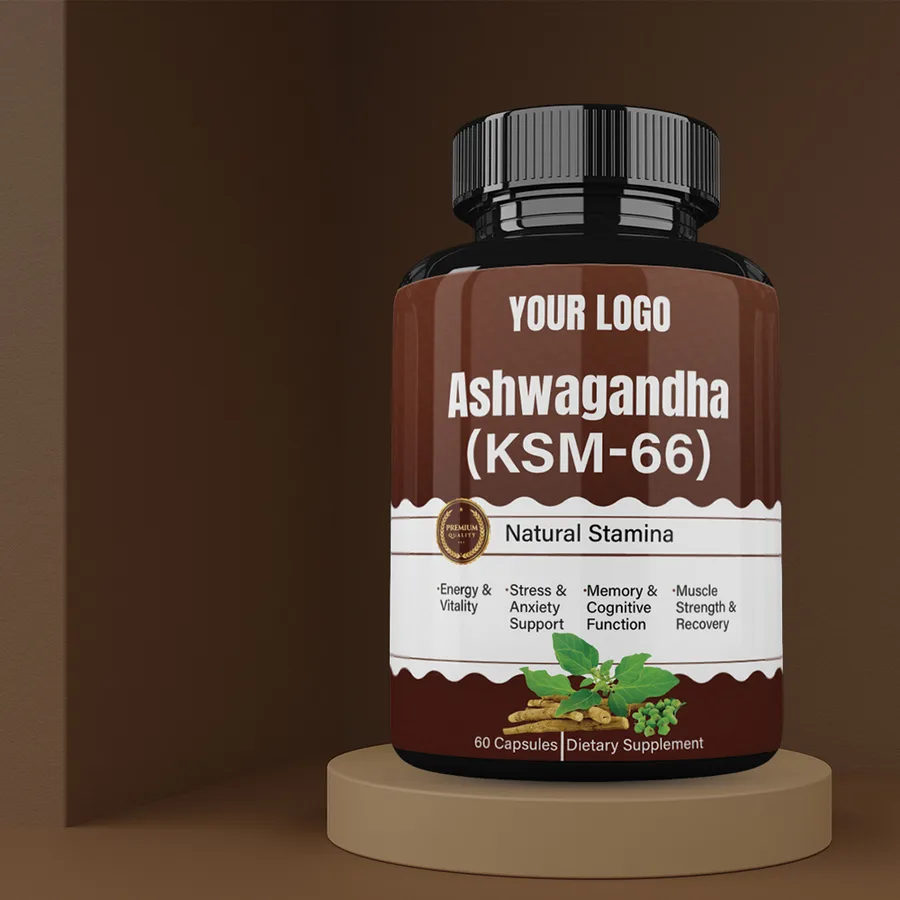
What to check: root only, not leaf. A stated withanolide percentage. A named grade like KSM-66 if that matters to you, since much of the trial work used one.
The caution people miss: ashwagandha can influence thyroid hormone levels. Anyone with a thyroid condition or on thyroid medication should check with their doctor first.
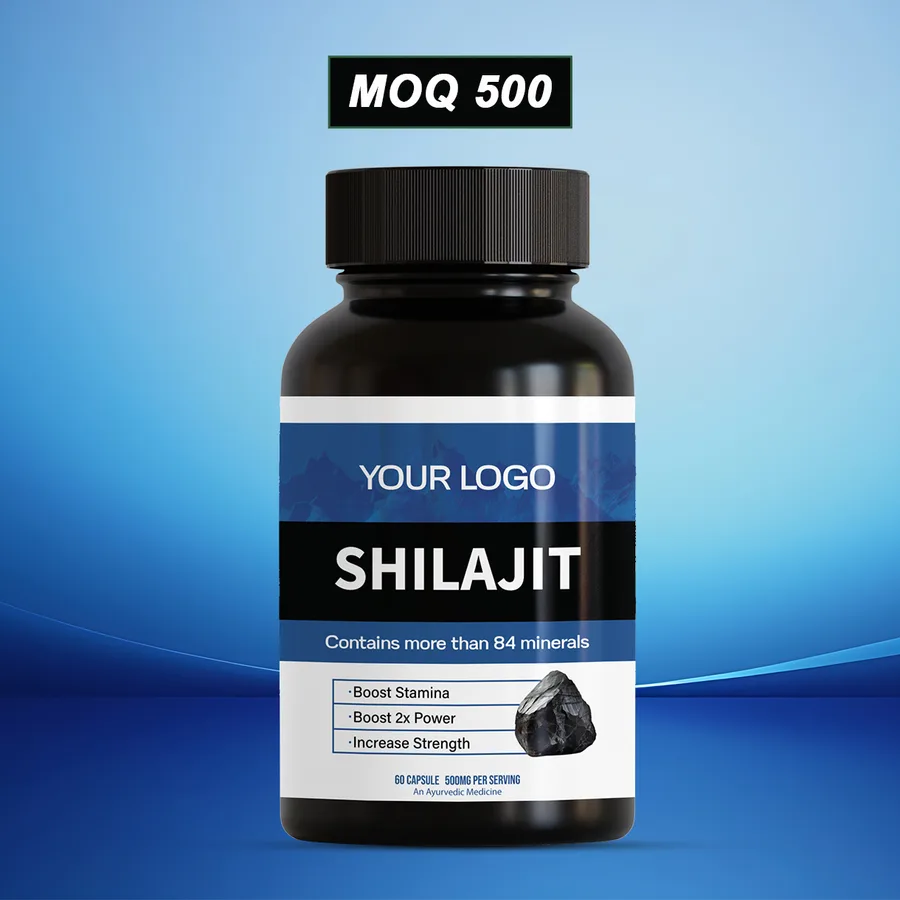
Shilajit, the recognition hook, and the quality problem
Shilajit carries more instant recognition with Indian men than anything else in this catalogue. Putting it on a label does more conversion work than a paragraph of copy.
The evidence: limited. There are small studies, but nothing approaching the ashwagandha literature. Its place in classical Ayurveda as a rasayana is long and genuine; the modern clinical case is thin.
The real issue is not efficacy, it is authenticity. Shilajit is among the most adulterated ingredients in Indian herbal supply. Fakes made with gum, resin, jaggery or clay are common, and poorly purified material can carry heavy metals.
Unpurified shilajit is not merely weaker. It is a genuine heavy-metal risk, which is why classical texts specify a purification step (shodhana) rather than treating it as optional.
What to check: the word purified or shodhit on the label. A stated fulvic acid percentage. And a batch heavy-metal test report. If a seller cannot produce the last one, there is no basis for trusting the product regardless of how good the packaging is.
We have written separately on telling real from fake, the short version is that home tests catch crude adulteration and tell you nothing about heavy metals, which is the risk that matters.
Safed musli, the one you can probably skip
The evidence: very limited. Its standing comes almost entirely from its classical role in vajikarana formulations rather than from modern research.
What it does in a product: it adds classical credibility to a men’s formulation and it is a real cost line, being an expensive cultivated root.
Our honest position: if you are a brand owner costing a formulation, this is the ingredient you can reduce or drop with the least loss. It weakens the traditional story somewhat, which matters to some audiences more than others, but you are not removing the component doing the identifiable work.
If you are a buyer, its presence is not a reason to choose one product over another.
How they fit together in a formulation
A reasonable men’s wellness product is usually built like this:
Ashwagandha carries the functional weight, stress, sleep, recovery. Often at the highest dose in the formula.
Shilajit carries recognition and the mineral-rasayana story. Needs verification more than it needs volume.
Safed musli, kaunch beej, gokshura fill out the classical vajikarana base.
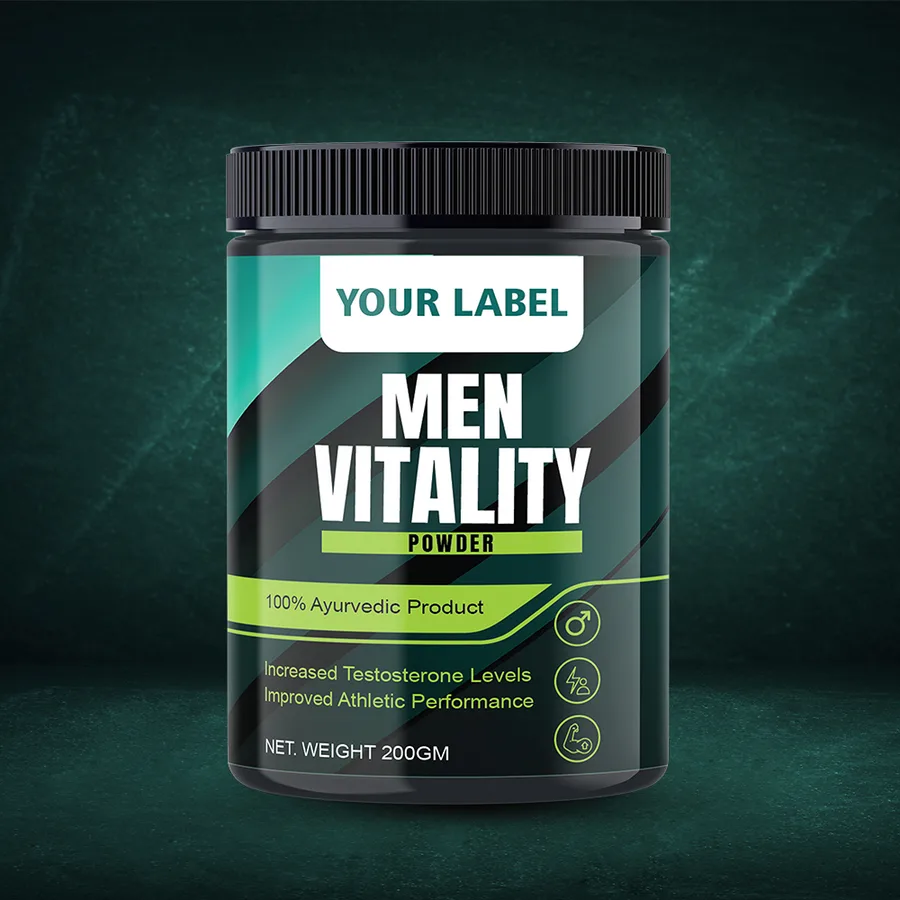
Zinc is frequently added, and it is the one nutrient here with a recognised, straightforward role in male reproductive health. It also permits clean structure-function wording on a label, which herbs do not.
Notice that the ingredient with the clearest regulatory position is the cheapest one in the list.
What none of them can claim
This needs stating plainly because the category routinely ignores it.
In India, no supplement may claim to treat, cure or prevent any disease. Beyond that, the Drugs and Magic Remedies (Objectionable Advertisements) Act specifically restricts advertising around sexual performance and related claims.
So: vitality, stamina, energy and general wellness are available positions. Specific sexual-performance promises are not. Neither are guaranteed timelines or outcome claims.
We decline artwork that makes them. A buyer should treat such claims as information about the brand’s honesty rather than about the product’s strength.
Before you buy any of the three
The most useful thing in this article: if your complaint is persistent fatigue or low energy, test before you supplement.
Haemoglobin and ferritin, vitamin B12, vitamin D, thyroid, and blood sugar if you have risk factors. Those five cover the great majority of genuine causes, and three of them are very common in India.
Correcting a B12 deficiency does more than any of these three herbs. Supplementing on top of an unidentified deficiency means spending money on the wrong thing and feeling no better.
If you are formulating
- Put the budget into ashwagandha dose and grade, not into ingredient count
- Verify shilajit with a batch heavy-metal report, every lot, regardless of supplier certificate
- Treat safed musli as optional if cost is tight
- Include zinc; it is cheap and gives you a defensible nutrient claim
- Offer plain packaging, this category has a privacy dimension and it measurably reduces refused deliveries
The short version
Ashwagandha has the evidence and does the real work via stress and sleep. Shilajit has the recognition and the adulteration problem, verify it or do not sell it. Safed musli is classical padding you can drop if cost matters. Zinc is the cheapest ingredient and the one with the cleanest claims position.
And test for deficiencies before buying any of them.
Composition detail: Menzovo 360. Hindi version on practical remedies: ताक़त बढ़ाने के घरेलू उपाय.
Get our product list and minimum orders
Leave your email and we will send the formats we make, the minimum order for each and typical lead times. We use it only to reply to you.
Manufacturing in this category?
We make products in this category for other people's brands. Tell us the format and volume and we will send a specification and a per-unit cost.
Request a quotation ↗NutraHerbal manufactures food supplements, Ayurvedic proprietary medicines and cosmetics for business customers. Product information on this site describes composition, format and commercial positioning for brand owners. It is not medical advice, does not claim to diagnose, treat, cure or prevent any disease, and is not a substitute for consulting a qualified practitioner. Final label claims are the brand owner's responsibility and must be approved for the destination market.
How we write and review content: editorial policy.