Reviewed for accuracy and claims compliance: Claims compliance review
Saw palmetto is the best-selling prostate supplement ingredient in the world, and it is also the one with the most high-quality negative trial data against it. Both of those statements are true, which makes it a genuinely interesting case.
If you are formulating a prostate product for the Indian market, or deciding whether to pay for a standardised extract, this is the honest picture.
This is information, not medical advice. Urinary symptoms in men need a proper evaluation, the symptoms of benign enlargement and of prostate cancer overlap considerably, and only investigation separates them.
What it is, briefly
Saw palmetto is the fruit of Serenoa repens, a small palm native to the south-eastern United States. The medicinal preparation is a lipidosterolic extract of the berry, a fat-soluble fraction containing free fatty acids, phytosterols and other lipids.
Native American use of the berries is documented, and it entered European phytotherapy in the twentieth century, where standardised extracts became widely prescribed, particularly in Germany, France and Italy.
It is not an Ayurvedic herb. It has no classical Indian tradition behind it. Its presence in Indian products is entirely imported from Western supplement practice, which is worth being clear about, because it is sometimes presented in India with a vaguely traditional framing it does not have.
What it is used for
Benign prostatic hyperplasia, BPH, the non-cancerous enlargement of the prostate that becomes common with age. The symptoms are urinary: weak stream, hesitancy, incomplete emptying, frequency, and the night-time waking that patients usually find most disruptive.
The proposed mechanisms include inhibition of 5-alpha-reductase, the enzyme that converts testosterone to dihydrotestosterone, and anti-inflammatory effects on prostate tissue. The 5-alpha-reductase idea is a reasonable one because it is the mechanism of finasteride and dutasteride, which do work.
What the evidence shows, and this is the interesting part
The story has two distinct halves.
The early picture looked good. Through the 1990s and into the 2000s, numerous trials and meta-analyses reported symptomatic improvement, reduced nocturia, improved flow rates, with effects in some analyses approaching those of standard drug treatment. On that basis saw palmetto became, and remains, a standard recommendation in several European countries.
Then the large rigorous trials arrived. Two in particular are usually cited: the STEP trial, and the larger CAMUS trial, which tested escalating doses up to three times the usual amount. Both were well-designed, adequately powered, and placebo-controlled.
Both found no significant benefit over placebo on validated symptom scores.
An updated Cochrane review, incorporating the larger trials, concluded that saw palmetto does not improve BPH symptoms more than placebo.
Why did the early picture differ? Three explanations, probably all contributing:
- Smaller, lower-quality trials tend to overstate effects, and the early literature was largely that.
- Placebo response in BPH is large. Symptom scores improve substantially on placebo, and a trial without an adequate placebo arm will read that as drug effect.
- Extract variability. Preparations differed considerably between studies, so the trials were not all testing the same thing.
That last point is the one saw palmetto’s defenders press hardest, and it is not a frivolous argument, but it is also unfalsifiable as usually stated, since there is always another extract that was not tested.
The honest summary
For symptomatic benefit over placebo in BPH, the best available evidence does not support saw palmetto.
Its safety record, by contrast, is good: adverse effects in trials were mild and comparable to placebo, mostly minor gastrointestinal complaints.
So it is a well-tolerated ingredient without demonstrated efficacy for its principal use. That is a specific position and worth stating plainly rather than splitting the difference.
Who it suits, and who it does not
It may still suit a man with mild symptoms who has been properly evaluated, understands the evidence, prefers to try a supplement before medication, and whose doctor is content with that. The placebo response in this condition is genuinely large, and in mild symptoms an informed trial of something harmless is a defensible choice.
It does not suit:
- Anyone with urinary symptoms who has not been evaluated. This is the important one. BPH symptoms and prostate cancer symptoms overlap, and only examination and investigation distinguish them.
- Men on anticoagulants or antiplatelet drugs, or facing surgery, there have been reports concerning bleeding, and the sensible course is to tell your doctor and stop before any procedure.
- Anyone with retention, severe symptoms or complications, these need urological care, not a supplement.
One practical point that is often missed: saw palmetto does not appear to meaningfully alter PSA, unlike finasteride and dutasteride which roughly halve it. That is actually convenient, because it means it does not mask the PSA picture during cancer screening. If you are on a 5-alpha-reductase inhibitor, your doctor needs to know in order to interpret your PSA, a point many patients do not realise.
How it is usually taken
The conventional specification is 320 mg per day of a lipidosterolic extract standardised to 85–95% free fatty acids, either once daily or as two 160 mg doses.
That standardisation matters commercially. The extract is lipid-based, so it is typically delivered in a softgel; dry powder in a tablet is not the same material and should not be sold as though it were.
Trials generally ran for several months, so a product in this category should not promise anything quickly.
For Indian formulators
A few practical considerations.
It is imported, and it is not cheap. A genuine 85–95% free fatty acid lipidosterolic extract at 320 mg is a material cost line, and it needs a softgel. That pushes a product into a higher price band.
Market recognition is split. A customer who reads international supplement content knows saw palmetto. The traditional Ayurvedic customer does not, and the ingredient has no classical standing to invoke.
The Ayurvedic alternatives for this indication are gokshura, varun and punarnava, used in classical mutrakrichra and urinary formulations. Their evidence base is thinner than saw palmetto’s, but then saw palmetto’s best evidence is negative, which changes the comparison. For an Indian product, the classical herbs cost far less, are domestically sourced, and carry recognition with the customer who is actually buying.
Our own position: we build this category on the classical herbs, and we will formulate with saw palmetto where a client’s market expects it, at the real standardisation and with claims kept to traditional use and general prostate wellness.
What we will not put on artwork:
- That the product treats BPH or prostate enlargement
- That it shrinks the prostate, improves urine flow, or reduces night-time urination
- Anything touching prostate cancer, in any register
- “Clinically proven” for saw palmetto, which the current evidence does not support
In India these are medicinal claims, and the cancer-adjacent ones fall squarely under the Drugs and Magic Remedies (Objectionable Advertisements) Act.
And we ask for a referral line. More on why below.
Honest limits, what it will not do
It does not shrink the prostate to any clinically meaningful degree.
It does not treat or prevent prostate cancer. No supplement does, and the SELECT trial, which tested vitamin E and selenium for prostate cancer prevention, found vitamin E associated with a higher incidence. Supplementation in this area is not automatically neutral.
It does not replace evaluation. This is the limit that matters most.
A man with new urinary symptoms needs a digital rectal examination, a PSA discussion with his doctor, and often an ultrasound to check post-void residual volume. BPH is very common and usually manageable. But acute retention is an emergency, chronic retention damages kidneys silently, and prostate cancer in its early stages is frequently symptom-free or presents exactly like BPH.
The real harm in this product category is not that the pills do nothing. It is that a man with symptoms takes them for a year instead of getting examined.
Get checked urgently for: inability to pass urine, blood in urine, fever with urinary symptoms, bone pain, or unexplained weight loss.
The short version
Saw palmetto is the world’s most-sold prostate supplement and the large, well-designed trials, STEP and CAMUS, found it no better than placebo for BPH symptoms. The early positive literature was smaller, lower-quality, and contending with a big placebo response.
It is safe and well tolerated. It does not shrink the prostate, does not touch cancer, and does not replace a urological assessment. If you are formulating for India, the classical urinary herbs cost less and are better recognised; if you use saw palmetto, use the real 320 mg lipidosterolic extract and keep the claims to traditional use.
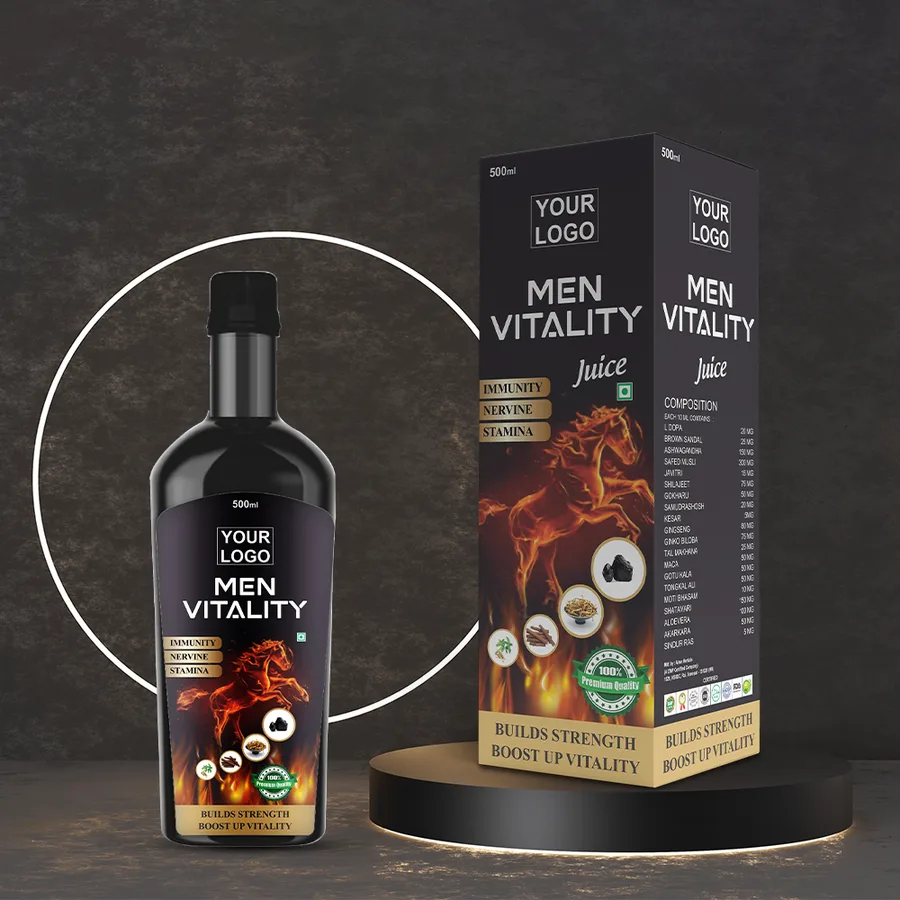
Composition detail: Prostavo 360. On the claims that should raise suspicion in this category: Men’s health products, jo claims dekh kar shak karna chahiye.
Get our product list and minimum orders
Leave your email and we will send the formats we make, the minimum order for each and typical lead times. We use it only to reply to you.
Manufacturing in this category?
We make products in this category for other people's brands. Tell us the format and volume and we will send a specification and a per-unit cost.
Request a quotation ↗NutraHerbal manufactures food supplements, Ayurvedic proprietary medicines and cosmetics for business customers. Product information on this site describes composition, format and commercial positioning for brand owners. It is not medical advice, does not claim to diagnose, treat, cure or prevent any disease, and is not a substitute for consulting a qualified practitioner. Final label claims are the brand owner's responsibility and must be approved for the destination market.
How we write and review content: editorial policy.