Reviewed for accuracy and claims compliance: Claims compliance review
Most allergy calendars you will find online describe a temperate Northern Hemisphere year, tree pollen in spring, grass in early summer, ragweed in autumn, and a winter off.
India does not work that way. The monsoon dominates, there is no reliable frost to end a season, and in much of the country something is pollinating in almost every month. Add winter air pollution and perennial indoor allergens, and the result is a pattern worth mapping properly.
And the practical reason to map it: your own symptom timing is the best clue you have to what you react to.
This is information, not medical advice. Allergy testing and treatment, including immunotherapy, are a doctor’s decisions. Regional patterns vary considerably and local data beats any general calendar.
First: is it allergy or infection?
Because this is the most common misidentification, and it changes the treatment entirely.
| Sign | Allergy | Viral infection |
|---|---|---|
| Itching, nose, eyes, palate | Prominent. The single biggest discriminator | Minimal |
| Sneezing | Repeated, in volleys | Some |
| Discharge | Thin, clear, persistent | Thickens, often turns coloured |
| Fever | No | Often |
| Body aches, sore throat | Uncommon | Common |
| Duration | Weeks, while the trigger is present | 7–10 days, then resolves |
| Same month every year? | Yes, the most useful question of all | No |
| Eyes | Itchy, watery, red | Mildly watery |
That last row deserves emphasis: itchy eyes with sneezing is allergy far more often than it is infection.
And one more sign people miss: a dark discolouration under the eyes (“allergic shiners”), and in children a horizontal crease across the nose from rubbing it upwards.
The calendar
Treat this as a framework, not a timetable. North, south, east, west and the hills differ, and a bad year shifts everything by weeks.
February – April: the main tree and flower season
This is the closest thing India has to a classic spring allergy season, and it is most pronounced in the north and in the hills.
In the air: tree pollen, and the significant ones in India include Holoptelea integrifolia (Indian elm), Prosopis juliflora (vilayati babool), Morus (mulberry), Cassia, Eucalyptus, Casuarina, Ailanthus and Putranjiva.
And Prosopis juliflora deserves a particular mention, it is an invasive species that has spread widely across dry regions of India, and it is a recognised significant pollen allergen.
Also: wheat and mustard harvest dust in the north, Holi colours (a genuine contact and respiratory trigger), and rising temperatures stirring settled dust.
Peak in: the north and north-west, and the hill stations as spring arrives.
April – June: grass, dust and the pre-monsoon
In the air: grass pollen, Cynodon dactylon (doob/Bermuda grass) is one of the most important aeroallergens in India and is present almost year-round, with peaks in this window and again post-monsoon; also Pennisetum, Sorghum, Imperata and Cenchrus.
Plus: dust storms in the north and west, which carry both dust and pollen; high ozone on hot sunny afternoons, which irritates airways independently of allergy; and heavy indoor fan and cooler use, which stirs house dust and, in desert coolers, grows mould in standing water.
The desert cooler is an under-recognised allergen source. Standing water plus a wet pad is a mould culture. Clean and dry it; replace pads.
June – September: the monsoon, mould and dust mite
This is India’s distinctive allergy season, and it is the one the Western calendar completely misses.
In the air and in the house:
Fungal spores, Aspergillus, Alternaria, Cladosporium, Penicillium, Curvularia, Fusarium. Humidity drives this, and it is the dominant monsoon allergen.
House dust mite, and this is the key fact: dust mites thrive above roughly 60–70% relative humidity, which much of coastal and monsoon India exceeds for months. Dust mite allergy is accordingly very common in India and is a year-round problem that peaks now.
Damp walls, mould on bathroom and kitchen surfaces, damp mattresses and cupboards.
Cockroach allergen, a significant and under-recognised aeroallergen, and it increases with monsoon infestation.
Weed pollen too, Parthenium hysterophorus (congress grass / gajar ghas) flowers through and after the rains. It causes both respiratory allergy and a well-documented, sometimes severe contact dermatitis. Amaranthus, Chenopodium, Ricinus, Argemone also contribute.
And the thing to rule out first in this season: monsoon fevers, dengue, chikungunya, malaria, typhoid, leptospirosis. A fever in the monsoon is not an allergy and is not something to wait out at home.
September – November: post-monsoon weeds, then pollution
In the air: weed pollen peaks, Parthenium, Amaranthus, Chenopodium, Artemisia, Xanthium, Ageratum, and Cynodon grass again.
Mould continues as damp dries out slowly.
And then, from roughly late October in the north: air quality collapses. Particulate matter, crop residue burning, and Diwali fireworks smoke.
This is the point to be clear about something: much of what is called “Diwali allergy” or “winter allergy” in north India is pollution-driven airway inflammation, not an allergic response. The symptoms overlap, and the treatment differs, an antihistamine does little for particulate irritation, while an N95 mask and an air purifier do.
December – February: cold, pollution and indoor allergens
In the air: low pollen in most of the plains, this is the quietest pollen window.
But: winter inversion traps pollution near the ground; indoor time increases, so dust mite and pet exposure rise; woollens come out of storage carrying dust and mould; and cold dry air itself triggers airway narrowing, which is not allergy but produces the same cough and wheeze.
And in the south and coastal regions, the pattern differs, some trees flower in these months, and humidity keeps mite and mould levels up year-round.
And one regional note: in parts of the north, Cannabis and Chenopodium pollinate late and extend the weed season well into the winter.
The year-round ones, which matter most
This is the point the whole calendar builds to.
For a great many people in India, the dominant allergens are not seasonal at all:
House dust mite, the single most common aeroallergen in Indian studies, and present all year, worst in humidity.
Cockroach, significant, under-recognised, and strongly associated with asthma.
Mould, in damp homes, all year.
Pets, cat and dog dander.
And occupational and indoor exposures, flour in bakeries, wood dust, agarbatti and mosquito coil smoke, biomass cooking smoke.
Which means: if your symptoms have no seasonal pattern at all, the calendar is not your answer, your house is.
How to use your own timing
This is the practical method, and it is free.
Keep a simple diary for a few months: the date, your symptoms and their severity, where you were, and the weather.
Then look for:
Which months are bad, and whether they repeat next year.
Indoors versus outdoors, worse indoors points to mite, mould, cockroach or pets. Worse outdoors points to pollen.
Worse on waking, points to bedroom allergens, so the mattress, pillow and bedding.
Worse after cleaning or making the bed, dust mite.
Worse in the rain or in damp rooms, mould.
Worse on dry windy days, pollen.
Worse at work, better on holiday, occupational.
Then take the diary to your doctor. It is more useful than a test ordered without a history, and it is what makes a test interpretable.
What actually helps
1. Reduce exposure, and target it to what you actually react to.
For dust mite (and this is where most Indian households should start): wash bedding weekly in hot water; use mite-proof mattress and pillow covers, these are the intervention with the best evidence; remove carpets and heavy curtains from the bedroom; keep soft toys off the bed and wash them; dust with a damp cloth rather than dry; reduce humidity where you can.
For pollen: keep windows closed on dry windy days and in the early morning; shower and change clothes after being out; dry clothes indoors during the season; and wear wrap-around sunglasses.
For mould: fix damp; ventilate bathrooms and kitchens; clean the cooler and air conditioner; and do not dry washing inside a closed room in the monsoon.
For cockroach: pest control, and food stored sealed.
For pollution: an N95 mask, a HEPA purifier in the bedroom, and timing outdoor exercise by the AQI.
2. Saline nasal irrigation. Cheap, evidence-supported for allergic rhinitis, and under-used. Boiled or distilled water only, and a clean device.
3. The medicines, which are the effective part.
Second-generation antihistamines, less sedating, taken regularly through the season rather than only on bad days.
Intranasal corticosteroid sprays, and this is the most important sentence here: these are the most effective treatment for allergic rhinitis, more so than antihistamines, and they are widely under-used because people fear the word steroid. The dose reaching the body is very small. They take several days to a couple of weeks to work fully, so starting them before your season begins matters.
Antihistamine eye drops for itchy eyes.
And for asthma: the preventer inhaler, taken daily.
4. Start before your season. If you know March is your month, begin in February. Prevention of inflammation is easier than its treatment, and this single change in timing helps more than any addition.
5. Allergen immunotherapy. This is the only treatment that modifies the disease rather than suppressing symptoms, given as injections or sublingual drops over years, for specific confirmed allergens. It is available in India and most people with persistent allergy are never told it exists. Ask.
What to get tested
Testing is for when the history is unclear or immunotherapy is being considered, not as a first step.
Skin prick testing, the usual first-line, done off antihistamines.
Specific IgE blood tests, where skin testing is not possible.
Spirometry, if there is any cough, wheeze or breathlessness. Allergic rhinitis and asthma travel together, and the asthma is frequently missed.
And what not to pay for: IgG food panels, “allergy profiles” sold direct to consumers, hair analysis and applied kinesiology. These have no validated basis and they lead to unnecessary food restriction.
A positive test without matching symptoms is not an allergy. Sensitisation is common; disease is what the history shows.
Honest limits of this calendar
Three things to hold alongside it.
Regional variation is large. A Kerala calendar and a Delhi calendar differ substantially, and so do Pune, Kolkata and Guwahati.
Published Indian aerobiology data is patchy, there are good survey studies from several cities, and nothing like comprehensive national pollen monitoring. Your symptom diary is better local data than this article.
And climate change is shifting it. Pollen seasons lengthening and intensifying is a documented trend, and the Indian pattern is moving too.
Our position
We manufacture in this category, so the boundary matters.
What is sayable: vitamin C, vitamin D, zinc and selenium contribute to the normal function of the immune system; vitamin C contributes to the protection of cells from oxidative stress; and traditional-use statements for tulsi, neem, haridra and vasaka.
What is not sayable: treats allergy, prevents allergic reactions, relieves sneezing or blocked nose, treats asthma, or acts as an antihistamine. These are medicinal claims, and the Drugs and Magic Remedies (Objectionable Advertisements) Act applies in this area regardless of licence.
And the honest ranking: exposure reduction and a nasal steroid spray started before the season do more than anything we make. Immunotherapy is the only thing that changes the disease.
What a supplement can honestly be is nutritional support, and nothing in this category should delay a spirometry test in someone who is wheezing. Allergic rhinitis with undiagnosed asthma is the real risk here, and it is common.
When to see a doctor
Urgently:
- Swelling of lips, tongue or throat; hoarseness; difficulty breathing or swallowing
- Breathlessness or wheeze not responding to a reliever inhaler
- Dizziness or collapse with a reaction, anaphylaxis
- In the monsoon: fever, dengue, malaria, typhoid need excluding, not antihistamines
Soon:
- Symptoms every year in the same months, ask about testing and immunotherapy
- Any cough, wheeze or breathlessness, spirometry; the asthma is often missed
- Symptoms lasting beyond the season, or year-round, look at the house
- Nasal blockage on one side only, or blood-stained discharge, needs examination
- Loss of smell
- Recurrent sinus infections or ear problems
- Symptoms disturbing sleep, work or school
- A child with poor sleep, mouth breathing or snoring, adenoids and allergy
- If you have ever had a severe reaction, ask about an adrenaline auto-injector
The short version
- The Western allergy calendar does not fit India, the monsoon dominates and there is no frost to end a season.
- Itchy eyes, nose and palate are the biggest discriminator from infection. No fever.
- “Same months every year?” is the most useful question you can ask yourself.
- Feb–April: tree pollen, Holoptelea, Prosopis juliflora, mulberry, Cassia.
- April–June: grass, Cynodon dactylon is one of India’s most important aeroallergens, plus dust storms and ozone.
- Clean and dry desert coolers, standing water grows mould.
- June–Sept: the monsoon season is mould and dust mite, India’s distinctive allergy window.
- Dust mites thrive above ~60–70% humidity, which much of India exceeds for months.
- Cockroach allergen is significant and under-recognised, strongly linked to asthma.
- Parthenium causes both respiratory allergy and a severe contact dermatitis.
- A monsoon fever is not allergy, exclude dengue, malaria, typhoid.
- Oct–Nov: weed pollen peaks, then north Indian air quality collapses.
- Much “winter allergy” in the north is pollution, not allergy, and a mask helps where an antihistamine does not.
- Dec–Feb: low pollen, high pollution, more indoor allergen exposure. Cold dry air alone triggers wheeze.
- If there is no seasonal pattern, the problem is your house, not the calendar.
- Keep a diary, indoors vs outdoors, on waking, after cleaning, in damp, at work.
- Mite-proof mattress and pillow covers have the best evidence for mite reduction.
- Saline nasal irrigation is cheap and supported, boiled water, clean device.
- Intranasal steroid sprays are the most effective treatment for allergic rhinitis, and the most under-used.
- Start treatment before your season begins.
- Immunotherapy is the only disease-modifying option, available in India, rarely offered.
- Get spirometry if there is any wheeze, the asthma is frequently missed.
- IgG food panels and consumer “allergy profiles” have no validated basis.
- A positive test without matching symptoms is not an allergy.
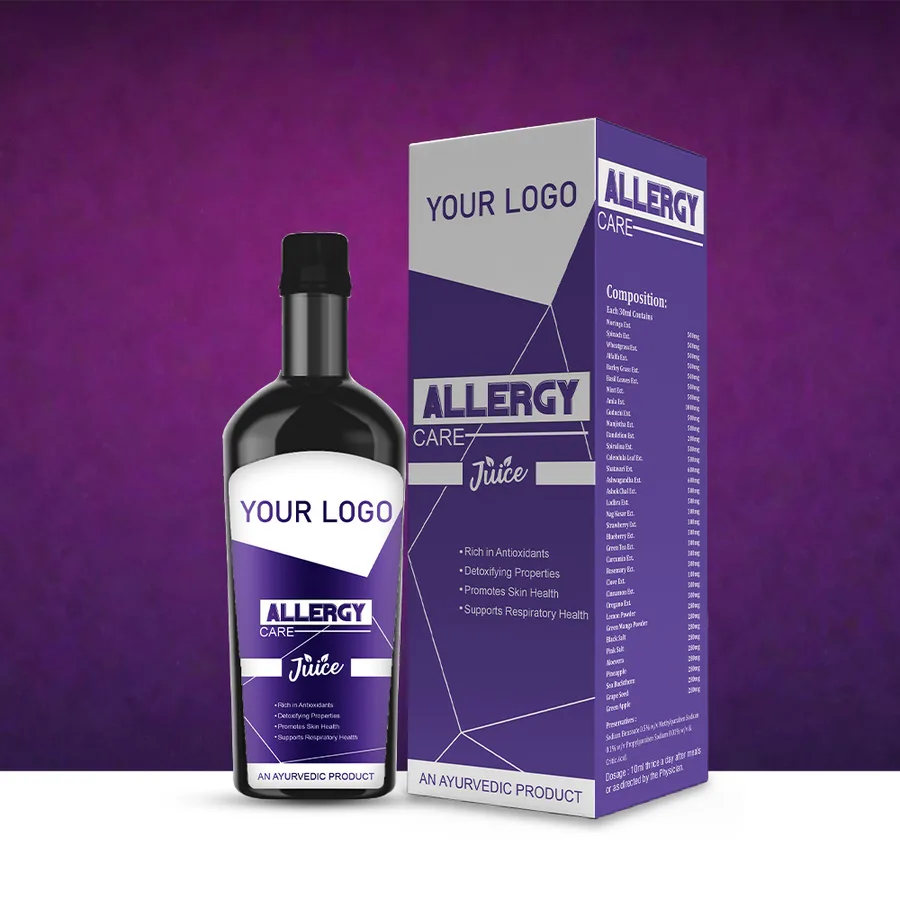
Composition detail: allergy care juice and Oxivo 360. Related: why a supplement does not replace an antihistamine, एलर्जी का आयुर्वेदिक इलाज, and air pollution, what actually helps.
Get our product list and minimum orders
Leave your email and we will send the formats we make, the minimum order for each and typical lead times. We use it only to reply to you.
Manufacturing in this category?
We make products in this category for other people's brands. Tell us the format and volume and we will send a specification and a per-unit cost.
Request a quotation ↗NutraHerbal manufactures food supplements, Ayurvedic proprietary medicines and cosmetics for business customers. Product information on this site describes composition, format and commercial positioning for brand owners. It is not medical advice, does not claim to diagnose, treat, cure or prevent any disease, and is not a substitute for consulting a qualified practitioner. Final label claims are the brand owner's responsibility and must be approved for the destination market.
How we write and review content: editorial policy.