Reviewed for accuracy and claims compliance: Claims compliance review
We sell an allergy-support product. This article explains why it is not an antihistamine and should never be used as one.
The reason is mechanical rather than a matter of degree. An antihistamine occupies a specific receptor and stops a specific signal, within about an hour. Nothing in a food supplement does that, and no amount of formulation skill changes it.
And in allergy, the substitution occasionally kills people. That is why this is written as a safety article.
This is information, not medical advice. Swelling of the lips, tongue or throat, difficulty breathing, or collapse is anaphylaxis, a medical emergency. Use adrenaline if prescribed and call for help.
What actually happens in an allergic reaction
You need this to see why the two things are not comparable.
Sensitisation, first. On a first exposure, the immune system produces IgE antibodies specific to that allergen, which attach to mast cells in the nose, airways, skin and gut.
Then, on re-exposure: the allergen cross-links those IgE antibodies, the mast cell degranulates within seconds to minutes, and releases histamine plus tryptase, prostaglandins, leukotrienes and cytokines.
Histamine acts on H1 receptors, producing itching, sneezing, runny nose, vasodilation, wheals and bronchoconstriction. This is the early phase: minutes.
And then a late phase, four to twelve hours later, as eosinophils and other cells arrive and produce prolonged inflammation and congestion. This is why blocked nose persists after the sneezing stops, and why treatment aimed only at histamine is incomplete.
What an antihistamine does
It is a competitive antagonist at the H1 receptor. It sits in the receptor so histamine cannot.
Which gives it four properties a supplement does not have:
1. Speed, typically within an hour.
2. Specificity, one receptor, one pathway, a predictable effect.
3. A known dose-response, established in trials, with a known duration.
4. Reliability, it works the same way in most people, most times.
Second-generation antihistamines, cetirizine, levocetirizine, loratadine, fexofenadine, bilastine, cross into the brain less and so sedate less. First-generation ones, chlorpheniramine, hydroxyzine, promethazine, diphenhydramine, sedate markedly, which is why they appear in night-time cold preparations and why they are not the right daytime choice. And sedating antihistamines carry real risks in older people, falls, confusion, and should generally be avoided there.
What antihistamines do well: itching, sneezing, runny nose, itchy eyes, urticaria.
What they do less well: nasal blockage, which is driven more by the late-phase inflammation. This is why a nasal steroid spray outperforms them for congestion, and why it is the first-line treatment for persistent allergic rhinitis.
What a supplement can and cannot do
Being fair to our own category.
What the plausible mechanisms are, where they exist:
Anti-inflammatory activity, curcumin, boswellia and others have demonstrable anti-inflammatory effects in laboratory systems. This is a slow, broad, upstream effect, not receptor blockade.
Mast cell stabilisation, quercetin is the usual claim here, and it does inhibit mast cell degranulation in cell culture. The human evidence is thin, and a crucial practical point: quercetin’s oral bioavailability is poor, so the concentrations used in cell studies are not what a capsule achieves in tissue.
Nutrient roles, vitamin C, D and zinc are required for normal immune function, and correcting a deficiency restores normal function.
Vitamin D specifically, observational associations with allergy and asthma severity, and trials of supplementation have been mixed.
Nothing in that list blocks the H1 receptor. And none of it works in an hour.
So the honest frame: a supplement in this category is an upstream, slow, partial, nutritional contribution. An antihistamine is a fast, specific block. They are not two strengths of the same thing.
The specific substitutions that cause harm
This is the core of the article.
1. Replacing an adrenaline auto-injector
Anaphylaxis is treated with intramuscular adrenaline, immediately.
Antihistamines do not treat anaphylaxis, they treat itching and urticaria, and relying on one while the airway closes is a recognised cause of death.
And no supplement has any role whatsoever here.
If you have ever had a severe reaction: carry the auto-injector, know how to use it, check the expiry, and call for emergency help after using it, because reactions can return hours later.
2. Replacing an asthma preventer inhaler
Allergic asthma is treated with an inhaled corticosteroid, taken daily.
Asthma deaths are overwhelmingly associated with under-treatment and poor adherence to preventers, not with the severity of the attack itself.
A herbal product that reassures someone enough to skip the preventer is doing real harm, whatever is in it. We will not sell on that framing.
3. Replacing a nasal steroid spray
Not life-threatening, and it costs quality of life for months.
Nasal steroids are the most effective treatment for allergic rhinitis and the most under-used, because of fear of the word “steroid”. Systemic absorption is very low. They take days to a couple of weeks to work fully, which is why people abandon them and why starting before your season matters.
4. Delaying a diagnosis
Two specific cases.
Undiagnosed asthma. Allergic rhinitis and asthma travel together, and the asthma is frequently missed. Anyone with cough, wheeze or breathlessness needs spirometry.
And in India, a cough lasting more than three weeks needs tuberculosis testing. Treating that as an allergy with a syrup is how TB diagnoses are delayed, for the person and for their household.
5. Undeclared pharmaceuticals
Some “herbal” allergy and skin products have been found to contain undeclared corticosteroids or antihistamines.
A product that produces a dramatic effect within a day or two is a reason for suspicion, not satisfaction, because that is pharmacology, not botany.
And the specific danger: stopping an undeclared steroid abruptly can itself be harmful, and the user does not know they are taking one.
Where a supplement genuinely fits
Being honest in the other direction, because “useless” is not the right conclusion either.
Correcting a deficiency a test has found, vitamin D in particular, which is widely deficient in India. Here the effect is real.
Nutritional support alongside treatment, with your doctor informed.
Soothing an irritated throat, where classical demulcents genuinely help.
And for those who want a traditional formulation as part of their approach, with long traditional use, clean test reports and honest labelling. That is a legitimate product.
What it is not: a treatment, a replacement, or a reason to stop anything.
The ranked list, honestly
If you have allergic rhinitis or allergic asthma:
1. Identify and reduce exposure. In most Indian homes that means dust mite and damp, bedding washed hot weekly, mite-proof mattress and pillow covers, carpets out of the bedroom, damp fixed, coolers cleaned.
2. Saline nasal irrigation. Cheap, evidence-supported, under-used. Boiled or distilled water, clean device.
3. An intranasal corticosteroid spray, started before your season.
4. A second-generation antihistamine, taken through the season rather than only on bad days.
5. For asthma: the preventer inhaler daily, with checked technique and a spacer.
6. Ask about allergen immunotherapy. The only disease-modifying treatment, it changes the underlying sensitisation rather than suppressing symptoms. Available in India, and almost never offered.
7. Get vitamin D checked, and correct it if low.
8. And then, if you want, a traditional or nutritional formulation alongside.
Our product sits at number eight. We would rather publish that than imply otherwise.
Antihistamines are not risk-free either
Being fair.
Sedation with first-generation agents, and it impairs driving and work even when it does not feel like sleepiness.
In older adults, sedating antihistamines carry risks of confusion, urinary retention and falls, and are generally best avoided.
Dry mouth, constipation, urinary retention, especially with first-generation drugs.
Dose adjustment in kidney or liver disease.
Children, dose by weight, and some agents are not suitable for infants.
Pregnancy, some are better established than others; ask.
And they must be stopped before skin prick testing, usually about a week before, or the test is invalid.
So: a real medicine with real considerations. The point is not that they are harmless; it is that they work.
Claims, the regulatory position
What is sayable: vitamin C, vitamin D, zinc, selenium, iron, copper, vitamin A, B6, B12 and folate contribute to the normal function of the immune system; vitamin C contributes to the protection of cells from oxidative stress; zinc, biotin and vitamin A contribute to the maintenance of normal skin; and traditional-use statements for haridra, tulsi, vasaka and neem.
What is not sayable: antihistamine, anti-allergic, relieves sneezing, clears blocked nose, treats allergy, treats asthma, or prevents allergic reactions.
And the word “antihistamine” is itself a drug-class term. Using it, or implying it, on a food supplement is a straightforward violation, and the Drugs and Magic Remedies (Objectionable Advertisements) Act applies here regardless of licence held.
What we refuse: any artwork implying the product can replace, reduce or allow stopping an antihistamine, inhaler, nasal spray or adrenaline injector; “allergy-free in 30 days”; and before-and-after imagery.
And what we require on the pack: “continue your prescribed medicines and tell your doctor you are taking this”, and “seek medical advice if a cough lasts more than three weeks”. Neither costs us anything and both are the most useful lines on the label.
When to see a doctor
Emergency, use adrenaline if prescribed and call for help:
- Swelling of lips, tongue, throat or around the eyes
- Difficulty breathing, hoarseness, or a tight throat
- Dizziness, collapse, or a feeling of impending doom
- Widespread rash with vomiting or abdominal pain
- An asthma attack not responding to the reliever inhaler
Urgently:
- Fever with a spreading rash, or skin peeling
- Blistering of the mouth, eyes or genitals with a rash, possible severe drug reaction
- A rash after starting a new medicine, stop it and get seen
Soon:
- Any cough, wheeze or breathlessness, spirometry
- A cough over three weeks, tuberculosis testing
- Urticaria lasting more than six weeks, chronic urticaria, which is treatable
- Symptoms every year in the same months, ask about testing and immunotherapy
- Nasal blockage on one side only, blood-stained discharge, or loss of smell
- Symptoms disturbing sleep, work or school
- A child who mouth-breathes or snores, adenoids and allergy
- If you have ever had a severe reaction, ask for an auto-injector and an action plan
The short version
- An antihistamine blocks the H1 receptor within about an hour. No supplement does that.
- Mast cells release histamine in seconds, the early phase is minutes.
- A late phase follows 4–12 hours later, which is why blockage outlasts sneezing.
- Antihistamines give speed, specificity, a known dose-response and reliability.
- Second-generation agents sedate less. First-generation ones impair driving and work.
- Sedating antihistamines carry real risks in older adults.
- Antihistamines treat itch, sneeze and runny nose better than blockage.
- A nasal steroid spray is the most effective treatment for allergic rhinitis, and the most under-used.
- Quercetin stabilises mast cells in cell culture; its oral bioavailability is poor.
- Supplement mechanisms are upstream, slow and partial, not a weaker version of the same thing.
- Antihistamines do not treat anaphylaxis. Adrenaline does, immediately.
- Call for help after using an auto-injector, reactions can return hours later.
- Asthma deaths are associated with under-treatment, not with attack severity.
- Nasal steroids take days to weeks, start before your season.
- Allergic rhinitis and asthma travel together, and the asthma is often missed.
- A cough over three weeks needs TB testing in India.
- Undeclared steroids and antihistamines have been found in “herbal” products.
- A dramatic effect in a day is pharmacology, not botany.
- Exposure reduction first, in India that usually means dust mite and damp.
- Saline irrigation is cheap and supported.
- Immunotherapy is the only disease-modifying treatment. Ask for it.
- Stop antihistamines about a week before skin prick testing.
- “Antihistamine” is a drug-class term, a food supplement may not use or imply it.
- Our product belongs at number eight on the list, and we will say so.
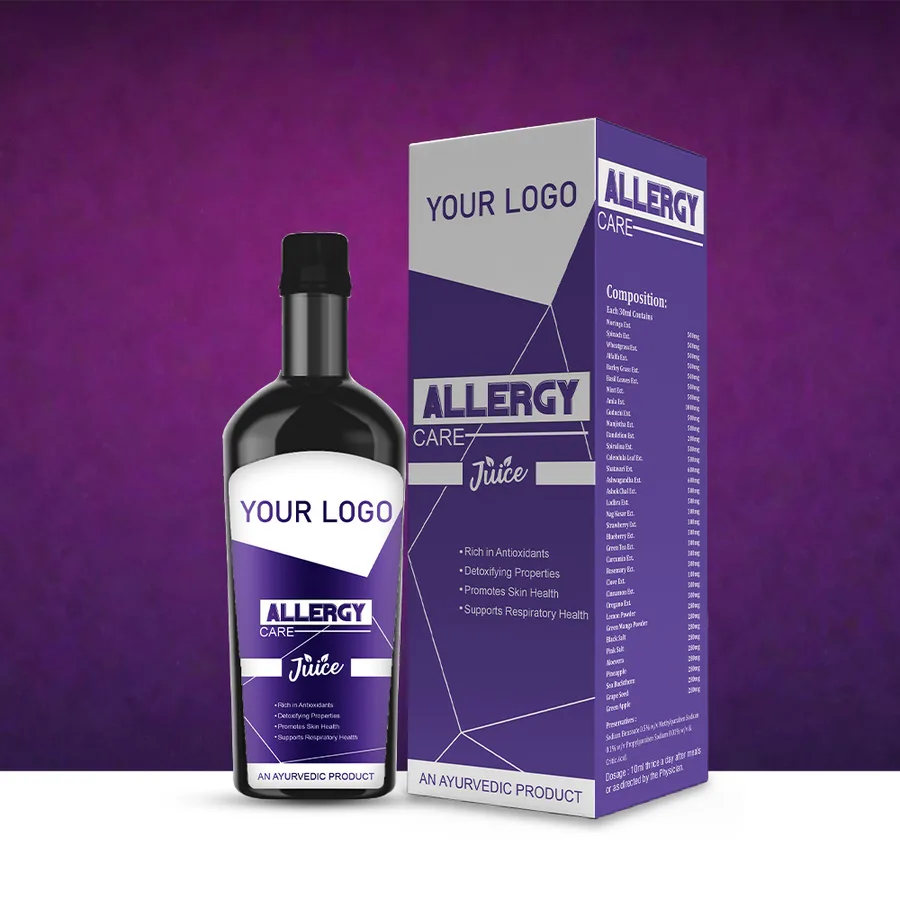
Composition detail: allergy care juice and Renewo 360. Related: seasonal allergy calendar for India, एलर्जी का आयुर्वेदिक इलाज, and स्किन एलर्जी के घरेलू उपाय.
Get our product list and minimum orders
Leave your email and we will send the formats we make, the minimum order for each and typical lead times. We use it only to reply to you.
Manufacturing in this category?
We make products in this category for other people's brands. Tell us the format and volume and we will send a specification and a per-unit cost.
Request a quotation ↗NutraHerbal manufactures food supplements, Ayurvedic proprietary medicines and cosmetics for business customers. Product information on this site describes composition, format and commercial positioning for brand owners. It is not medical advice, does not claim to diagnose, treat, cure or prevent any disease, and is not a substitute for consulting a qualified practitioner. Final label claims are the brand owner's responsibility and must be approved for the destination market.
How we write and review content: editorial policy.