Reviewed for accuracy and claims compliance: Claims and compliance review
Of all the repositionings in the Indian herbal market, gokshura’s is the most complete. It is sold almost entirely for one purpose that its classical literature treats as secondary, while the purpose the texts put first has disappeared from the shelf.
Classically, gokshura is primarily mutrala, a diuretic, and its best-known formulation, Gokshuradi guggulu, is a urinary preparation.
Commercially, it is “Tribulus”, a testosterone booster, sold beside protein powder.
And the human trials on that second claim are negative.
So this is a case where the traditional use is better supported than the modern one, and the market chose the modern one anyway, because urinary symptoms are embarrassing and testosterone is aspirational.
We use gokshura in formulations. This article sets the two framings side by side and says which one the evidence favours.
General information, not medical advice. And one caution that belongs early: there are case reports of kidney injury associated with Tribulus extracts, which is an awkward fact for a urinary herb and is covered below.
The classical framing
Gokshura, from go (cow) and kshura (hoof), named for the spiny fruit that injures cattle hooves. A prostrate weed, found across India on roadsides, field margins and waste ground.
Part used: fruit, and sometimes the whole plant.
And the classical designations, in the order the literature puts them:
Mutrala, diuretic. The primary category.
Mutrakrichra, painful or difficult urination.
Ashmari, urinary calculi.
Balya, strengthening.
Vatahara.
Prameha, the classical category overlapping diabetes.
And vrishya, relating to reproductive vitality. Present, and one entry among several.
The formulations tell the same story:
Gokshuradi guggulu, the famous one, and a urinary formulation, used for dysuria, burning micturition and calculi.
Gokshura churna and Gokshuradi kwath, the same direction.
And trikantaka, a synonym, appears in some vajikarana formulations, which is where the vitality framing has its genuine root.
So the honest reading: a urinary herb with a reproductive-vitality side mention.
The modern framing
“Tribulus terrestris” entered the Western supplement market in the 1990s as a testosterone booster, largely on the back of Bulgarian research and marketing, and the framing came back to India with that reputation attached.
And in India it now sits in sports nutrition, men’s wellness and “vitality” products, usually alongside ashwagandha, safed musli and kaunch beej.
The urinary use survives in classical Ayurvedic pharmacies and has essentially vanished from the modern shelf.
What the testosterone evidence actually shows
This needs to be stated plainly, because it is unambiguous in a way that herbal evidence rarely is.
Human trials in healthy men have not found a significant increase in testosterone with Tribulus.
Multiple studies, including in young men and in athletes, measured testosterone and found no meaningful change.
And reviews of this literature have reached the same conclusion: Tribulus does not raise testosterone in healthy men.
So where did the claim come from?
Rodent studies.
Animal work, in rats, and in some livestock research, did report hormonal and reproductive effects.
And the species difference is real. A compound can affect rodent reproductive physiology without doing the same in humans, and this is one of the clearer examples.
There is also a strand of research in specific populations, men with reduced testosterone or with erectile dysfunction, where some studies report changes. Those are different populations from a healthy gym user, and the findings have not been consistently replicated.
And where there is something
Being fair, because “no testosterone effect” is not “no effect”.
Some small trials in men with erectile dysfunction, and some in women with low sexual desire, report improvements in sexual function or desire scores.
And, this is the interesting part, those improvements were not explained by testosterone changes. The proposed mechanism involves nitric oxide pathways, which is a different route entirely.
So the honest statement: there are modest, inconsistent signals on sexual function through a non-hormonal mechanism, and no testosterone effect in healthy men.
And the market sells the second thing.
Where the classical use holds up better
And this is the part worth taking seriously.
Diuretic activity, documented in animal studies, consistent with the classical mutrala designation.
Urinary calculi, animal antiurolithiatic studies exist, and the mechanism is straightforward: more urine volume dilutes the urine, and urine dilution is the central principle of modern stone prevention too, where the main instruction is to drink more water.
So the classical reasoning and the modern reasoning converge here, which is uncommon and worth noting.
Lower urinary tract symptoms, and this is where the two framings quietly meet.
A large share of the men buying gokshura are middle-aged or older. And a large share of those men have benign prostatic hyperplasia, waking at night to urinate, a weak stream, incomplete emptying.
Which is mutrakrichra. Which is what the classical texts used this herb for.
So some customers are, without knowing it, buying it for the right reason under the wrong label.
And the evidence for that use is thin too, but it is at least the use the tradition supports, and it points them toward a question worth asking a doctor.
The specification problem
Protodioscin is the marker saponin, and the figure that appears on better labels.
And the sourcing point that explains a lot:
Protodioscin content varies substantially with geographic origin. Material from parts of Eastern Europe is reported to be higher in it; Indian material generally lower.
Which means two products both labelled “Tribulus terrestris” can be chemically quite different, and that is one reason the trial literature is inconsistent, since different studies used different material.
So a usable label states: the botanical name; the part used (fruit or whole plant); protodioscin percentage; and the origin.
Almost none do.
The doping problem, and gym users should read this
This matters specifically for anyone subject to testing, and it is a documented issue.
Tribulus products have been associated with positive doping tests.
And the likely explanation is not the plant. It is adulteration, prohormones, DHEA, or androgenic compounds added to supplements sold for “testosterone support”, in a category where that adulteration has been repeatedly documented across testing programmes.
So:
If you compete under anti-doping rules, a Tribulus product is a genuine risk, not because of Tribulus, but because of the category it sits in.
And look for third-party batch certification against banned substances if you are in that position. A general “lab tested” claim does not cover it.
We have written more about this in the gym-use article.
And the safety point that is awkward
There are case reports of nephrotoxicity, kidney injury, associated with Tribulus extract use, including a well-known report of a young man developing kidney injury after taking a Tribulus product.
These are case reports, not a large signal. And for a herb whose main classical use is urinary, they are worth stating rather than omitting.
So: avoid in kidney disease without medical advice, stay well hydrated, and stop for reduced urine output, leg swelling or marked fatigue.
Other cautions: diuretic medication and lithium (renal clearance); blood sugar and blood pressure medication (monitoring); pregnancy and breastfeeding (no); hormone-sensitive conditions, given the steroidal saponins; and a reported case of gynaecomastia in a man.
And as context rather than a human warning: sheep grazing heavily on Tribulus terrestris develop a documented hepatogenous photosensitisation syndrome. That is a grazing-animal phenomenon, not a supplement dose, and it demonstrates that the plant is not biologically inert.
So what should someone do with this ingredient
If you are buying it for testosterone or muscle: don’t. The human trials are negative and the category has an adulteration problem.
If you are buying it for sexual function: the signals are modest, inconsistent and non-hormonal, and reduced libido or erectile difficulty is worth a medical check, because it can be an early marker of cardiovascular or metabolic disease. That check is more valuable than the supplement.
If you have urinary symptoms: you are closer to the classical use than most buyers, and new urinary symptoms need assessment first, because benign prostatic hyperplasia and prostate cancer can present similarly early on.
If you have a stone history: the classical reasoning is sound and the most effective intervention is still water. Target a urine output that keeps urine pale, and have the stone type identified.
And if you have kidney disease: not without your doctor.
What we will and will not say
Sayable: the botanical name and part used; protodioscin content and origin; a traditional-use statement framed as traditional use, including the classical mutrala and mutrakrichra designations described as classical designations; the quantity; and authorised nutrient-function claims for any vitamins or minerals present.
And the governing fact: there is no authorised health claim for gokshura. And advertising for sexual potency and infertility is separately restricted in India under the Drugs and Magic Remedies (Objectionable Advertisements) Act.
Not sayable: increases testosterone, builds muscle, increases strength, enhances sexual potency, treats infertility, dissolves stones, treats prostate enlargement.
And three refusals:
“Increases testosterone”, the human trials in healthy men are negative and the claim rests on rodent data. We will not print it, and we decline client formulations built around it.
Sexual potency and infertility claims, separately restricted, and the part of this market where the most frightened people are charged the most.
And “dissolves stones”, because delay in an obstructing stone damages a kidney.
And the most honest summary:
Gokshura’s primary classical category is mutrala, diuretic, and its most famous formulation is a urinary one.
The market inverted that, selling a side mention as the headline, because urinary symptoms are embarrassing and testosterone is aspirational.
Human trials in healthy men show no testosterone effect; the claim came from rodent studies.
The modest sexual-function signals that do exist are non-hormonal.
And the classical urinary use converges with modern stone-prevention reasoning, which makes it the better-supported claim and the one nobody is selling.
When to see a doctor
Get assessed rather than self-treating if you have:
- burning, frequency, or urgency with fever, infection
- blood in the urine, this needs investigating, not waiting
- a weak stream, waking at night to urinate, incomplete emptying, or dribbling, prostate assessment, because BPH and prostate cancer can look similar early
- severe flank or back pain coming in waves, stones
- stone pain with fever, chills, vomiting, or reduced urine output, emergency
- reduced libido or erectile difficulty, this can be an early sign of cardiovascular or metabolic disease, and is worth a proper check
- difficulty conceiving, both partners need assessment
Ask before taking gokshura if you: have kidney disease, the most important; take a diuretic or lithium; take diabetes or blood pressure medication; are pregnant or breastfeeding (no); have a hormone-sensitive condition; or compete under anti-doping rules.
Stop and get advice if you develop: reduced urine output, leg swelling, marked fatigue (kidney); breast tissue changes; or a rash.
The short version
- Gokshura’s primary classical category is mutrala, diuretic
- Its most famous formulation, Gokshuradi guggulu, is a urinary preparation
- The market sells it as a testosterone booster beside protein powder
- So the traditional use is better supported than the modern one
- The name means “cow’s hoof”, from the spiny fruit
- It is a prostrate roadside weed, found across India
- Classical order: mutrala, mutrakrichra, ashmari, balya, vatahara, prameha, then vrishya
- So vrishya is one entry among several, not the headline
- “Tribulus” entered the Western market in the 1990s as a testosterone booster
- And that framing came back to India with the name
- Human trials in healthy men found no significant testosterone increase
- Including studies in young men and athletes
- Reviews have reached the same conclusion
- The claim came from rodent studies, where effects were reported
- The species difference is real and this is a clear example of it
- Some trials in men with low testosterone or ED report changes, inconsistently
- Small trials report improved sexual function or desire in some groups
- And those improvements were not explained by testosterone changes
- The proposed mechanism involves nitric oxide, a different route
- Diuretic activity is documented in animal studies, matching mutrala
- Animal antiurolithiatic studies exist, and the mechanism is urine dilution
- Which is the central principle of modern stone prevention too
- So classical and modern reasoning converge here, uncommonly
- Many buyers are older men with prostatic urinary symptoms
- Which is mutrakrichra, the classical indication
- So some are buying it for the right reason under the wrong label
- Protodioscin is the marker, and its content varies by geographic origin
- Eastern European material is reported higher; Indian material generally lower
- Which is one reason the trial literature is inconsistent
- Tribulus products have been associated with positive doping tests
- Likely from adulteration with prohormones or DHEA, documented in this category
- So competitors need third-party batch certification, not “lab tested”
- There are case reports of kidney injury with Tribulus extracts
- Awkward for a urinary herb, and worth stating rather than omitting
- Sheep grazing on it develop hepatogenous photosensitisation, the plant is not inert
- There is no authorised health claim for gokshura
- And sexual potency and infertility advertising is separately restricted in India
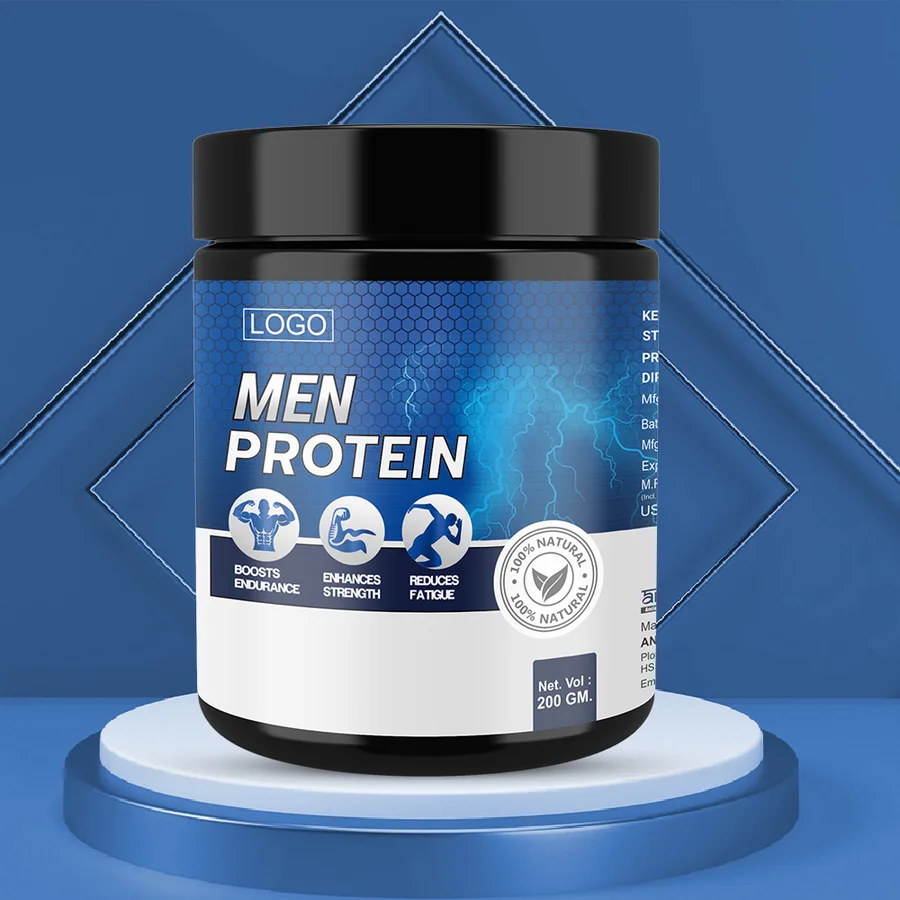
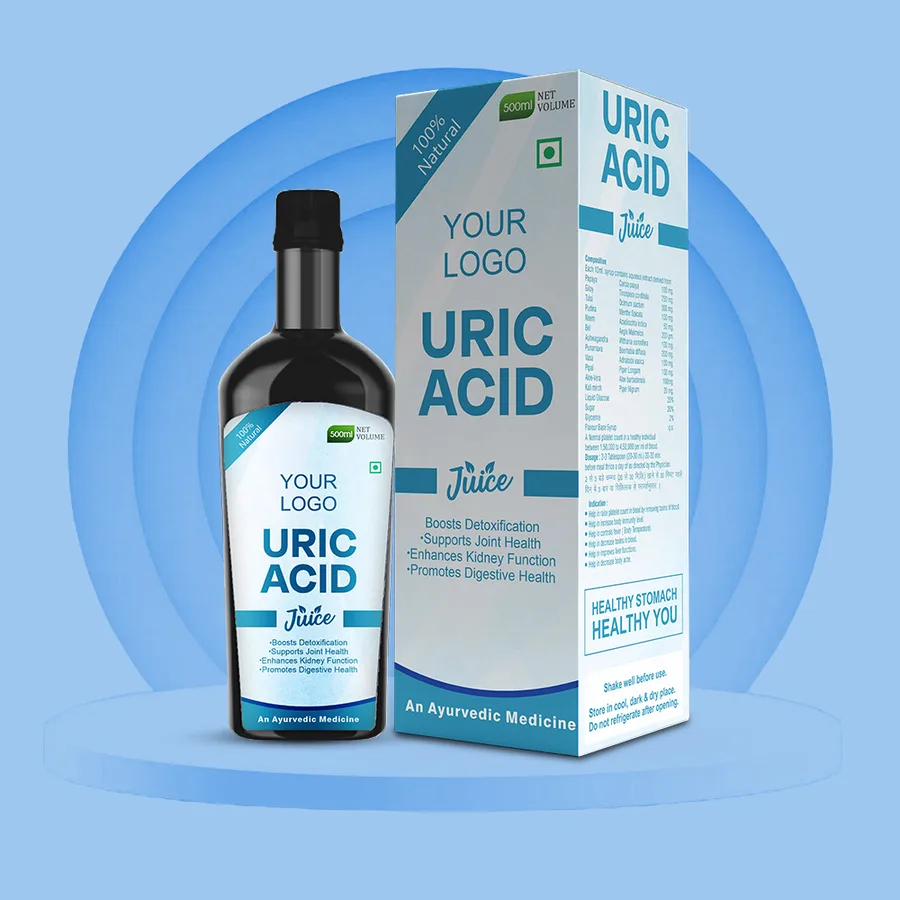
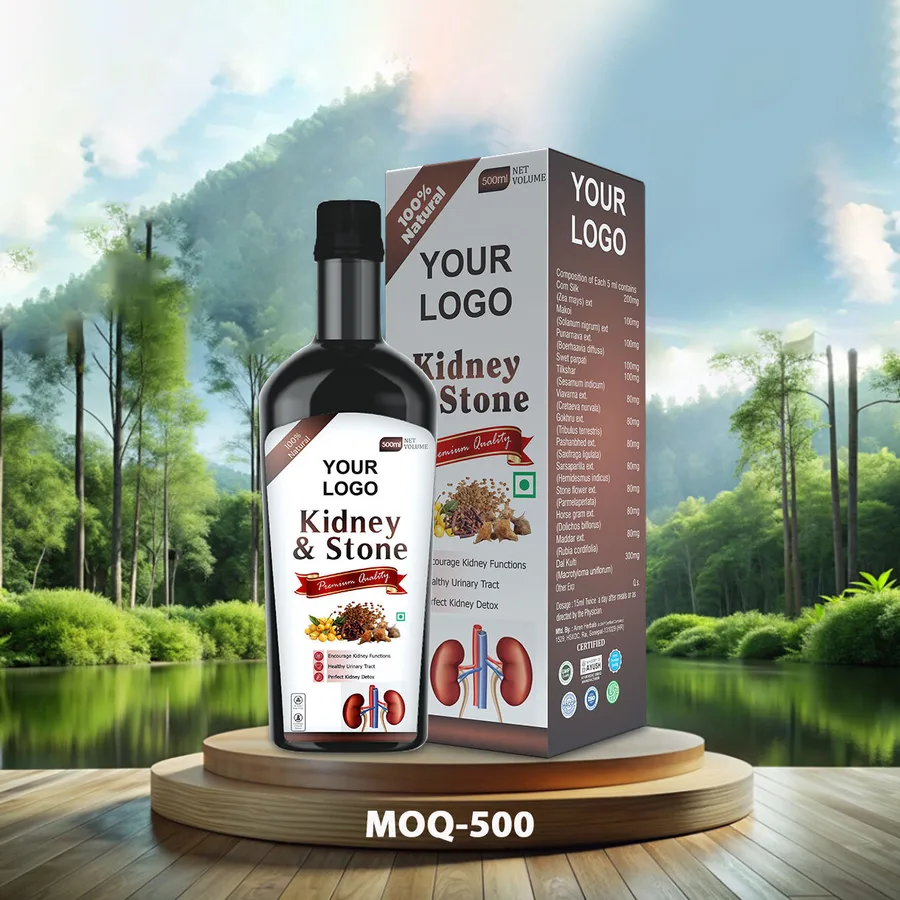
Ingredient details: gokshura, varun, safed musli. Our formulations: Men’s Nutrition Powder, Uric Acid Care Juice, Kidney Stone Juice. Related reading: गोक्षुर (गोखरू) के फ़ायदे, gokshura for gym use, ashwagandha, shilajit and safed musli compared, and label compliance.
Get our product list and minimum orders
Leave your email and we will send the formats we make, the minimum order for each and typical lead times. We use it only to reply to you.
Manufacturing in this category?
We make products in this category for other people's brands. Tell us the format and volume and we will send a specification and a per-unit cost.
Request a quotation ↗NutraHerbal manufactures food supplements, Ayurvedic proprietary medicines and cosmetics for business customers. Product information on this site describes composition, format and commercial positioning for brand owners. It is not medical advice, does not claim to diagnose, treat, cure or prevent any disease, and is not a substitute for consulting a qualified practitioner. Final label claims are the brand owner's responsibility and must be approved for the destination market.
How we write and review content: editorial policy.